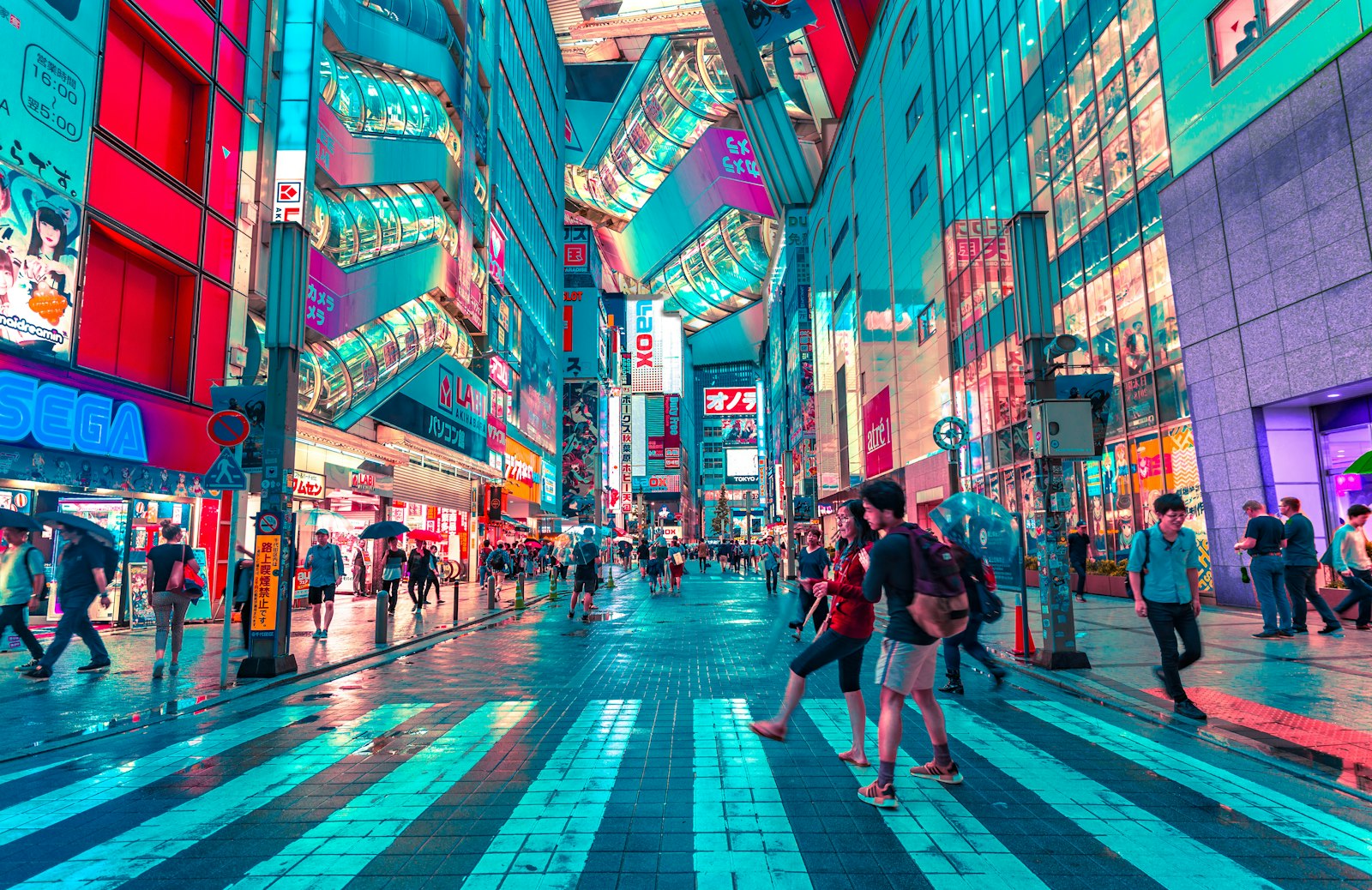
Tokyo in 5 Days: Neon, Temples, Ramen & the World's Best Metro
Shibuya Crossing at midnight, Senso-ji at dawn, standing sushi in Tsukiji, Golden Gai bar crawls, and a day trip to Kamakura. The complete guide with real prices in yen.

Delhi · Visited: Kedarnath, Gangotri, Manali, Shimla, Rishikesh & more · April 2026 · 18 min read
Shibuya Crossing at midnight when the neon reflects off wet pavement — this is the Tokyo they promised you and it delivers. But most first-timers waste two days being confused by the metro, overpay for everything, and miss entire neighbourhoods. This guide fixes all of that.
⚡ What Tokyo Actually Is
Tokyo is the largest metropolitan area on earth — 37 million people across a sprawl that never quite ends. It is simultaneously the most futuristic and the most traditional city you will visit. A 7th-century Buddhist temple sits across the street from a building covered in animated billboards. A Michelin-starred sushi counter operates inside a basement that looks like someone's storage closet. A convenience store onigiri at 2am is a genuine culinary experience.
What catches most first-timers off guard is how quiet Tokyo actually is. For a city this large, the trains run in near-silence, nobody talks on their phone in public, and entire neighbourhoods feel like small towns. The contrast between Shibuya's sensory overload and a side street in Yanaka — where a cat sleeps on a temple wall and an old man sweeps his shop front — is the real Tokyo experience.
The metro system is the backbone of everything. It looks overwhelming on the map but works with absolute precision. Get a Suica card at the airport, download Google Maps with the offline Tokyo map, and the entire city opens up. Most tourist confusion in Tokyo comes from not understanding the trains. Once you do, five days is enough to see the essential neighbourhoods, eat extraordinarily well, and leave wondering how any other city functions.
Narita / Haneda
Airports
Mar–May, Oct–Nov
Best Season
5 Days
Duration
¥8,000/day
Budget From
🌡️ Best Time to Visit Tokyo
Mar–May — Spring — Cherry Blossom Season
Peak season
12–22°C. Late March to mid-April is cherry blossom season and the single most popular time to visit Tokyo. Ueno Park, Shinjuku Gyoen, and the Meguro River turn pink. Hotels fill up and prices spike, but the atmosphere is unlike anything else. Book accommodation 3+ months ahead. May is warm, clear, and much less crowded — an underrated window.
Jun–Aug — Summer — Hot, Humid, Festival Season
For festival lovers
25–35°C with high humidity. June is rainy season (tsuyu). July and August are genuinely hot — plan indoor activities for midday. But summer brings fireworks festivals (hanabi), Obon celebrations, and beer gardens on department store rooftops. Fewer tourists than spring or autumn.
Sep–Nov — Autumn — Foliage & Comfortable Weather
Recommended
15–25°C. October and November are excellent — comfortable walking temperatures, stunning autumn foliage at Meiji Jingu Gaien, Koishikawa Korakuen, and Rikugien Gardens. Fewer crowds than spring. Late November for peak koyo (autumn colour). The sweet spot for most travellers.
Dec–Feb — Winter — Cold, Clear & Illuminations
Best value
2–12°C. Tokyo winters are cold but dry with blue skies — the clearest views of Mt. Fuji are in winter. Christmas illuminations across Roppongi, Marunouchi, and Omotesando are spectacular. New Year at Meiji Shrine is a once-in-a-lifetime crowd experience. Cheapest hotel rates of the year.
✈️ Getting to Tokyo
Key detail: Tokyo has two airports. Narita (NRT) is 60km east — most international flights land here. Haneda (HND) is 15km south and much closer to the city centre. If you have a choice, fly into Haneda. Either way, buy a Suica or Pasmo IC card at the airport before doing anything else.
From Narita Airport (most international flights)
Most commonNarita Express (N'EX) to Tokyo Station: ¥3,250 ($22), 53 minutes. Limousine Bus to Shinjuku: ¥3,200 ($21), 85–120 minutes depending on traffic. Budget option: Keisei Access Express to Asakusa/Ueno: ¥1,270 ($8), 60 minutes. Cheapest: Airport Shuttle Bus services from ¥1,300 ($9) — slower but direct to your hotel area.
From Haneda Airport (closer, domestic + some international)
Best optionTokyo Monorail to Hamamatsucho: ¥500 ($3), 13 minutes. Keikyu Line to Shinagawa: ¥300 ($2), 11 minutes — then connect to JR Yamanote Line for anywhere in central Tokyo. Much faster and cheaper than Narita. If your airline offers Haneda, take it.
Suica / Pasmo IC Cards
EssentialBuy at any airport station or convenience store. ¥500 ($3) deposit, then top up as needed. Tap on/off at every train gate, bus, and most convenience stores and vending machines. Works on all metro lines, JR lines, and private railways in Tokyo. This is non-negotiable — individual tickets waste 5–10 minutes every ride.
Japan Rail Pass (JR Pass)
Only for multi-city7-day JR Pass: ¥50,000 ($333). Only worth it if you are also visiting Kyoto, Osaka, or Hiroshima by bullet train. For Tokyo only, the Suica card and occasional day passes are far cheaper. A round-trip shinkansen to Kyoto alone costs ¥27,000 — so the JR Pass saves money only if you take multiple long-distance trips.
📅 5-Day Tokyo Itinerary
Each day card is expandable. This itinerary is designed for a mid-range budget (¥15,000–25,000/day) but works at any level — swap the restaurant picks for convenience store meals to go budget, or upgrade to omakase counters for luxury. The route is optimised to minimise backtracking across Tokyo's sprawl.
- ●Morning: Meiji Shrine (free) — arrive by 9am. Walk through the massive torii gate into 170 acres of forest in the middle of the city. The gravel path, the sake barrels, the inner shrine — genuinely peaceful. If you are lucky, you will catch a traditional Shinto wedding procession. Allow 45–60 minutes.
- ●11am: Harajuku — Takeshita Street for the sensory overload (crepes, costume shops, crowds), then walk Omotesando for architect-designed flagships (Dior by SANAA, Prada by Herzog & de Meuron). Cat Street for indie boutiques. Free to browse.
- ●Lunch: Afuri Harajuku for yuzu shio ramen — ¥1,200 ($8). Light, citrusy, perfect. Or Bills Omotesando for ricotta pancakes — ¥1,800 ($12) if you want the brunch experience.
- ●3pm: Shibuya Crossing — the world's busiest intersection. Watch from Shibuya Sky observation deck — ¥2,000 ($13), book online to skip the queue. The sunset slot gives you the crossing below as neon lights turn on. Then cross it yourself.
- ●5pm: Walk from Shibuya to Ebisu — Yebisu Beer Museum has free tastings (¥400/$3 for the premium set). Quieter, more local feel than Shibuya.
- ●Evening: Shinjuku — Golden Gai bar crawl. Six narrow alleys with 200+ tiny bars seating 5–8 people each. Cover charge ¥500–1,000 usually includes your first drink. Pick 2–3 bars. Then walk through Omoide Yokocho (Memory Lane) for yakitori under the train tracks — ¥2,000–3,000 ($13–20) for a full meal with drinks.
- ●7am: Tsukiji Outer Market — the inner wholesale market moved to Toyosu but the outer market is still thriving. Tamagoyaki (egg omelette on a stick) ¥200 ($1), fresh sashimi bowl ¥1,500–2,000 ($10–13), grilled scallops ¥500 ($3). Eat standing at the stalls, like locals do.
- ●10am: teamLab Borderless at Azabudai Hills — ¥3,800 ($25). Book tickets 2 weeks ahead or you will not get in. No walk-ups, no exceptions. The immersive digital art rooms are genuinely extraordinary — allow 2–3 hours and wear white clothing for the best photo experience.
- ●2pm: Odaiba — take the Yurikamome monorail across Rainbow Bridge for the view. Life-size Unicorn Gundam statue at DiverCity (free). Palette Town for browsing. The waterfront gives you Tokyo Bay skyline views.
- ●5pm: Akihabara — electric town. Super Potato for retro game shopping (Famicom cartridges, vintage consoles), Mandarake for rare manga and anime collectibles, Yodobashi Camera for 8 floors of electronics. Maid cafes if you are curious — ¥1,500 ($10) entry typically.
- ●Dinner: Fuunji near Shinjuku Station for tsukemen (dipping ramen) — ¥1,000 ($7). Queue moves fast, noodles are thick and rich. One of the best bowls in Tokyo at any price.
- ●8am: Senso-ji Temple, Asakusa — Tokyo's oldest temple, founded in 628 AD. Free entry. The massive Kaminarimon (Thunder Gate) lantern and the Nakamise shopping street leading to the main hall are best before 9am when the tourist buses arrive. Draw a fortune slip (omikuji) for ¥100 — if you get bad luck, tie it to the rack and leave it behind.
- ●10am: Walk along the Sumida River towards Tokyo Skytree — ¥2,100 ($14) for the observation deck at 350m, or just photograph it from below. The Asahi Beer Hall (the building with the golden flame sculpture) is a free photo op from the riverbank.
- ●Lunch: Sometaro in Asakusa — cook-your-own okonomiyaki (savoury pancake) on a hot plate built into your table. ¥1,500–2,000 ($10–13). Fun, interactive, delicious. Or grab street food along Nakamise — melon pan ¥200, ningyo-yaki ¥300.
- ●2pm: Ueno Park — free. Tokyo National Museum (¥1,000/$7) is world-class if you have any interest in Japanese art and history. Shinobazu Pond is beautiful, especially with lotus flowers in summer. Walk through to Yanaka.
- ●4pm: Yanaka district — the old Tokyo neighbourhood that survived both the 1923 earthquake and WWII bombing. Yanaka Ginza shopping street has traditional shops, menchi-katsu (¥250/$2), and the kind of neighbourhood Tokyo that most tourists never see. Sunset from the Yanaka Cemetery stairs — free, beautiful, peaceful.
- ●Evening: Sumida River cruise from Asakusa to Hamarikyu Gardens — ¥1,000 ($7). Green tea in the garden with the city skyline behind you. Or return to Asakusa for a quiet evening — the temple lit up at night with almost no one around is a completely different experience.
- ●Option A — Kamakura (recommended for first-timers): 1 hour from Tokyo by JR Yokosuka Line (¥950/$6). A coastal temple town with an entirely different atmosphere from Tokyo. The Great Buddha (Kotoku-in, ¥300/$2), Hasedera Temple (¥400/$3 — the ocean views from the upper terrace are stunning), and Hokokuji bamboo grove (¥300/$2, matcha ¥600/$4).
- ●Walk Komachi-dori shopping street for souvenirs and snacks. Lunch: shirasu (whitebait) rice bowl is Kamakura's speciality — ¥1,200–1,800 ($8–12) at any harbour-side restaurant.
- ●Afternoon: Enoshima Island via the Enoden coastal tram (the ride itself is half the fun — sit on the ocean side). Enoshima has shrines, cave grottoes, and views across Sagami Bay to Mt. Fuji on clear days. Free to walk; shrine area ¥200.
- ●Option B — Nikko (for temple enthusiasts): 2 hours from Tokyo by Tobu Railway (¥1,500/$10 each way). Toshogu Shrine (¥1,600/$11) is jaw-droppingly ornate — UNESCO World Heritage, gold leaf and carved monkeys in a mountain cedar forest. Less crowded than Kamakura. The Sacred Bridge and Rinnoji Temple are included in combo tickets.
- ●Both options: Leave Tokyo by 8am, back by 6pm. Bring your Suica card — it works on trains to both destinations.
- ●9am: Imperial Palace East Gardens — free, open 9am–4pm (closed Mon & Fri). Beautiful moats, stone walls, and manicured gardens where the Edo Castle once stood. The Ninomaru garden is stunning in any season. Skip the main palace — you cannot enter without a guided tour booked weeks ahead.
- ●11am: Ginza — Tokyo's most upscale district. Window-shop the department stores: Uniqlo flagship (12 floors), Itoya stationery (gorgeous design objects), Dover Street Market (fashion). Tsukiji Hongwanji Temple is a free, stunning piece of Indo-Saracenic architecture most tourists walk past.
- ●Lunch: Ginza depachika (department store basement food hall) in Mitsukoshi or Matsuya — bento boxes ¥800–2,000 ($5–13) that are genuine works of art. Wagyu bento, sushi sets, tonkatsu — all at prices far below the restaurants upstairs.
- ●3pm: Mori Art Museum + rooftop at Roppongi Hills — ¥2,000 ($13), includes observation deck at 250m with Tokyo Tower views. Sky Deck is an extra ¥500 but worth it on clear days. Always has excellent contemporary art exhibitions.
- ●5pm: Nezu Museum — ¥1,500 ($10). A Japanese art collection in a stunning Kengo Kuma-designed building with a tranquil garden. Quiet, elegant, and the perfect way to end five days. Or walk to Tokyo Tower — ¥1,200 ($8) main deck. Less crowded than Skytree, more nostalgic.
- ●Farewell dinner: Standing sushi bar in Ginza — ¥3,000–5,000 ($20–33) for excellent-quality nigiri at a counter where the chef slices in front of you. Or splurge on a seated omakase — ¥15,000–30,000 ($100–200). Book ahead.
Free · Personalised · 24hr Reply
Want this Tokyo plan customised for your dates?
Tell us your group size, budget, and travel dates. We'll build a day-by-day plan around you — completely free.
No account · No credit card · Takes 2 minutes
⛩️ Landmark & Cultural Guide
The most important sites in order of priority. Entry fees and hours as of early 2026. Most temples and shrines are free; the paid attractions are all worth the entry fee.
Senso-ji Temple (Asakusa)
Tokyo's oldest temple, founded 628 AD. The massive Kaminarimon gate, the Nakamise shopping street, and the five-storey pagoda are iconic. The incense hall is open to all — fan the smoke over yourself for good health. Best before 9am or after 8pm when it is lit up and nearly empty.
Meiji Shrine (Harajuku)
A Shinto shrine surrounded by 170 acres of donated forest in central Tokyo. The gravel path through towering camphor trees feels like leaving the city entirely. Write a wish on an ema wooden tablet (¥500). Traditional weddings take place on weekends.
teamLab Borderless (Azabudai Hills)
Immersive digital art museum where installations flow between rooms and respond to your movement. The Crystal Universe room, the Infinity Mirror Room, and the waterfall projections are extraordinary. Pre-booking essential — sells out weeks ahead. Wear white for best photos. Allow 2–3 hours.
Imperial Palace East Gardens
The gardens of the former Edo Castle — moats, stone walls, manicured lawns, and seasonal flowers. Open 9am–4pm, closed Mondays and Fridays. The Ninomaru garden is the highlight. The main palace interior requires a separate guided tour booked weeks in advance.
Shibuya Sky
Open-air observation deck on top of Shibuya Scramble Square, 230m above Shibuya Crossing. The sunset slot is the best — watch the city light up while the crossing pulses below you. Book online to skip the queue.
Tokyo Skytree
At 634m, the tallest structure in Japan. Two observation decks at 350m and 450m. The views are vast but Shibuya Sky is a better experience for most people. Best on clear winter days when you can see Mt. Fuji. The Solamachi shopping complex at the base is free.
Mori Art Museum (Roppongi Hills)
Contemporary art museum with rotating world-class exhibitions on the 53rd floor. The ticket includes access to the indoor observation deck with 360-degree city views. The Sky Deck rooftop costs an extra ¥500 but is worth it on clear days.
Tokyo — Neon, Temples & Hidden Corners
The city where ancient tradition meets relentless modernity.
📸
Shibuya Crossing
Shibuya Crossing
The world's busiest intersection. Best viewed from Shibuya Sky above, or cross it yourself during rush hour for the full experience.
💰 Budget Breakdown
Tokyo is more affordable than its reputation suggests. Accommodation and food range wildly, but the metro is cheap and most temples are free. Convenience store meals (¥300–600) are genuinely excellent, and depachika food halls offer world-class bento for ¥800–1,500. The biggest budget trap is taxis — avoid them.
| Category | 💰 Budget | ✨ Mid-Range | 💎 Luxury |
|---|---|---|---|
| 🏨 Accommodation (5N) | ¥15,000–25,000 ($100–167) | ¥40,000–75,000 ($267–500) | ¥300,000–750,000 ($2,000–5,000) |
| 🍜 Food & Drinks | ¥10,000–15,000 ($67–100) | ¥25,000–40,000 ($167–267) | ¥100,000–200,000 ($667–1,333) |
| 🚇 Transport (metro + day trip) | ¥5,000–8,000 ($33–53) | ¥8,000–12,000 ($53–80) | ¥20,000–40,000 ($133–267) |
| 🎯 Activities & Entry Fees | ¥8,000–12,000 ($53–80) | ¥15,000–25,000 ($100–167) | ¥80,000–150,000 ($533–1,000) |
| 🍶 Nightlife & Extras | ¥2,000–5,000 ($13–33) | ¥5,000–10,000 ($33–67) | ¥20,000–50,000 ($133–333) |
| Total (5 days) | ¥40,000–60,000 ($267–400) | ¥75,000–125,000 ($500–833) | ¥500,000–900,000 ($3,333–6,000) |
All prices in ¥ (Japanese Yen), 2026. USD equivalent at ~¥150/$1. Excludes international flights.
💚 Budget (¥8,000–12,000/day)
Capsule hotels or hostels (¥3,000–5,000/night), convenience store and street food meals, Tokyo Metro day pass (¥600), free temples and shrines. Completely comfortable and genuinely fun — Japan does budget better than almost anywhere.
🌟 Mid-Range (¥15,000–25,000/day)
Business hotel in Shinjuku/Shibuya (¥8,000–15,000/night), sit-down restaurant meals, all major activities. The sweet spot — you eat well, stay comfortably, and do everything on the itinerary without thinking about cost.
Get the free travel guide
+ weekly destination tips
Download the Rajasthan 7-Day Guide instantly — day-by-day itinerary, real budgets, local food spots & packing list. Plus weekly guides from 2,400+ travellers' favourite destinations.
No spam, ever. Unsubscribe with one click.
🏨 Where to Stay in Tokyo
Location matters more than the hotel itself. Tokyo is enormous and the metro closes at midnight. Stay near a major station on the JR Yamanote Line (the green circle line) and you can reach anything in the city within 30 minutes. Shinjuku and Shibuya are the best bases for first-timers.
Shinjuku Area
Best for first-timers · Central hub
The single best base in Tokyo. The world's busiest train station connects to everywhere. Walk to Golden Gai, Omoide Yokocho, Kabukicho, and Shinjuku Gyoen. Every budget level is covered: capsule hotels like Nine Hours Shinjuku (¥4,500), business hotels like Shinjuku Granbell (¥12,000), and luxury at the Park Hyatt (¥65,000 — the Lost in Translation hotel).
Shibuya Area
Trendy · Great for nightlife
Walk to Shibuya Crossing, Harajuku, Omotesando, and Ebisu. Slightly younger, trendier neighbourhood than Shinjuku. Shibuya Stream and Miyashita Park have modernised the area. Excellent transit connections. Trunk Hotel (¥25,000) is a standout boutique option.
Asakusa Area
Traditional · Budget-friendly
Stay near Senso-ji for old Tokyo atmosphere. The cheapest accommodation zone in central Tokyo — hostels like Khaosan Tokyo Kabuki (¥3,500) to traditional ryokan like Sadachiyo (¥18,000 with tatami rooms and communal baths). Further from Shibuya/Shinjuku but the Ginza metro line is direct.
Capsule Hotels
Uniquely Japanese · Budget
A quintessentially Japanese experience worth trying at least one night. Your own sleeping pod with TV, reading light, and curtain. Nine Hours and First Cabin are the premium chains with clean, design-forward pods. Luggage storage and communal baths included. Not claustrophobic — most pods are larger than you expect.
Traditional Ryokan
Heritage · Splurge
Tatami mat floors, futon bedding, kaiseki dinner, communal onsen baths, and yukata robes. The full traditional Japanese hospitality experience. Sadachiyo in Asakusa or Hoshinoya Tokyo in Otemachi (¥80,000 — a luxury ryokan inside a skyscraper). Book well ahead for popular properties.
🍜 Where to Eat in Tokyo
Tokyo has more Michelin stars than any city on earth, but the best meals often cost under ¥1,500. Ramen counters, standing sushi bars, conveyor belt joints, and convenience stores operate at a quality level that would be a destination restaurant anywhere else. The secret is specialisation — a shop that only makes tsukemen has been perfecting it for decades.
Fuunji (Shinjuku)
Tsukemen (dipping ramen) · Near Shinjuku Station
Possibly the best tsukemen in Tokyo — thick noodles with a rich, fishy dipping broth. Queue is always long but moves fast. ¥1,000–1,200 ($7–8). Cash only. Order from the vending machine outside. The noodles are made fresh and the broth is concentrated enough to coat every strand. This is a meal worth queuing for.
Genki Sushi / Conveyor Belt Sushi (various locations)
Kaiten-zushi · Multiple locations
Conveyor belt sushi in Japan is nothing like the sad versions abroad. Plates from ¥150–400 ($1–3) each. Order from a tablet, plates arrive on a mini bullet train. A full meal runs ¥1,200–2,000 ($8–13). Genki Sushi in Shibuya and Sushiro chain are reliable. For a step up, try a standing sushi bar in Ginza — ¥3,000–5,000 ($20–33) for outstanding quality.
Omoide Yokocho / Memory Lane (Shinjuku)
Yakitori alley · Under the train tracks
Narrow alley of tiny yakitori (grilled chicken skewer) stalls under the Shinjuku train tracks. Smoke, noise, cold beer, and skewers from ¥100–200 ($0.70–1.30) each. A full meal with beer runs ¥2,000–3,000 ($13–20). Arrive by 6pm or expect to queue. This is old Tokyo at its most atmospheric.
Depachika (Department Store Food Halls)
Food halls · Ginza, Shinjuku, Shibuya
The basement floors of Japanese department stores (Mitsukoshi, Isetan, Matsuya) contain some of the best food in Tokyo. Wagyu bento boxes ¥1,500–3,000 ($10–20), sushi sets, tonkatsu, pastries — all at prices well below the restaurants upstairs. Free samples are common. Mitsukoshi Ginza and Isetan Shinjuku are the best. Go after 6pm for discounts on unsold items.
Convenience Stores (7-Eleven, FamilyMart, Lawson)
24/7 · Everywhere
This is not a joke recommendation. Japanese convenience store food is genuinely excellent. Onigiri (rice balls) ¥150 ($1), egg sandwich ¥250 ($2), fresh bento ¥500–700 ($3–5), fried chicken ¥200 ($1.30). The quality control is remarkable. A 7-Eleven onigiri at 2am after a Golden Gai bar crawl is a peak Japan moment.
Where to Stay in Tokyo
Verified prices · Instant booking
Khaosan Tokyo Kabuki
Budget Hostel · Asakusa
Shinjuku Granbell Hotel
Boutique · Shinjuku
Park Hyatt Tokyo
Luxury · Shinjuku
Affiliate links — we earn a small commission at no extra cost to you. Helps keep our guides free.
Things to Do in Tokyo
Tours & experiences · Instant confirmation
teamLab Borderless Skip-the-Line
Must doTsukiji Outer Market Food Tour
FoodKamakura Day Trip from Tokyo
Mt. Fuji & Hakone Day Tour
Affiliate links — we earn a small commission at no extra cost to you.
❌ Mistakes to Avoid
Not getting a Suica/Pasmo card
Buying individual metro tickets wastes 5–10 minutes every ride and the fare calculation is confusing. Get a Suica at the airport and top up as needed. Works on all trains, buses, convenience stores, and vending machines. This is the single most important practical tip for Tokyo.
Buying a JR Pass for Tokyo only
The JR Pass costs ¥50,000+ and only covers JR lines. Most Tokyo sightseeing uses Metro lines, not JR. Only buy the JR Pass if you are also taking bullet trains to Kyoto, Osaka, or Hiroshima. For Tokyo alone, the Suica card and ¥600 Metro day passes are far cheaper.
Skipping teamLab booking
teamLab Borderless sells out weeks ahead. If you do not pre-book online, you will not get in. No walk-ups, no same-day availability, no exceptions. Check their website the moment you know your Tokyo dates.
Taking taxis everywhere
Tokyo taxis start at ¥500 and a 20-minute ride costs ¥3,000–5,000 ($20–33). The metro goes everywhere, runs until midnight, and costs ¥170–320 per ride. A taxi from Narita Airport to Shinjuku costs ¥25,000+ ($167). Just take the train.
Ignoring cash
Japan is still heavily cash-based. Many small restaurants, shrines, street food stalls, and izakayas do not accept cards. Withdraw ¥30,000–50,000 at a 7-Eleven ATM on arrival (they accept international cards when most ATMs do not). Running out of cash on a Saturday night in Golden Gai is miserable.
Only eating at sit-down restaurants
Convenience store food in Japan is genuinely excellent — ¥150 onigiri, ¥500 bento boxes, ¥200 fried chicken. Depachika food halls in department store basements serve world-class meals for ¥800–1,500. Eating exclusively at restaurants means overpaying and missing half the food culture.
💡 Pro Tips for Tokyo
Tokyo Metro 24hr Pass — ¥600 ($4)
Unlimited rides on all Tokyo Metro lines for 24 hours. If you are hitting 4+ stations in a day, this pays for itself by lunchtime. Buy at any Metro station. Note: does not cover JR lines (Yamanote) or private railways — you will still need your Suica for those.
Three apps solve 90% of confusion
Google Maps (offline Tokyo map — download before you go) gives exact platform numbers and train times. Google Translate (Japanese offline pack) reads menus and signs through your camera. Suica app or physical card for all transit. These three tools make Tokyo navigable for anyone.
Cherry blossom timing
Usually late March to mid-April. Check japan-guide.com/sakura for real-time forecasts updated daily. Ueno Park, Shinjuku Gyoen (¥500 entry), and the Meguro River are the best spots in central Tokyo. Peak bloom lasts only 7–10 days — timing matters more than anything else.
Coin lockers are everywhere
Station coin lockers: ¥300–600 ($2–4) for the day. Store your bags and explore hands-free. Large sizes at Tokyo, Shinjuku, and Shibuya stations fill up by noon — arrive early or use the luggage forwarding service (takkyubin) to send bags directly to your next hotel for ¥2,000.
Tipping is rude in Japan
Do not tip at restaurants, to taxi drivers, or at hotels. It is considered insulting. If you leave money on the table, staff will chase you down to return it. This applies everywhere in Japan without exception. Service charges are included in the price.
7-Eleven is your best friend
ATMs that accept international cards (when most Japanese ATMs do not), excellent food at any hour, bill payment, event ticket printing, decent coffee, and clean toilets. Open 24/7 on virtually every block. The ATM feature alone makes 7-Eleven essential for tourists.
📸 Been to Tokyo?
Share your photos and get featured in this guide with full credit. Your real photos help thousands of travellers plan better trips.
❓ Frequently Asked Questions
Plan your Tokyo trip
You Might Also Like


Questions & Comments
Been there? Planning a trip? Drop it below — we reply to everything.
Have you visited this destination?
Any tips you'd add to this guide?
Questions before your trip?
Want a personalised itinerary?
We'll build your day-by-day plan in 24 hours — free.