Osaka in 3 Days: Street Food, Castles & the Real City
Dotonbori at dusk, takoyaki from the stalls locals actually queue at, Osaka Castle grounds, Kuromon Market mornings, and the neon glow of Shinsekai. The complete guide with real timings, costs in JPY & USD, and the mistakes that ruin most Osaka trips.
Delhi · Visited: Kedarnath, Gangotri, Manali, Shimla, Rishikesh & more · April 2026 · 16 min read
Osaka is Japan's stomach and it's proud of it. Budget more for food here than Tokyo — you'll spend it and you won't regret a single yen. Osakans are the loudest, funniest, most welcoming people in Japan and the vibe here is completely different from Tokyo's polished coolness. This guide tells you exactly where to eat, when to go, and what to skip.
⚡ What Osaka Actually Is
Osaka is Japan's second city and its undisputed food capital. The local motto is “kuidaore” — eat until you drop. Where Tokyo is polished and precise, Osaka is loud, funny, and deeply unpretentious. The Kansai dialect is brasher, the comedy culture is Japan's best, and the street food here is better and cheaper than anywhere else in the country.
The tourism reality: Dotonbori is heavily touristed and 20–30% more expensive than the rest of the city. The real Osaka — the one with the ¥500 takoyaki, the standing-bar izakayas, and the neighbourhood energy — lives in Shinsekai, Tenma, Ura-Namba, and the backstreets of Tsuruhashi. The trick to a good Osaka trip is getting the ratio right: enough Dotonbori neon to get the photos, enough backstreet eating to understand why Osakans are so fiercely proud of their city.
Three days is the sweet spot. You can cover Osaka Castle, Dotonbori, Kuromon Market, Shinsekai, and either Universal Studios Japan or deeper neighbourhood exploration. Add a day trip to Kyoto (29 minutes by train) or Nara (45 minutes) if you have a fourth day.
KIX (Kansai)
Airport
Mar\u2013May, Oct\u2013Nov
Best Season
Street Food
Famous For
¥7,000/day
Budget From
🌡️ Best Time to Visit Osaka
Mar–May \u2014 Cherry Blossom & Spring — Best Overall
Recommended
15–25°C with mild, pleasant weather. Cherry blossom season (late March–mid April) transforms Osaka Castle park into one of Japan’s best hanami spots. Golden Week (late April–early May) brings domestic crowds and higher prices — avoid those specific dates if possible. Otherwise, spring is the ideal time.
Jun–Aug \u2014 Summer — Hot & Humid
Festivals, but hot
28–35°C with high humidity. June is rainy season (tsuyu). July–August is genuinely hot and muggy. Universal Studios and outdoor sightseeing become exhausting. Street food stalls and air-conditioned indoor markets are your best friends. Summer festivals (Tenjin Matsuri in July) are spectacular if you can handle the heat.
Oct–Nov \u2014 Autumn Colours — Excellent
Best value
15–22°C with clear skies and autumn foliage. November colours at Osaka Castle and Minoo Park are stunning. Comfortable walking weather, reasonable prices, and fewer crowds than spring. This is arguably the best time for food — seasonal ingredients peak in autumn.
Dec–Feb \u2014 Winter — Cold but Cheapest
Budget travellers
3–10°C, dry and cold but rarely snows. Hotel prices drop 20–40%. Illumination events across the city (Midosuji, Osaka Castle) are beautiful. Hot ramen, oden, and nabe (hot pot) season — Osaka’s winter comfort food is outstanding. Pack warm layers.
✈️ Getting to Osaka
Key detail: Kansai International Airport (KIX) serves Osaka, Kyoto and Kobe. It sits on a man-made island in Osaka Bay, roughly 50 minutes from central Osaka by express train. Most passports get 90 days visa-free. Indian passport holders need a visa arranged in advance.
KIX Airport to Central Osaka
Nankai Rapit recommendedNankai Rapit express to Namba: 38 minutes, ¥1,290 ($9). JR Haruka express to Tennoji: 35 minutes, ¥1,740 ($12). Airport limousine bus to Namba or Umeda: 50–60 minutes, ¥1,100 ($7). The Nankai Rapit is the fastest and most convenient option for Namba-area hotels. Buy an ICOCA card at the airport for all local transport.
Shinkansen from Tokyo
2.5 hours from TokyoTokaido Shinkansen (Nozomi): 2 hours 30 minutes from Tokyo Station to Shin-Osaka, ¥13,870 ($92). Hikari: 2 hours 50 minutes, same price but covered by Japan Rail Pass. If you have a JR Pass, take the Hikari — otherwise the Nozomi is faster and more frequent. Trains run every 10–15 minutes.
From Kyoto
29 min, ¥580JR Special Rapid: 29 minutes from Kyoto Station to Osaka Station, ¥580 ($4). Hankyu Railway: 43 minutes to Umeda, ¥410 ($3). Both are covered by IC cards. No bullet train needed — the regular express is fast, frequent, and cheap. Kyoto is so close that many travellers day-trip between the two cities.
Getting Around Osaka
Metro day pass ¥820Osaka Metro day pass: ¥820 ($5) for unlimited rides on all Metro and city bus lines, plus discount coupons for attractions. Buy at any station. The Metro covers all major areas — Namba, Umeda, Shinsaibashi, Tennoji, Shinsekai. Walking between Dotonbori, Namba, and Shinsaibashi takes 10–15 minutes.
📅 3-Day Osaka Itinerary
This itinerary covers mid-range spending (¥12,000–18,000/day, ~$80–120). Each day card is expandable. The route covers Osaka Castle and Dotonbori, then Kuromon Market and Shinsekai, then Universal Studios or deeper city exploration. Budget and luxury alternatives are noted.
- ●9am: Osaka Castle — ¥600 ($4) entry to the museum inside. The castle grounds and park are free and stunning, especially during cherry blossom season. The museum covers 8 floors of Osaka’s samurai and merchant history. Allow 2 hours for the castle and grounds.
- ●11am: Walk through the castle park to Nakanoshima. Stop at the Rose Garden (free, beautiful May–Jun) along the river. Cross to Tenmabashi area for a more local atmosphere.
- ●12:30pm: Lunch at Hokkyokusei in Shinsaibashi — the restaurant that invented omurice (rice omelette) in 1925. ¥1,200–1,800 ($8–12). Budget alternative: okonomiyaki at a Tenma hole-in-the-wall for ¥800–1,000 ($5–7).
- ●2pm: Shinsaibashi-suji shopping arcade — free to browse, 600m covered shopping street. Uniqlo, Don Quijote (tax-free shopping), Daimaru department store depachika (basement food hall) with free tastings.
- ●5pm: Dotonbori — the neon-lit canal. Glico Running Man sign photo. Walk both sides of the canal as lights come on. Tombori River Cruise ¥1,000 ($7), 20 min, for a different perspective.
- ●Dinner: Takoyaki at Wanaka or Kukuru (¥500–700/$3–5) + okonomiyaki at Mizuno or Chibo (¥1,200–2,500/$8–17). Street-eat your way through Dotonbori.
- ●Late night: Hozenji Yokocho — atmospheric stone-paved alley with a moss-covered Buddha statue. Free, beautiful after dark. Then cocktails at a Namba rooftop bar if you have energy left.
- ●8am: Kuromon Market (Osaka’s Kitchen) — 600m covered market selling fresh sashimi, grilled seafood, wagyu skewers, and everything in between since 1902. A5 wagyu skewer ¥2,000 ($13), grilled scallops ¥500, uni (sea urchin) ¥1,500. Budget ¥2,000–6,000 ($13–40) depending on appetite. Go hungry, eat standing, graze every aisle.
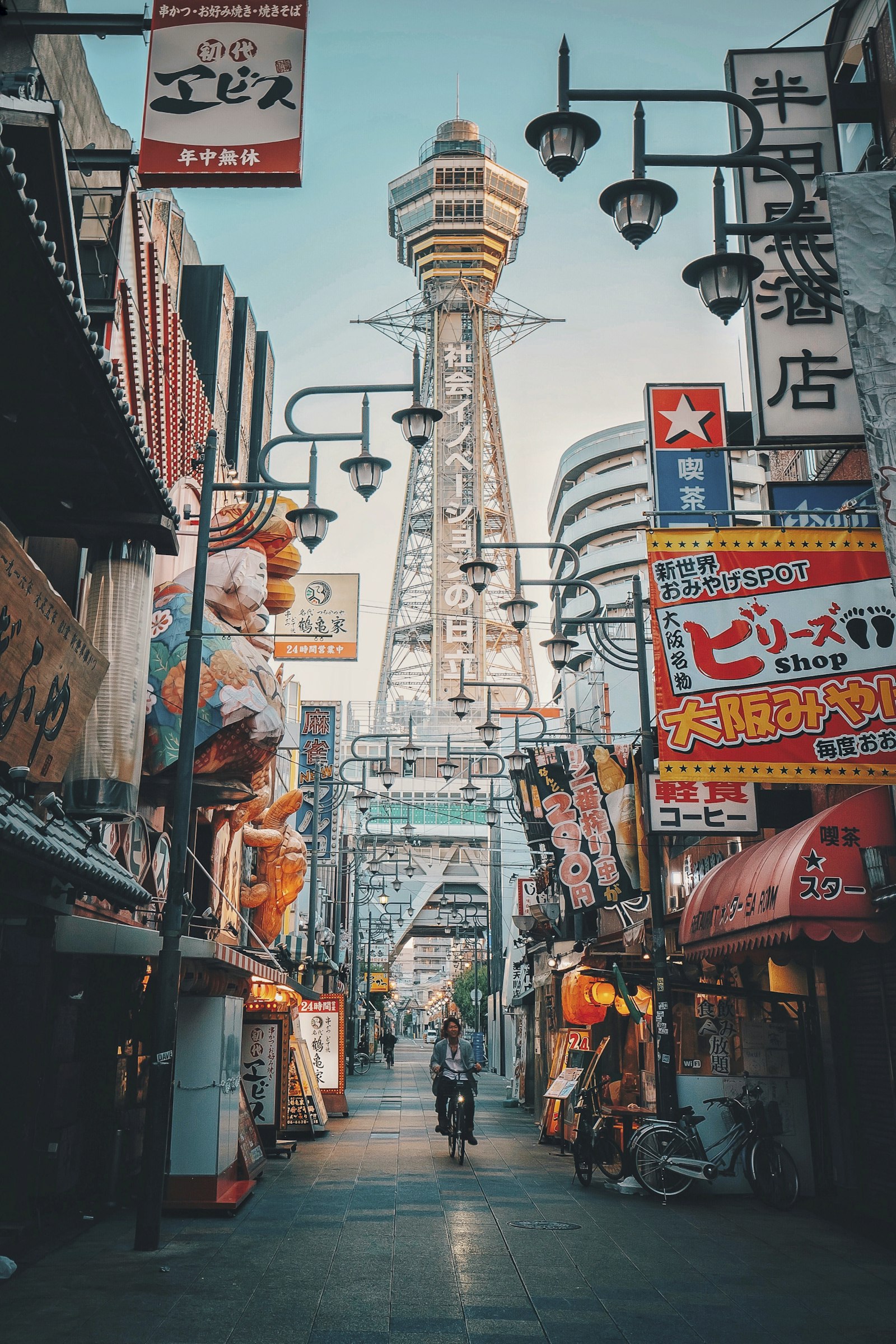
- ●10:30am: Walk south to Shinsekai — retro neon district built in 1912. Feels like stepping back in time. This is Osaka’s most characterful neighbourhood: zero tourist polish, all personality. Free to walk and photograph.
- ●11am: Tsutenkaku Tower — ¥900 ($6). Osaka’s Eiffel Tower. The neighbourhood around it is more interesting than the tower itself. Alternatively: skip the tower and explore the streets below.
- ●12pm: Kushikatsu lunch in Shinsekai — Daruma is the most famous chain, Yaekatsu is slightly upscale. ¥100–300 per skewer. Order 8–10 skewers for ¥1,500–4,000 ($10–27). Rule: no double-dipping in the communal sauce. Use cabbage to scoop sauce instead.
- ●2pm: Tennoji Park — Keitakuen Garden ¥150 ($1), a hidden gem. Then walk to Abeno Harukas — Japan’s tallest building, observation deck ¥1,500 ($10) for panoramic city views.
- ●4pm: Amerikamura (American Village) — Osaka’s youth culture hub. Vintage shops, street art, Big Step mall, Orange Street for indie boutiques. Triangle Park for people-watching. Melon pan ice cream sandwich ¥400.
- ●6pm: Ura-Namba (behind Namba Station) — the local dining district where Osakans actually eat. Izakaya hopping with ¥2,000–3,000 ($13–20) per spot. No English menus, no tourist prices. 2–3 spots is ideal.
- ●Option A — Universal Studios Japan: Full day. ¥8,600 ($57) standard ticket. Express Pass ¥7,800+ ($52+) for skipping queues. Arrive at opening 8:30am. Super Nintendo World first (Power-Up Band ¥4,200/$28 for interactive games). Harry Potter area second. Budget ¥20,000–28,000 ($133–187) total with food.
- ●Option B — Culture + Food: 9am at Sumiyoshi Taisha — Osaka’s oldest shrine (free, founded 211 AD). The iconic arched Taikobashi bridge over the sacred pond is stunning.
- ●Walk from Sumiyoshi through local neighbourhoods to Namba — 45 min walk or 15 min train. Stop at any neighbourhood shops that catch your eye.
- ●Namba food crawl: Start at Kuromon for any stalls you missed, then Dotonbori for round two of takoyaki, then finish at Shinsekai for kushikatsu. Budget ¥3,000–6,000 ($20–40) for grazing.
- ●Afternoon: Den Den Town (Osaka’s Akihabara) — retro games, anime, manga, electronics. Mandarake for vintage manga. Free to browse. 15 min walk from Shinsekai.
- ●5pm: Rikuro’s Cheesecake in Namba — ¥965 ($6). The famous jiggly soufflé cheesecake. Queue moves fast. Buy one as a farewell souvenir.
- ●Final dinner: Yakiniku (Japanese BBQ) in Tsuruhashi — Osaka’s Korean district. Budget spots from ¥2,000 ($13), premium wagyu at Yakiniku-M from ¥5,000 ($33). Worth the splurge on the last night.
Free · Personalised · 24hr Reply
Want this Osaka plan customised for your dates?
Tell us your group size, budget, and travel dates. We'll build a day-by-day plan around you — completely free.
No account · No credit card · Takes 2 minutes
🏯 Landmark Guide
The most important landmarks and cultural sites in order of priority. Entry fees are as of early 2026.
Osaka Castle (Osaka-jo)
16th-century castle originally built by Toyotomi Hideyoshi, reconstructed in 1931 with a modern museum inside covering 8 floors of Osaka’s samurai and merchant history. The surrounding park is massive and free — one of Japan’s best hanami (cherry blossom) spots in late March–April. The castle is illuminated at night and visible from across the city. Allow 2 hours.
Dotonbori Canal & Glico Sign
Osaka’s neon-lit heart. The Glico Running Man sign, giant mechanical crab, and canal reflections make this Japan’s most photographed street. Best experienced after 5pm when the neon comes alive. Walk both sides of the canal, cross the bridges for different angles. The Tombori River Cruise (¥1,000/$7, 20 min) gives you the view from the water.
Kuromon Market
Osaka’s Kitchen — a 600m covered market operating since 1902. Fresh sashimi on rice, grilled scallops, A5 wagyu skewers, uni, king crab legs, and tamagoyaki. Best 8–10am when everything is fresh. By afternoon, popular stalls sell out. Budget ¥2,000–6,000 ($13–40) for a grazing breakfast. Go hungry.
Shinsekai & Tsutenkaku Tower
Retro entertainment district built in 1912, modelled after Paris and New York. Tsutenkaku Tower is Osaka’s mini Eiffel Tower. The real draw is the neighbourhood itself: neon signs, kushikatsu restaurants, gaming arcades, and a time-warp atmosphere that Dotonbori has lost. This is where locals eat kushikatsu for ¥100–300 per skewer.
Sumiyoshi Taisha
Osaka’s oldest and most important shrine, founded in 211 AD. The iconic arched Taikobashi bridge over the sacred pond is one of the most photographed structures in Osaka. The shrine architecture predates Chinese influence on Japanese design — the straight-line style (sumiyoshi-zukuri) is unique in Japan. Quiet, serene, and uncrowded.
Universal Studios Japan
Japan’s biggest theme park. Super Nintendo World is the headline attraction — a fully immersive Mario world with interactive rides and games. The Wizarding World of Harry Potter is the other major draw. Express Pass (¥7,800+/$52+) is essential on busy days. Sells out on weekends and holidays — buy tickets online at least 1 week ahead.
Osaka \u2014 Street Food, Neon & Culture
Japan\u2019s kitchen and its most energetic city.
📸
Dotonbori Canal
Dotonbori Canal
Osaka’s neon-lit heart. The Glico Running Man sign, giant crab, and canal reflections make this Japan’s most photographed street.
💰 Budget Breakdown
Osaka is excellent value at every price level. Budget travellers can eat and explore well on $47–67/day, mid-range on $80–120/day, and luxury on $200+/day. All prices in Japanese Yen (JPY) and USD at ~¥150/$1.
| Category (3 days) | 💰 Budget | ✨ Mid-Range | 💎 Luxury |
|---|---|---|---|
| 🏨 Accommodation (3N) | ¥9,000–13,500 ($60–90) | ¥21,000–36,000 ($140–240) | ¥120,000–240,000 ($800–1,600) |
| 🍜 Food & Drinks | ¥8,000–12,000 ($53–80) | ¥18,000–28,000 ($120–187) | ¥80,000–150,000 ($533–1,000) |
| 🚉 Transport | ¥2,000–3,500 ($13–23) | ¥3,500–5,500 ($23–37) | ¥10,000–20,000 ($67–133) |
| 🎯 Activities | ¥2,000–9,000 ($13–60) | ¥5,000–15,000 ($33–100) | ¥60,000–100,000 ($400–667) |
| 🍺 Extras | ¥1,000–2,000 ($7–13) | ¥3,000–5,000 ($20–33) | ¥10,000–20,000 ($67–133) |
| Total (per person) | ¥21,000–30,000 ($140–200) | ¥36,000–54,000 ($240–360) | ¥330,000–560,000 ($2,200–3,733) |
All prices in ¥ (Japanese Yen), 2026. USD equivalent at ~¥150/$1. Excludes travel to Osaka from other cities.
💰 Budget (¥7,000–10,000/day)
Stay in hostels or capsule hotels (¥3,000–4,500/night), eat at street stalls and standing counters (¥500–1,200/meal), use the Metro day pass (¥820), and graze through Kuromon and Shinsekai. Osaka is one of the cheapest major cities in Japan for food.
✨ Mid-Range (¥12,000–18,000/day)
Business hotels in Namba (¥7,000–12,000/night), a mix of market grazing, sit-down restaurants, and izakaya evenings. Add the river cruise, observation decks, and optional Universal Studios. The sweet spot for comfort and food variety.
💎 Luxury (¥30,000+/day)
St. Regis or Conrad Osaka (¥40,000–80,000/night), Michelin dining, private food tours, cooking classes, and VIP Universal access. Osaka has more Michelin-starred restaurants than Paris at a fraction of the price.
Get the free travel guide
+ weekly destination tips
Download the Rajasthan 7-Day Guide instantly — day-by-day itinerary, real budgets, local food spots & packing list. Plus weekly guides from 2,400+ travellers' favourite destinations.
No spam, ever. Unsubscribe with one click.
🏨 Where to Stay in Osaka
The key decision is which area to base yourself. Namba for Dotonbori, food stalls, and nightlife. Shinsaibashi for shopping and central access. Umeda for business hotels and transport connections. Shinsekai for local atmosphere and kushikatsu. All areas are connected by the Metro \u2014 staying near a station is more important than the specific neighbourhood.
Cross Hotel Osaka
Boutique · Namba / Shinsaibashi
Excellent location between Namba and Shinsaibashi, 5 minutes walk to Dotonbori. Modern rooms, good breakfast, and a rooftop bath. The best mid-range option in central Osaka — close to everything without the noise of the main strips. Book direct for the best rates.
The St. Regis Osaka
Luxury · Midosuji / Shinsaibashi
Osaka’s most refined luxury hotel on Midosuji boulevard. Immaculate service, spacious rooms, butler service, and a location that puts you within walking distance of Shinsaibashi and Dotonbori. The bar on the upper floors has panoramic city views. Worth the splurge for at least one night.
The Dorm Hostel Osaka
Design Hostel · Shinsaibashi
Clean, well-designed hostel with private curtained pods, lockers, and a social common area. 5-minute walk to Shinsaibashi shopping arcade and 10 minutes to Dotonbori. The kind of hostel that makes budget travel in Japan feel stylish rather than cramped. Excellent value for solo travellers.
Umeda area business hotels
Business hotels · Umeda / Osaka Station
Umeda is Osaka’s main transport hub — JR Osaka Station, Hankyu, and Hanshin terminals all converge here. Ideal if you’re day-tripping to Kyoto, Kobe, or Himeji. Hotels like Granvia Osaka and Hotel Hankyu Respire offer reliable quality. The area is more business-oriented than Namba but well-connected to everything.
Shinsekai guesthouses
Budget · Shinsekai / Tennoji
Staying in Shinsekai puts you in Osaka’s most characterful neighbourhood — retro neon, kushikatsu on your doorstep, and a vibe that Dotonbori lost years ago. Tennoji Station is nearby for transport. Look on Booking.com for options rated 8+ — several excellent guesthouses at prices well below Namba equivalents.
🍜 Where to Eat in Osaka
Osaka\u2019s food rule: Dotonbori has the famous stalls but locals eat in Shinsekai, Tenma, Tsuruhashi, and Ura-Namba. Walk 200 metres off the tourist strip and prices drop 20\u201330% for the same (or better) food. Here are the dishes and spots worth seeking out.
Takoyaki — Wanaka, Kukuru, Aizuya
Street food · Dotonbori / Namba
Crispy octopus balls — the city’s soul food. ¥500–800 ($3–5) for 8 pieces. The best stalls always have a small queue of locals, not tourists. Wanaka (Sennichimae) and Aizuya (Shinsekai) are consistently excellent. Eat them hot — the inside is molten and the outside should be crispy.
Okonomiyaki — Mizuno, Chibo, Fukutaro
Sit-down · Dotonbori / Namba
Osaka-style savoury pancake — the original. ¥800–2,500 ($5–17) depending on toppings. Watch the chef cook it on the griddle in front of you. Osaka-style mixes everything into the batter (vs Hiroshima-style layers). Mizuno in Dotonbori is the classic; Fukutaro in Namba is where locals go.
Kushikatsu — Daruma, Yaekatsu
Sit-down · Shinsekai
Deep-fried everything on sticks — Shinsekai’s signature dish. ¥100–300 per skewer ($1–2). Order 8–10 for a full meal: pork, shrimp, lotus root, quail egg, asparagus. Daruma is the most famous, Yaekatsu is slightly upscale. No double-dipping in the communal sauce — this is a serious rule.
Kuromon Market Breakfast
Market grazing · Nipponbashi
Fresh sashimi on rice (¥1,500/$10), A5 wagyu skewers (¥2,000/$13), grilled scallops (¥500/$3), tamagoyaki (¥200/$1), and king crab legs (¥2,000/$13). The market has operated since 1902. Best 8–10am when everything is fresh. Budget ¥2,000–6,000 for a full grazing breakfast.
Kani Doraku (Dotonbori)
Crab specialist · Dotonbori
Crab specialist since 1960 — the giant mechanical crab above the entrance is a Dotonbori landmark. Set meals from ¥4,000 ($27). Lunch sets are better value than dinner. Book ahead for weekend dinner; walk-in lunch is usually fine. The crab is genuinely excellent.
Ura-Namba Izakayas
Local bars · Behind Namba Station
The streets behind Namba Station are where Osakans actually eat and drink. Tiny standing bars, 8-seat counters, no English menus. Point at what looks good and say ‘kore kudasai’ (this please). ¥2,000–3,000 ($13–20) per spot including drinks. The most authentic eating experience in Osaka.
Where to Stay in Osaka
Verified prices · Instant booking
The Dorm Hostel Osaka
Design Hostel · Shinsaibashi
Cross Hotel Osaka
Boutique · Namba
The St. Regis Osaka
Luxury · Midosuji
Affiliate links — we earn a small commission at no extra cost to you. Helps keep our guides free.
Things to Do in Osaka
Tours & experiences · Instant confirmation
Dotonbori Street Food Tour
Must doOsaka Castle Guided Tour
CulturalUniversal Studios Japan Ticket
Osaka Cooking Class (Takoyaki)
Affiliate links — we earn a small commission at no extra cost to you.
❌ Mistakes to Avoid
Under-budgeting for food
Osaka is Japan’s food capital. Budget more for food here than any other Japanese city. You’ll want to eat 4–5 times a day and you should. That’s not a mistake — under-eating in Osaka is.
Only eating in Dotonbori
Dotonbori is touristy and 20–30% more expensive. The best food is in Shinsekai (kushikatsu), Tenma (local izakayas), Tsuruhashi (Korean BBQ), and Ura-Namba (hidden restaurants behind Namba).
Skipping Kuromon Market morning
The market is best 8–10am when everything is fresh. By afternoon, popular stalls sell out. Go hungry, eat standing, graze through every aisle.
Buying Universal tickets at the gate
Universal Studios sells out on weekends and holidays. Buy tickets online at least 1 week ahead. Express Pass is essential on busy days — it halves your wait times.
Ignoring Shinsekai
Many tourists stick to Dotonbori and miss Shinsekai entirely. It’s Osaka’s most characterful neighbourhood: retro neon, ¥100 kushikatsu skewers, and zero tourist polish. Don’t skip it.
Not carrying cash
Many of Osaka’s best food stalls, market vendors, and small restaurants are cash-only. Withdraw ¥20,000–30,000 ($133–200) at a 7-Eleven ATM on arrival. IC cards (ICOCA/Suica) work on all trains.
💡 Pro Tips for Osaka
The Takoyaki Rule
Never eat takoyaki from the first stall you see. The best stalls always have a small queue of locals, not tourists. Wanaka, Kukuru, and Aizuya are consistently excellent.
Osaka Metro Day Pass
¥820 ($5) for unlimited rides on all Osaka Metro and city bus lines. Includes discount coupons for attractions. Buy at any station. Pays for itself by trip two.
Ura-Namba for Locals
The streets behind Namba Station are where Osakans actually eat and drink. No English menus, no tourist prices. Point at what looks good and say ‘kore kudasai’ (this please).
Shinsekai Kushikatsu Rules
No double-dipping in the communal sauce. Take cabbage from the shared bowl to scoop sauce instead. Breaking this rule will get you scolded by the chef.
Tax-Free Shopping
Spend over ¥5,000 ($33) at one store and get 10% tax refund. Bring your passport. Don Quijote, Bic Camera, and department stores all offer this.
Day Trip to Kobe or Himeji
Kobe: 22 min by train, famous for Kobe beef and harbour views. Himeji: 50 min, home to Japan’s most spectacular castle (¥1,000/$7). Both make excellent half-day trips.
📸 Been to Osaka?
Share your photos and get featured in this guide with full credit. Your real photos help thousands of travellers plan better trips.
❓ Frequently Asked Questions
Plan your Osaka trip
You Might Also Like


Questions & Comments
Been there? Planning a trip? Drop it below — we reply to everything.
Have you visited this destination?
Any tips you'd add to this guide?
Questions before your trip?
Want a personalised itinerary?
We'll build your day-by-day plan in 24 hours — free.