Mumbai in 3 Days: Gateway, Elephanta & the City That Never Sleeps
Gateway of India, Elephanta Caves, Dharavi, Marine Drive at sunset, local trains, vada pav, and the electric pulse of India's greatest city. The complete guide.
Delhi · Visited: Kedarnath, Gangotri, Manali, Shimla, Rishikesh & more · April 2026 · 13 min read
Mumbai at 6am is unlike any city in India — the local trains already thundering with office workers, vada pav vendors lighting their tavas on every footpath corner, fishermen returning to Sassoon Dock, and Marine Drive catching the first Arabian Sea light. Three days won't exhaust this city, but done right they'll give you the Gateway, Elephanta, Dharavi, the best street food in the country, and the electric pulse that makes Mumbai the city that never quite sleeps.
⚡ What Mumbai Actually Is
Mumbai is seven islands stitched into one peninsula by British engineers over two centuries of reclamation — Colaba, Mazagaon, Old Woman's Island, Wadala, Mahim, Parel, and Matunga. The original fishing villages of the Koli community still exist at Sassoon Dock and Versova. Today it is India's financial capital, the home of Bollywood, and a city of 21 million people that runs on an extraordinary suburban railway carrying 7.5 million commuters daily.
The architecture tells the story: Gothic-Victorian terminals at Chhatrapati Shivaji Terminus (a UNESCO World Heritage Site), Art Deco apartment blocks along Marine Drive (another UNESCO listing), the Indo-Saracenic Gateway of India, the 6th-century rock-cut Elephanta Caves on an island in the harbour, and the glass towers of Bandra-Kurla Complex rising behind it all. Mumbai is not one city — it is several, layered on top of each other.
Three days gives you the essential Mumbai: the southern heritage district (Colaba, Fort, Marine Drive), the island caves of Elephanta, the organised chaos of Dharavi, and the suburban character of Bandra and Juhu. The street food alone — vada pav, bhel puri, pav bhaji, seekh kebabs — is reason enough to come.
BOM
Airport
Nov–Feb
Best Season
₹5–15
Local Train
₹1,500/day
Budget From
🌡️ Best Time to Visit Mumbai
Nov–Feb — Winter — Best Season
Recommended
22–32°C, low humidity, virtually no rain. Every attraction open, Elephanta ferries running daily. December–January is ideal — mild temperatures, packed festival calendar with the Kala Ghoda Arts Festival, Banganga Classical Music Festival, and the Mumbai Marathon. This is peak tourist season so book hotels 2–3 weeks ahead.
Mar–May — Summer — Hot & Humid
Mornings & evenings only
30–38°C with rising humidity through May. Manageable in March, increasingly uncomfortable by May. Marine Drive evenings are still pleasant. Indoor attractions (museums, Taj lobby tour) work well. Fewer crowds and lower hotel prices than winter. Avoid the midday heat for walking tours.
Jun–Sep — Monsoon — Intense But Beautiful
For rain lovers only
2,400mm of rain over 4 months, flooding in low-lying areas like Dadar, Sion, and parts of Kurla. Elephanta ferry services may be suspended on rough-sea days. The city is genuinely beautiful in monsoon — Marine Drive in the rain is cinematic — but plan for major disruptions. Waterproof shoes are essential.
Oct — Post-Monsoon — Shoulder Season
Good value
28–34°C. The rains taper off by early October and the city is freshly washed and green. Fewer tourists than November, good hotel prices. Navratri and Diwali celebrations add colour and festivity. A genuinely underrated time to visit Mumbai.
✈️ Getting to Mumbai
Key detail: Chhatrapati Shivaji Maharaj International Airport (BOM) has two terminals — T1 (domestic) and T2 (international + some domestic IndiGo/Air India). Always check your terminal before heading to the airport. The terminals are 5km apart and not connected by foot.
Fly into BOM (recommended)
Best optionIndiGo, Air India Express, SpiceJet, and Akasa Air serve BOM from every major Indian city. Book 3–6 weeks ahead for fares under ₹3,000 from Delhi, Bangalore, Hyderabad, or Kolkata. International flights connect via T2 from Dubai, Singapore, London, and New York. From BOM to Colaba: Ola/Uber ₹350–550 (T1) or ₹550–800 (T2), 45–75 minutes depending on traffic.
Train to Mumbai CST / Mumbai Central
For domestic travelCentral Railway trains terminate at Chhatrapati Shivaji Terminus (CST) in the heart of Fort — walkable to Colaba and the Gateway of India. Western Railway trains arrive at Mumbai Central. The Rajdhani Express from Delhi (16 hrs, ₹1,800–₹4,000), Duronto from Bangalore (24 hrs), and Deccan Queen from Pune (3.5 hrs, ₹150–₹350) are all excellent options. Book on IRCTC 60–120 days in advance.
Bus from Pune / Goa / Nashik
From nearby citiesMSRTC Shivneri AC buses from Pune: 3.5–4 hrs, ₹400–₹600. Private Volvo buses from Goa: 10–12 hrs, ₹800–₹1,500 (overnight options available). From Nashik: 4 hrs, ₹300–₹500. All terminate at Mumbai Central or Dadar bus depots. Ola/Uber to Colaba from there is ₹150–₹300.
Drive from Pune / Lonavala
FlexibleMumbai–Pune Expressway: 150km, 2.5–3 hrs (toll ₹295). The highway is excellent. Lonavala is halfway and makes a good stop. Parking in South Mumbai is expensive and difficult — if driving, park at your hotel and use Ola/Uber or local trains to get around.
📅 3-Day Mumbai Itinerary
Each day card is expandable. This itinerary covers South Mumbai's heritage district, Elephanta Island, Dharavi, and the suburban highlights of Bandra and Juhu — with the best street food at every stop.
- ●7:30am — Start at Gateway of India before the tour boats arrive and the selfie crowds gather. The basalt arch frames the harbour beautifully at sunrise. Entry is free. Stand on the waterfront and watch the ferries leave for Elephanta.
- ●8:30am — Breakfast at Cafe Mondegar (Metro House, Colaba Causeway) — keema pav ₹110, masala chai ₹40. A Mumbai institution since 1932 with murals by Mario Miranda covering every wall.
- ●10:00am — Walk Colaba Causeway for books, antiques, and silver jewellery. Bargain firmly — open at 50% of the first price. The Strand Book Stall (PM Road, Fort) is nearby and sells discounted originals.
- ●12:00pm — Vada pav at Ashok Vada Pav, junction of SV Patel Road near Kirti College — ₹20 per piece, widely considered the benchmark. Two pieces and a cutting chai (₹15 at the tapri next door) is a complete Mumbai lunch.
- ●1:30pm — Walk or take a BEST bus (₹9–15) to Marine Drive. The Art Deco buildings lining the curve are a UNESCO World Heritage Site. Walk the full 3.6km promenade from Nariman Point to Chowpatty Beach.
- ●4:00pm — Bhel puri and sev puri at Chowpatty Beach from the stalls near the central section — ₹40–60 per plate. Sit facing the sea.
- ●7:00pm — Marine Drive at dusk: the Queen's Necklace city lights stretch along the arc. Best viewed from the steps between the two signal bridges. Free, and genuinely one of India's most beautiful urban views.
- ●8:30pm — Dinner at Olympia Coffee House, Colaba — mutton kheema ₹180, brain masala ₹220. Cash only. A colonial-era Irani cafe that hasn't changed its menu in 50 years.
- ●7:30am — Reach Gateway of India by 8am. Boat to Elephanta Island departs every 30 minutes from 9am (MTDC launches, ₹230 return, 1 hour journey). Buy tickets at the MTDC counter near the Gateway — no advance booking needed on weekdays but arrive early on weekends.
- ●9:00am — Elephanta Caves: ₹40 for Indians, ₹600 for foreigners. The main cave's Trimurti sculpture — Shiva as Creator, Preserver, and Destroyer — is a 6-metre masterpiece of 6th-century rock-cut artistry. Budget 2 hours for the island. The ferry ride includes a ₹200 ferry tax.
- ●11:30am — Return boat to Gateway. Grab a fresh sugarcane juice (₹30) from the vendor near Sassoon Dock road.
- ●1:00pm — Dharavi walking tour with Reality Tours & Travel (₹600–1,000 per person, book online at realitytoursandtravel.com). 2-hour walk through Asia's largest informal economy — recycling district, pottery village, leather workshops, bakeries. No photography inside the residential section — respect the rule.
- ●3:30pm — Exit Dharavi near Mahim. BEST bus or rickshaw to Bandra West (₹25–60). Carter Road waterfront and the Bandra-Worli Sea Link view from Castella de Aguada — the bridge lit at evening is exceptional.
- ●6:00pm — Street food on Hill Road, Bandra: pav bhaji at Sardar Refreshments (Tardeo) — ₹80 for a full plate with two pavs.
- ●8:00pm — Dinner at Lucky Restaurant, Bandra West (Turner Road) — nihari ₹220, phirni ₹80, roomali roti ₹25. Open until midnight.
- ●6:30am — Juhu Beach at sunrise before the crowds. Walk from the Juhu Hotel end toward JVPD. Bhel puri and corn carts set up by 7am — ₹50 per plate.
- ●8:30am — Mumbai local train experience: board at Vile Parle station (Western Line, heading south toward Churchgate). Trains every 3–5 minutes, ₹5–15 per journey. Travel in the general coach to experience the rush — or ladies' compartment for solo women. This is Mumbai's real circulatory system.
- ●9:30am — Churchgate Station to Crawford Market (Mahatma Phule Market). Fruit wholesale, pet section, spice traders. The British-era building with Lockwood Kipling friezes is worth seeing even if you don't buy anything.
- ●11:00am — Dhobi Ghat (Mahalakshmi Dhobi Ghat) — the world's largest open-air laundry. Best viewed from the bridge on Dr E Moses Road (free, no entry required). 800 dhobi families wash 900,000 garments daily here. The colour and choreography of the washing rows is remarkable at morning light.
- ●1:00pm — Lunch at Britannia & Co., Ballard Estate — berry pulao ₹320, chicken dhansak ₹280. One of the last remaining Irani Parsi restaurants in the city. Closed Sundays.
- ●3:00pm — CST (Chhatrapati Shivaji Maharaj Terminus) exterior — the Gothic-Victorian-Indian fusion UNESCO World Heritage building. Free to photograph from the street. The interior platforms are accessible with a platform ticket (₹10).
- ●5:00pm — Versova Beach via auto from Andheri (₹80–100). The fishing village end of Versova is one of Mumbai's genuinely unspoiled corners. Sit at the chai tapri at the fishing colony gate until sunset.
- ●7:30pm — Final dinner at Bademiya, Colaba back lane — seekh kebabs ₹180–220 per skewer, chicken tikka roll ₹120. Open-air seating behind the Taj. The original Mumbai late-night street food institution.
Free · Personalised · 24hr Reply
Want this Mumbai plan customised for your dates?
Tell us your group size, budget, and travel dates. We'll build a day-by-day plan around you — completely free.
No account · No credit card · Takes 2 minutes
🏛️ Landmark Guide
The most important sights in order of priority. Entry fees as of early 2026.
Gateway of India
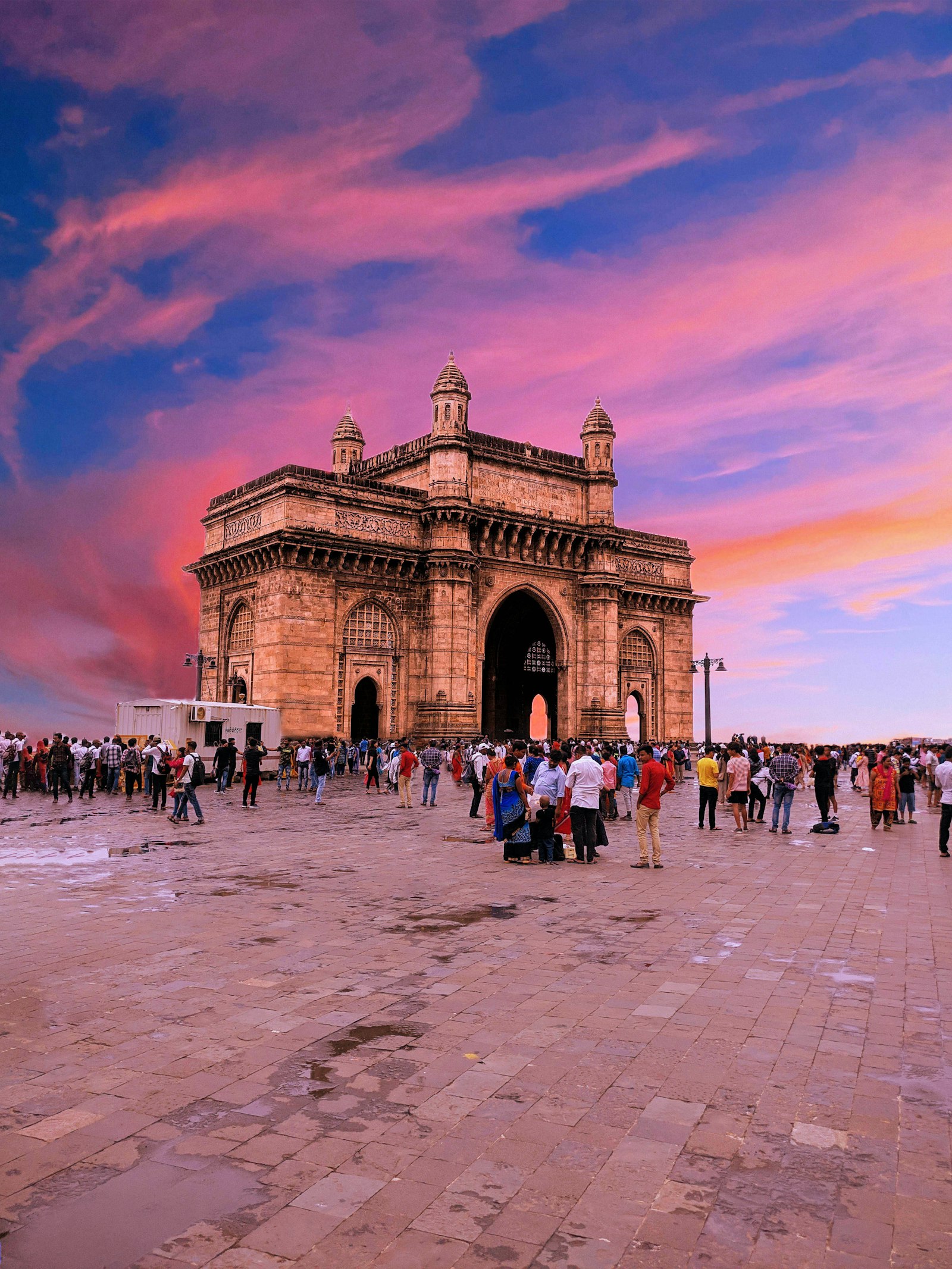
The 26-metre basalt arch built in 1924 to commemorate King George V's visit to India. It overlooks the Arabian Sea harbour and is the departure point for Elephanta Island ferries. Best at sunrise before the crowds arrive. The Taj Mahal Palace Hotel frames it from behind — one of India's most iconic urban views.
Elephanta Caves
UNESCO World Heritage Site on Elephanta Island, a 1-hour ferry ride from the Gateway. The 6th-century rock-cut caves contain the extraordinary Trimurti sculpture — a 6-metre three-headed Shiva — and some of the finest Hindu cave art in India. Budget 2–3 hours including the ferry and island walk.
Chhatrapati Shivaji Terminus (CST)
A UNESCO World Heritage Site and Mumbai's most architecturally significant building. The Gothic-Victorian structure with Indian detailing was completed in 1888 and remains a functioning railway terminus. The exterior is free to photograph; interior platforms accessible with a ₹10 platform ticket.
Marine Drive (Queen's Necklace)
A 3.6km promenade curving along the Arabian Sea from Nariman Point to Chowpatty Beach. The Art Deco buildings along the drive are a UNESCO World Heritage listing. Walk the full stretch at sunset and watch the city lights form the necklace curve. Best experienced on foot.
Dharavi
Asia's largest informal economy — 700,000+ residents, recycling industries processing 80% of Mumbai's plastic, pottery villages, leather workshops, and bakeries. Visit only with a responsible tour operator like Reality Tours & Travel. Photography restricted to industrial zones. Context-setting, not poverty tourism.
Dhobi Ghat
The world's largest open-air laundry at Mahalakshmi. 800 dhobi families wash 900,000 garments daily in concrete wash pens. Best viewed from the bridge on Dr E Moses Road. The morning light between 8–9am creates remarkable colour patterns across the washing rows.
Colaba Causeway
Mumbai's most famous shopping street — books, antiques, silver jewellery, leather goods, and street stalls. Bargain firmly. The parallel lanes hold Leopold Cafe, Cafe Mondegar, and Olympia Coffee House — three of Mumbai's most storied restaurants.
Mumbai — Gateway, Sea & Street Life
India's maximum city in five frames.
📸
Gateway of India
Gateway of India
The 26-metre basalt arch overlooking Mumbai harbour — the city's most iconic landmark and departure point for Elephanta.
💰 Budget Breakdown
Mumbai spans every price point from ₹20 vada pavs to ₹45,000/night heritage suites. The city is excellent value at the budget and mid-range levels — street food is world-class, local trains cost almost nothing, and many major sights are free.
| Category | Budget | Mid-Range | Luxury |
|---|---|---|---|
| 🏨 Accommodation | ₹600–1,200 | ₹3,500–6,500 | ₹18,000–45,000 |
| 🍽 Food | ₹300–600 | ₹800–2,000 | ₹3,000–8,000 |
| 🚉 Transport | ₹100–200 | ₹400–800 | ₹1,500–4,000 |
| 🏛️ Activities | ₹300–700 | ₹500–1,200 | ₹2,000–8,000 |
| TOTAL (per day) | ₹1,300–2,700 | ₹5,200–10,500 | ₹24,500–65,000 |
💚 Budget (₹1,500–2,500/day)
Stay in Colaba hostels (₹600–1,200/dorm or basic double), eat street food and at Irani cafes, use local trains and BEST buses. Mumbai's budget infrastructure is excellent — you eat better at ₹200 on the street than at ₹800 in a tourist restaurant.
✨ Mid-Range (₹4,000–8,000/day)
Stay in Colaba or Bandra boutique hotels (₹3,500–6,500/night). Mix street food with sit-down restaurants like Trishna and The Bombay Canteen. Use Ola/Uber for comfort. The sweet spot for experiencing Mumbai without compromise.
💎 Luxury (₹15,000+/day)
Taj Mahal Palace Heritage Wing, The Oberoi Mumbai, or Four Seasons Worli. Private transfers, fine dining at Wasabi and Aer, sunset cruises. Mumbai's luxury hospitality rivals any city in Asia.
Get the free travel guide
+ weekly destination tips
Download the Rajasthan 7-Day Guide instantly — day-by-day itinerary, real budgets, local food spots & packing list. Plus weekly guides from 2,400+ travellers' favourite destinations.
No spam, ever. Unsubscribe with one click.
🏨 Where to Stay in Mumbai
Colaba is the best base for first-time visitors — walking distance to the Gateway, Taj, Colaba Causeway, and the Fort heritage district. Bandra West is better for nightlife and restaurants. Avoid staying in Andheri East or Goregaon unless you have business near BKC.
Taj Mahal Palace
Iconic luxury · Heritage Wing · Colaba
India's most storied hotel — the Heritage Wing sea-view rooms look directly at the Gateway of India and the Arabian Sea. Survived the 26/11 attacks and still carries the most prestigious address in Indian hospitality. The lobby, Sea Lounge, and Harbour Bar are open to non-guests.
The Oberoi Mumbai
5-star luxury · Marine Drive · Nariman Point
Directly on Marine Drive with floor-to-ceiling Arabian Sea views. The rooms are newer and more modern than the Taj — some visitors prefer the Oberoi's understated elegance. Ziya restaurant and the rooftop pool are exceptional. Walking distance to Chowpatty and the Marine Drive promenade.
Abode Bombay
Boutique heritage · Colaba
A beautifully restored heritage building in the heart of Colaba with just 20 individually designed rooms. Walking distance to the Gateway, Leopold Cafe, and Colaba Causeway. The rooftop terrace has one of the best neighbourhood views in South Mumbai. Breakfast included.
Backpacker Panda Hostel
Budget hostel · Colaba
Clean, well-managed hostel in the heart of Colaba. Mixed and female-only dorms with lockers, common area, and helpful staff. Walking distance to all South Mumbai landmarks. The best budget option in the tourist district.
🍽️ Where to Eat in Mumbai
Mumbai has the best street food in India — this is not a matter of opinion, it's a census. The Irani cafes, Parsi restaurants, seafood joints, and kebab stalls of Colaba, Fort, and Bandra are collectively unmatched anywhere in the country.
Leopold Cafe
Iconic landmark · Colaba Causeway
A Mumbai institution since 1871 — the bullet holes from the 26/11 attacks are preserved in the walls. Chicken stroganoff ₹380, cold coffee ₹150, beer from ₹250. The atmosphere and history are the draw. Gets loud and packed by 8pm — arrive early for a quieter meal.
Britannia & Co.
Irani Parsi · Ballard Estate, Fort
The last remaining Irani Parsi restaurant in the city. Berry pulao ₹320 — Parsi rice with dried barberries and saffron, served with a fiercely spiced dhansak or salli boti. Chicken dhansak ₹280. Run by the legendary Boman Kohinoor. Closed Sundays. Cash and UPI only.
Bademiya
Late-night kebabs · Colaba back lane
The original Mumbai late-night street food institution — seekh kebabs ₹180–220 per skewer, chicken tikka roll ₹120, baida roti ₹100. Open-air seating on fold-out tables behind the Taj Mahal Palace. Opens at 7pm, best after 10pm. Cash only.
Olympia Coffee House
Irani cafe · Colaba
A colonial-era Irani cafe that hasn't changed its menu or decor in 50 years. Mutton kheema ₹180, brain masala ₹220, bun maska ₹30 with Irani chai ₹25. Cash only. The marble tables and ceiling fans are a time capsule. Breakfast here is essential Mumbai.
Ashok Vada Pav
Street food · Kirti College, Dadar
Widely considered Mumbai's benchmark vada pav — ₹20 per piece. Spiced potato dumpling in gram flour batter, stuffed into a soft pav with dry garlic chutney and fried chilli. Two vada pavs and a cutting chai from the tapri next door is the complete Mumbai street lunch. Don't pay more than ₹30 for a street vada pav anywhere.
Where to Stay in Mumbai Maharashtra
Verified prices · Instant booking
Taj Mahal Palace
Iconic heritage luxury · Colaba waterfront
The Oberoi Mumbai
5-star luxury · Marine Drive
Abode Bombay
Boutique heritage · Colaba
Treebo Trend Amber
Budget hotel · Colaba area
Affiliate links — we earn a small commission at no extra cost to you. Helps keep our guides free.
Things to Do in Mumbai Maharashtra
Tours & experiences · Instant confirmation
Elephanta Caves Guided Tour
Must doDharavi Walking Tour
Eye-openingMumbai Street Food Tour
Mumbai Heritage Walking Tour
Affiliate links — we earn a small commission at no extra cost to you.
💡 Pro Tips for Mumbai
Get a Mumbai Local Train Tourist Pass
A 1-day unlimited local train pass costs ₹85 (AC) or ₹35 (non-AC) and covers the entire Central, Western, and Harbour rail network. Mumbai's suburban rail carries 7.5 million passengers daily — it's the fastest way between Churchgate, Dadar, Bandra, Andheri, and CST. Buy at any major suburban station booking window.
Best Street Food Zones By Neighbourhood
Chowpatty Beach for bhel puri and kulfi. Colaba back lanes for kebabs after 8pm. Juhu Beach for sev puri and dahi puri. Mohammed Ali Road during Ramzan for nihari and sheer khurma. Dadar's Hindu Colony for sabudana khichdi and misal pav. Tardeo's Sardar Refreshments for the pav bhaji Mumbai invented.
Use Ola/Uber Over Autos at Night
After 11pm, finding autos willing to use the meter is nearly impossible — especially in South Mumbai and Andheri. Ola and Uber are consistently available at fixed prices and drivers are GPS-tracked. The Mumbai Metro (Lines 1, 2A, 7) connects Versova–Andheri–Dahisar for ₹10–50 per journey — excellent for the western suburbs.
Beat the Monsoon and Peak Season with Timing
November to February is peak season — 22–30°C, no rain, every attraction open. The best window is December–January when the Kala Ghoda Arts Festival and Banganga Festival run. Avoid May–June (extreme humidity, 35–39°C). March and October are good shoulder months with fewer crowds and lower prices.
Don't Skip Elephanta for the Queue
The Gateway of India ferry queue looks daunting on weekends, but moves fast — rarely more than 20 minutes. Elephanta Caves are a UNESCO World Heritage Site with carvings that took hundreds of artisans decades to complete. Go on a Tuesday or Wednesday morning to avoid the crowd entirely.
Avoid Restaurants Near Tourist Landmarks
The restaurants immediately around the Gateway of India serve overpriced, mediocre food aimed at tourists. Walk two minutes to Colaba Causeway (Leopold Cafe, Olympia Coffee House, Bademiya) or five minutes to the Irani cafes in Fort. The price difference is 60–70% and the quality gap is just as dramatic.
📸 Been to Mumbai?
Share your photos and get featured in this guide with full credit. Your real photos help thousands of travellers plan better trips.
❓ Frequently Asked Questions
Plan your Mumbai trip
Nearby & Related


Questions & Comments
Been there? Planning a trip? Drop it below — we reply to everything.
Have you visited this destination?
Any tips you'd add to this guide?
Questions before your trip?
Want a personalised itinerary?
We'll build your day-by-day plan in 24 hours — free.