Delhi in 3 Days: Mughals, Markets & the Capital's Two Souls
Red Fort, Chandni Chowk, Karim's, India Gate, Qutub Minar, Humayun's Tomb — three days that feel like three weeks anywhere else. The complete guide.
Delhi · Visited: Kedarnath, Gangotri, Manali, Shimla, Rishikesh & more · April 2026 · 14 min read
Delhi is two cities occupying one — and that collision is exactly what makes three days here feel like three weeks anywhere else. Old Delhi's lanes still smell of cardamom and frying jalebi, the same lanes where Mughal emperors once paraded on elephants. New Delhi's broad Lutyens avenues lead to monuments so large they challenge comprehension.
⚡ What Delhi Actually Is
Delhi has been continuously inhabited for over 3,000 years and has served as the capital of multiple empires — the Tomars, the Slave Dynasty, the Khiljis, the Tughlaqs, the Mughals, and the British. Each wave of rulers built their city on top of or beside the last, which is why Delhi is not one city but eight, and why you can spend a week here and feel like you've barely started.
Old Delhi (Shahjahanabad, built by Shah Jahan in 1638) is the Mughal city — the Red Fort, Jama Masjid, and the dense commercial lanes of Chandni Chowk. New Delhi was built by the British between 1911 and 1931, designed by Edwin Lutyens and Herbert Baker: ceremonial boulevards, colonial bungalows, and India Gate. South Delhi has the oldest monuments — the Qutub Minar (1193 CE), Humayun's Tomb (1570 CE), and the medieval tombs scattered through the Lodhi Garden.
Day one belongs to the Mughals. Day two to Lutyens' New Delhi and the medieval south. Day three to wherever the city takes you — Dilli Haat with its craft villages, Akshardham Temple, or the Agra Gatimaan Express for one pre-dawn Taj Mahal moment. Delhi rewards curiosity and punishes rushing.
DEL T3
Airport
Oct–Feb
Best Season
3 in city
UNESCO Sites
₹1,200/day (~$14)
Budget From
🌡️ Best Time to Visit Delhi
Oct–Feb — Winter — Ideal Season
Recommended
18–28°C daytime, 3–15°C nights in December–January. The best sightseeing weather — clear days, manageable heat, Mughal gardens in their best condition. October–November is ideal (post-monsoon freshness) but air quality deteriorates in November from Diwali stubble burning. December–February is peak season: bright days, cold mornings, pack layers.
Feb–Mar — Spring — Best Compromise
Excellent
18–28°C, low smog, spring colour in Mughal gardens. February and March are arguably the most photogenic months in Delhi — the Amrit Udyan at Rashtrapati Bhavan opens to the public, bougainvillea blazes across the city, and sightseeing is comfortable all day. Slightly less crowded than December peak.
Apr–Jun — Summer — Brutal Heat
Not recommended
38–46°C. Delhi summer is genuinely punishing — the Red Fort's red sandstone radiates heat, the wide Lutyens avenues offer no shade, and outdoor sightseeing after 10am is exhausting. If you must travel in summer, start everything before 8:30am, retreat indoors by noon, and resume after 5pm. Air-conditioned Metro is your best friend.
Jul–Sep — Monsoon — Uncrowded but Humid
For rain lovers
35–38°C with high humidity, frequent heavy rain. Monuments are dramatically less crowded — the Red Fort and Qutub Minar in rain-washed air have a quality all their own. But rain delays, flooded lanes in Old Delhi, and the relentless humidity make for exhausting sightseeing. Malaria and dengue precautions are important in July–August.
✈️ Getting to Delhi
Air quality note: Delhi regularly records hazardous AQI levels in November–January (stubble-burning season). If you are sensitive to air pollution, check the AQI at aqicn.org before travelling. An N95 mask (₹50–₹120) is worth carrying October–February.
Indira Gandhi International Airport — Terminal 3
Main entryDEL T3 is one of Asia's busiest terminals. The Delhi Metro Airport Express Line connects T3 directly to New Delhi station in 22 minutes (₹60 / ~$0.72). Trains run every 10–15 minutes from 4:45am–11:30pm. Pre-paid taxi counters in T3 arrivals charge ₹350–600 (~$4–7) to central Delhi. Airtel and Jio SIM counters are in the arrivals hall past customs.
Delhi Metro Airport Express
Best optionThe Airport Express Line (Orange Line) is the fastest, cheapest, and most reliable way between DEL T3 and central Delhi. 22 minutes to New Delhi station (₹60), with luggage racks at every door. The Metro system covers virtually every major Delhi sight — Red Fort (Chandni Chowk station, Yellow Line), Qutub Minar (Yellow Line terminus), Humayun's Tomb (Violet Line), Akshardham (Blue Line). Buy a 3-day Tourist Card (₹500 / ~$6) at any major station.
Train to New Delhi Station
Good optionNew Delhi (NDLS) is the most central railway station. Hazrat Nizamuddin (NZM) is better for South Delhi and Agra-bound trains (including the Gatimaan Express to Agra). Old Delhi station (DLI) is closest to Chandni Chowk. Book on IRCTC (irctc.co.in) 60 days ahead — trains from Mumbai, Jaipur, Agra, and Amritsar fill early.
Bus — ISBT Kashmere Gate
Budget optionDelhi's main interstate bus terminal. Volvo AC buses from Jaipur (5 hrs, ₹500–₹800 / ~$6–10), Agra (3.5 hrs, ₹350–₹500), Chandigarh (5 hrs, ₹400–₹600), and Amritsar (8 hrs, ₹700–₹1,000). Kashmere Gate Metro station connects to the Yellow and Violet lines. Book Volvo buses on redbus.in or abhibus.com.
📅 3-Day Delhi Itinerary
Each day card is expandable. All costs listed in both INR and approximate USD ($1 ≈ ₹84). The itinerary is designed around the Metro — you won't need a taxi or auto for most of it.
- ●7:00am — Red Fort (Lal Qila) opens at sunrise. Entry ₹35 for Indians (~$0.42), ₹550 for foreigners. Arrive at opening to beat the crowds — the Diwan-i-Aam (Hall of Public Audience), Diwan-i-Khas, and the Pearl Mosque are best before the 10am rush. Pre-book tickets on asi.payumoney.com to skip the cash queue (especially critical on weekends). The fort was Shah Jahan's palace-city, built in 1638, and served as the seat of the Mughal Empire until 1857.
- ●9:00am — Walk to Chandni Chowk via the Chatta Chowk bazaar exit. The main road is pedestrianised from the Red Fort to the Town Hall — no vehicles. This is India's oldest planned market street, and despite 380 years of continuous commerce it is still one of the most visually extraordinary streets in the country. The 17th-century Hira Mahal Vav stepwell is 200 metres down Dariba Kalan lane.
- ●9:30am — Breakfast at Paranthe Wali Gali, Chandni Chowk — the narrow lane off the main chowk with 5–6 paratha stalls. Stuffed paratha with aloo, mooli, or paneer: ₹40–60 (~$0.50–0.72) per piece, served with dahi and achar. The best is Kanhaiya Lal Durga Prasad Dixit at the lane entrance. Possibly the best ₹120 breakfast in India.
- ●11:00am — Jama Masjid — India's largest mosque, built by Shah Jahan in 1656. Entry free (₹300 to bring a camera inside; mobile photography free). Climb the south minaret for a panoramic view over Old Delhi's rooftops and the Red Fort: ₹100 (~$1.20). The mosque accommodates 25,000 worshippers and its scale, even by world standards, is astonishing.
- ●1:00pm — Lunch at Karim's, Gali Kababiyan (30 seconds from Jama Masjid south gate) — mutton seekh kebab ₹180 (~$2.15), mutton korma ₹220 (~$2.60), roomali roti ₹25. India's most famous Mughal restaurant, founded in 1913 by Haji Karimuddin, direct descendant of the royal Mughal kitchen. Arrive before 1:30pm or expect a 30-minute queue.
- ●3:00pm — Khari Baoli Spice Market — Asia's largest wholesale spice market, two lanes off Chandni Chowk near Fatehpuri Mosque. The colours, aromas, and 100-kg sacks of red chilli, cumin, and cardamom are extraordinary. No purchase necessary — this is one of Delhi's great sensory experiences and it's completely free.
- ●5:30pm — Metro (Chandni Chowk station, Yellow Line) to Connaught Place for evening chai at United Coffee House, Inner Circle — chai ₹60 (~$0.72). The last surviving art deco café in CP.
- ●7:30pm — Dinner at Bengali Market, Minto Road — Nathu's Sweets for dahi bhalla and chaat (₹80–₹120 per plate), then the neighbouring dhabas for dal makhani and tandoori roti (₹180–₹250 / ~$2–3 for a full meal). One of Delhi's most reliable evening food streets.
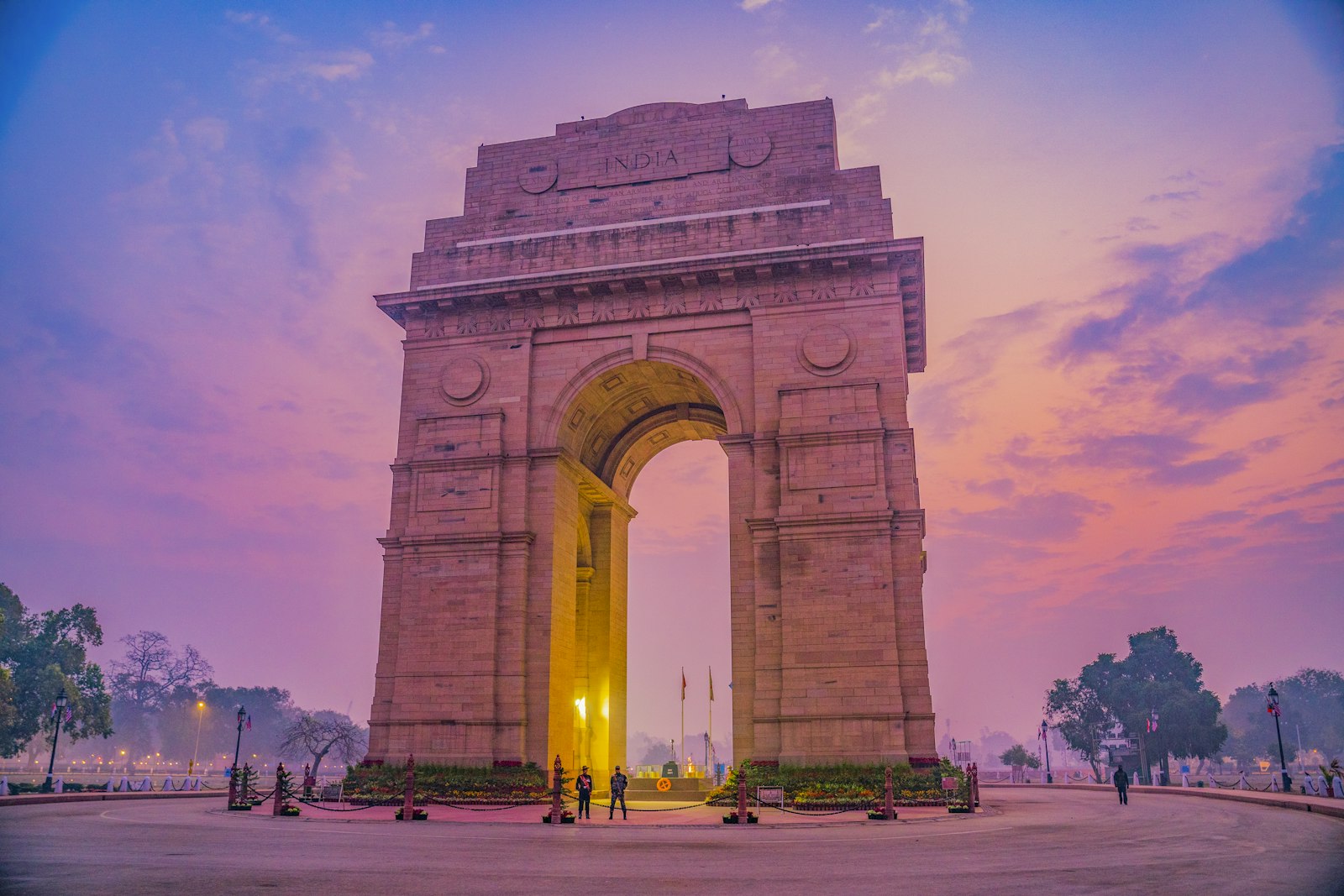
- ●7:30am — India Gate at sunrise. The 42-metre war memorial on Kartavya Path (formerly Rajpath) is most photogenic in the early morning light before the tour coaches arrive. Entry is free and the gate is always accessible. The Amar Jawan Jyoti eternal flame was merged with the National War Memorial in 2022. The 3km ceremonial axis from Rashtrapati Bhavan to India Gate is one of the world's great planned public spaces.
- ●9:00am — Metro (Central Secretariat station, Violet/Yellow Line) to Qutub Minar — transfer to Yellow Line south toward Huda City Centre, alight at Qutub Minar station, 10-minute walk. Total Metro fare: ₹40 (~$0.48).
- ●9:30am — Qutub Minar complex (₹35 / ~$0.42 for Indians, ₹550 for foreigners) — the 73-metre 12th-century minaret, the Iron Pillar (resisted rust for 1,600 years without corrosion), the Quwwat-ul-Islam mosque (India's first mosque, built 1193 CE), and the Alai Darwaza. Budget 1.5 hours. Best visited before 11am in summer.
- ●11:30am — Auto to Humayun's Tomb (₹80–₹100 / ~$1–1.20, or Metro to JLN Stadium + 15-minute walk). Entry ₹35 (Indians) / ₹550 (foreigners). The 1570 CE Mughal garden tomb that directly inspired the Taj Mahal — its proportions, red sandstone and white marble inlay, and the charbagh garden are magnificent. Allow 1 hour minimum.
- ●1:00pm — Lunch at Sunder Nagar Market, 10 minutes from Humayun's Tomb — Triveni Terrace Café (₹120–₹200 for lunch thali) or the Potbelly Rooftop Café in Shahpur Jat (₹180–₹280 mains, 15-minute auto ride).
- ●3:00pm — Lodhi Garden (free, open 5am–8pm) — a 90-acre park with the 15th-century Lodi Dynasty tombs dispersed across manicured lawns. The Muhammad Shah tomb and Bada Gumbad are the finest. The garden at 3–4pm, with families picnicking and joggers weaving between Mughal ruins, is one of Delhi's best free experiences.
- ●5:30pm — Hauz Khas Village — the medieval reservoir, 13th-century madrasa and mosque ruins on the hillock above the lake are free to explore. The surrounding lanes have Delhi's best independent cafés, vintage boutiques, and streetwear stores. The ruins at dusk, with the water below and the city visible beyond, are one of Delhi's quieter surprises.
- ●8:00pm — Dinner at Saravana Bhavan, Connaught Place (Inner Circle, P Block) — South Indian, masala dosa ₹120 (~$1.43), filter coffee ₹60 (~$0.72). Or Wengers Deli, A Block CP for club sandwiches and cold coffee (₹150–₹250 / ~$1.80–3).
- ●8:30am — Akshardham Temple (Metro to Akshardham station, Blue Line). Entry to the main monument is free. No photography of the main temple complex permitted; leave phone and camera in the cloakroom (₹25 / ~$0.30). The 234-foot pink sandstone and marble complex is among the most technically elaborate Hindu temples built in the modern era — over 20,000 carved figures, 234 intricately carved pillars, and a 141-foot-tall central shikhara. Budget 2.5 hours.
- ●11:30am — Return Metro to INA station (Yellow Line). Dilli Haat INA (entry ₹100 / ~$1.20) — a permanent craft bazaar with rotating stalls from every Indian state. Pashmina shawls from Srinagar, Channapatna wooden toys, Madhubani paintings, Kutch embroidery. Real artisans, fair prices. The best single place in Delhi for quality Indian crafts and gifts.
- ●1:30pm — Lunch inside Dilli Haat — each state's stall serves regional food. Rajasthani dal baati churma (₹120 / ~$1.43), Kashmiri rogan josh (₹180 / ~$2.15), Odisha pithas (₹60 / ~$0.72). The variety in one spot is India's best culinary sampler.
- ●3:30pm — Safdarjung's Tomb (₹35 / ~$0.42 for Indians, 10-minute Metro from INA to Jor Bagh or short auto) — the last great Mughal garden tomb in Delhi, built in 1754. Almost always quiet and unhurried, it is a calm alternative to the more famous Humayun's Tomb and an excellent place to understand the Mughal garden tomb tradition without the crowds.
- ●5:30pm — Return to Old Delhi for the evening. Dariba Kalan lane for silver jewellery and traditional bangles. Kinari Bazaar (the adjacent lane) for wedding accessories and zari work. Chandni Chowk at dusk, with the shopkeepers lighting their stalls and the street food vendors setting up, is the most atmospheric version of this ancient market.
- ●7:30pm — Dinner at Al Jawahar, Matia Mahal Chowk (opposite Jama Masjid) — mutton nihari ₹220 (~$2.60), baida roti ₹80, kheer ₹60. Founded in 1947 and essentially unchanged since. A better Mughal dining experience than most hotel restaurants charging 10x the price.
- ●9:00pm — Walk to the Jama Masjid steps at night — the mosque lit from outside, the Red Fort floodlit to the east, and the narrow lanes of Old Delhi humming with late-night street food and chai stalls. This is the city at its most alive.
Free · Personalised · 24hr Reply
Want this Delhi plan customised for your dates?
Tell us your group size, budget, and travel dates. We'll build a day-by-day plan around you — completely free.
No account · No credit card · Takes 2 minutes
🏛️ Delhi Landmark Guide
Entry fees as of early 2026. ASI-managed monuments use the same pricing structure — Indian nationals ₹35 at most sites. Foreigners pay ₹550 for major ASI monuments. Book online at asi.payumoney.com to avoid queues.
Red Fort (Lal Qila)
Shah Jahan's 1638 palace-city and UNESCO World Heritage Site. The Diwan-i-Aam, Diwan-i-Khas, Pearl Mosque, and Rang Mahal are the highlights. The sound and light show (evenings, ₹80 / ~$0.96) is worth attending separately. Pre-book tickets online to skip the queue — the cash line on weekends is 45–90 minutes.
Qutub Minar
India's tallest minaret (73 metres) and a UNESCO World Heritage Site, begun in 1193 CE. The Iron Pillar (1,600 years old, no rust), the Quwwat-ul-Islam mosque (first mosque built in India), and the Alai Darwaza are in the same complex. Best before 11am to avoid heat and crowds.
Humayun's Tomb
The 1570 CE Mughal garden tomb that served as the prototype for the Taj Mahal. Red sandstone and white marble inlay, a perfect charbagh garden, and a quiet atmosphere that the Taj rarely has. The adjacent Sunder Nursery (free, open to public) is a 90-acre heritage garden with Mughal water channels — combine both.
Jama Masjid
India's largest mosque, built by Shah Jahan between 1650–1656. The main courtyard accommodates 25,000 worshippers. Climb the south minaret for the best panoramic view over Old Delhi's rooftops: ₹100 (~$1.20). Dress modestly — cover shoulders and knees. Sarongs available to borrow at the gate.
India Gate
The 42-metre war memorial on Kartavya Path, built to honour the 90,000 Indian soldiers who died in World War I. Most photogenic at sunrise and after dark when it is lit. The 3km ceremonial boulevard from Rashtrapati Bhavan to India Gate is Delhi's grandest public space. Free at all hours.
Lodhi Garden
A 90-acre park with Lodi Dynasty tombs (15th century) dispersed among manicured gardens. The Muhammad Shah Sayyid tomb, Bada Gumbad, and Shish Gumbad are the finest. One of Delhi's best free experiences — the atmosphere of medieval ruins in a working public park is genuinely unusual.
Hauz Khas Village
A 13th-century reservoir, madrasa, and mosque ruins on a hillock above a lake in South Delhi, surrounded by independent cafés and boutiques. The ruins themselves are free and often overlooked by tourists who only come for the restaurants. Best at dusk when the water and city lights are both visible.
Dilli Haat (INA)
A permanent craft market with stalls from every Indian state, operated by Delhi Tourism. Rotating artisans mean the stock changes regularly. Better value than tourist shops (prices are fixed and reasonable), with on-site regional food stalls from all over India. Open 10:30am–10pm daily.
Delhi — Monuments, Markets & Old City
The Red Fort, Chandni Chowk, Qutub Minar, and Old Delhi's extraordinary street life.
📸
Red Fort at Sunset
Red Fort at Sunset
Shah Jahan's 1638 palace-city — the Red Fort glowing at dusk, its ochre sandstone walls reflected in the light of the setting sun.
💰 Budget Breakdown
Delhi is very affordable by world capital standards. Monument entry fees are the main cost for Indian nationals (₹35 per ASI site). The Delhi Metro makes transport remarkably cheap. All INR figures include USD equivalents at ₹84 = $1.
| Category | Budget (INR / USD) | Mid-Range (INR / USD) | Luxury (INR / USD) |
|---|---|---|---|
| 🏨 Accommodation | ₹400–1,000 / $5–12 | ₹4,000–8,000 / $48–95 | ₹15,000–35,000 / $179–417 |
| 🍽️ Food | ₹250–500 / $3–6 | ₹800–2,500 / $10–30 | ₹3,000–8,000 / $36–95 |
| 🚇 Transport | ₹100–200 / $1–2 | ₹300–600 / $4–7 | ₹2,000–5,000 / $24–60 |
| 🏛️ Activities | ₹200–500 / $2–6 | ₹500–2,000 / $6–24 | ₹2,000–8,000 / $24–95 |
| TOTAL per day | ₹950–2,200 / $11–26 | ₹5,600–13,100 / $67–156 | ₹22,000–56,000 / $262–667 |
💚 Budget (₹1,200–₹2,200/day / ~$14–26)
Paharganj or Karol Bagh guesthouse (₹400–₹800/night), eat at dhabas and Chandni Chowk street food, use the Metro for all transport. Delhi's budget infrastructure is excellent — you can eat extraordinarily well for ₹300/day if you know where to go.
🌟 Mid-Range (₹5,600–₹13,100/day / ~$67–156)
Hotel in Connaught Place or Karol Bagh (₹4,000–₹8,000/night), mix of restaurant meals and street food, a guided tour of Red Fort or Chandni Chowk food walk (₹1,500–₹1,800). The sweet spot for comfort without losing the authentic Delhi experience.
Get the free travel guide
+ weekly destination tips
Download the Rajasthan 7-Day Guide instantly — day-by-day itinerary, real budgets, local food spots & packing list. Plus weekly guides from 2,400+ travellers' favourite destinations.
No spam, ever. Unsubscribe with one click.
🏨 Where to Stay in Delhi
Delhi's best-value location is anywhere along the Yellow Metro Line — it connects Old Delhi, Connaught Place, and South Delhi. Avoid booking accommodation accessible only by road in Old Delhi; traffic can make a 2km journey take 45 minutes.
Paharganj (Backpacker Strip)
Budget · Central Delhi, near New Delhi Station
Guesthouses and hostels within walking distance of New Delhi station. Functional, noisy, and very tourist-focused. Good Metro access to the entire city. Clean options include Hotel Shelton and Hotel Vivek. Not recommended if you prioritise quiet or cleanliness above cost.
Karol Bagh
Budget-mid · West Delhi, Metro accessible
The most practical mid-range neighbourhood in Delhi — quieter than Paharganj, strong Metro connections (Blue Line), and a range of good hotels. The Karol Bagh market is one of Delhi's best for clothing and electronics. Hotel Ajanta and Hotel Godwin are reliable mid-range options.
Connaught Place
Mid-range to luxury · Central New Delhi
The geographic and commercial centre of New Delhi, with Metro connections on both Yellow and Blue lines. Within walking distance of India Gate, Parliament House, and multiple museums. The Park Hotel and Le Méridien are the standout mid-luxury options at CP. Premium pricing but unbeatable centrality.
South Delhi (Hauz Khas / Greater Kailash)
Mid-range to boutique · South Delhi
Delhi's most liveable residential neighbourhoods — safer, greener, and far less hectic than Central Delhi. Close to Qutub Minar, Lodhi Garden, and Hauz Khas Village. Slightly farther from Old Delhi (30–40 minutes Metro). Several excellent boutique guesthouses and serviced apartments. The Devna and Khasmahal Heritage Home are excellent options.
🍽️ Where to Eat in Delhi
Delhi has one of the world's great street food cultures and some of India's finest restaurants. The best food is almost never in tourist zones — it's in the specific institutions listed here.
Old Famous Jalebi Wala + Paranthe Wali Gali
Street food · Chandni Chowk, Old Delhi
The definitive Old Delhi morning food circuit. Old Famous Jalebi Wala (since 1884) fries fresh jalebi in a cast-iron kadhai — jalebi with rabri ₹80 (~$0.96) per 100g, eat it standing at the fryer at 8am. Then Paranthe Wali Gali for stuffed parathas (₹40–₹60 / ~$0.50–0.72), served at the same family stalls that have been there since the 1870s.
Sita Ram Diwan Chand — Chole Bhature
Old Delhi institution · Paharganj area
Widely considered the best chole bhature in Delhi — possibly in India. The recipe has been unchanged since 1950. The fried bread (bhatura) is served with a deeply spiced chickpea curry (chole) topped with raw onion and green chilli. ₹120 (~$1.43) per plate. Open 8am–5pm only. Closes when the chole runs out.
Karim's, Jama Masjid
Mughal restaurant · Old Delhi, since 1913
The most famous restaurant in Delhi. Mutton seekh kebab ₹180 (~$2.15), mutton korma ₹220 (~$2.60), roomali roti ₹25. Founded by Haji Karimuddin, a descendant of the royal Mughal kitchen. The quality has remained consistent for over a century. Arrive before 1:30pm for lunch — the queue after that is 30+ minutes. No alcohol.
ITC Bukhara (Splurge)
Fine dining · ITC Maurya, Sardar Patel Marg
India's most legendary restaurant, operating since 1977 with the same menu. Dal bukhara (slow-cooked for 18 hours) ₹950 (~$11.30), sikandari raan (24-hour marinated leg of lamb) ₹3,800 (~$45). Bill Clinton, Vladimir Putin, and practically every Indian PM have eaten here. Reservations required at least one week ahead. Smart casual dress code.
Nathu's Sweets — Bengali Market
Chaat · Minto Road, near Connaught Place
The benchmark for Delhi chaat. Dahi bhalla (₹80 / ~$0.96), golgappa (₹60 / ~$0.72), and aloo tikki (₹60) — all made fresh, with chutneys balanced to the specific Bengali Market standard. The chaat here is more refined than the Old Delhi versions — cleaner flavours, lighter hand on the oil. Open all day.
Gulati Restaurant — Pandara Road
North Indian · Pandara Road Market, behind Khan Market
Delhi's most reliable neighbourhood for classic Punjabi restaurant cooking. Butter chicken ₹450 (~$5.35), dal makhani ₹320 (~$3.81), naan ₹45. Open past 11pm. Pandara Road has been Delhi's late-night restaurant row since the 1960s and has outlasted every food trend. Khan Market is a 10-minute walk for books and coffee after dinner.
Where to Stay in Delhi
Verified prices · Instant booking
The Imperial, Janpath
Luxury colonial · Central New Delhi
ITC Maurya
Luxury · Sardar Patel Marg (Bukhara restaurant)
The Lodhi Hotel
Luxury boutique · Lodhi Road, South Delhi
Hotel Ajanta, Karol Bagh
Mid-range · Karol Bagh, West Delhi
Affiliate links — we earn a small commission at no extra cost to you. Helps keep our guides free.
Things to Do in Delhi
Tours & experiences · Instant confirmation
Delhi Old City Food Walk
Must doRed Fort Guided Tour
Top ratedDelhi Monuments Full Day Tour
Best overviewAgra Taj Mahal Day Trip from Delhi
Affiliate links — we earn a small commission at no extra cost to you.
❌ Mistakes to Avoid in Delhi
Ignoring Air Pollution in Winter
Delhi's AQI in November–January frequently enters the hazardous range (above 300). The Red Fort sandstone, the Chandni Chowk lanes, and the open Lutyens avenues offer no protection from particulate matter. An N95 mask (not a surgical mask — N95 specifically) filters PM2.5 particles. They cost ₹50–₹120 at any pharmacy. If you are asthmatic or have any respiratory condition, check aqicn.org before planning outdoor sightseeing days.
Taking Autos Without the Meter (or Ola)
Delhi autos are legally required to run the meter (₹25 base + ₹9.5/km). Most drivers near tourist spots refuse the meter and quote fixed rates 3–4x higher. The solution: open Ola or Uber on your phone and show the estimated fare — most drivers will agree to a similar figure on the meter. Or book Ola Auto directly for a guaranteed upfront price. Never agree to a fixed rate before checking Ola first. The auto fare from Red Fort to Connaught Place should be ₹80–₹120 on meter; touts quote ₹300–₹400.
Visiting Red Fort Without Pre-Booking
The Red Fort cash ticket queue on weekends and public holidays is 45–90 minutes. The ASI online portal (asi.payumoney.com) allows timed entry bookings up to 48 hours ahead for ₹35 (Indians) — no queue at the booked-entry gate. The evening sound-and-light show (₹80, evenings only) also needs advance booking and sells out on weekends. Plan both at the same time.
Eating Near India Gate or Major Tourist Sites
The food kiosks on Kartavya Path and in the India Gate garden area are overpriced and mediocre. The Bengali Market (1.5km north), Pandara Road Market (1km south-east), Connaught Place inner circle restaurants, and Old Delhi chaat streets are vastly better for the same or lower prices. India Gate is a monument and a park — not a food destination.
Underestimating Delhi's Scale
Delhi is massive — 1,484 km² with metro-area population exceeding 32 million. Old Delhi and Qutub Minar are 18km apart. The Chandni Chowk food circuit and Hauz Khas Village are not "nearby" to each other. Plan each day around a geographic cluster, not a list of sites. The Metro covers nearly everything — but check transfer times on Google Maps before committing to a day plan. A badly planned day in Delhi means 3 hours stuck in traffic.
💡 Pro Tips for Delhi
Buy the 3-Day Delhi Metro Tourist Card
The 3-day unlimited Metro Tourist Card costs ₹500 (~$6) including ₹50 refundable deposit. It covers all Metro lines including the Airport Express. The Metro connects virtually every major Delhi sight: Red Fort (Chandni Chowk, Yellow Line), Qutub Minar (Yellow Line terminus), Akshardham (Blue Line), Humayun's Tomb (Violet Line), Dilli Haat INA (Yellow Line). Buy at New Delhi, Rajiv Chowk, or DEL Airport station customer windows.
Start the Red Fort at Opening (7am)
The Red Fort at 7am is empty, golden, and quiet. By 10am, tour groups arrive in numbers and the experience degrades significantly. The same principle applies to all ASI monuments in Delhi — Humayun's Tomb and Qutub Minar are both worth opening-hour visits. Book your timed entry online the night before (asi.payumoney.com) for a smooth arrival.
The Best Chaat Circuit in Delhi
Delhi's chaat geography matters: Old Famous Jalebi Wala, Chandni Chowk (since 1884) for jalebi-rabri. Nathu's Sweets, Bengali Market for dahi bhalla benchmark. Annapurna Sweets, Sarojini Nagar for aloo tikki (₹40). Khan Chacha, Khan Market for seekh rolls (₹130). Do not eat chaat from random street carts — the institution addresses above maintain consistent standards.
Check Monument Closure Days
Delhi's major ASI monuments close on Fridays (Red Fort, Qutub Minar, Humayun's Tomb). Jama Masjid is closed to non-Muslim visitors during prayer times. Akshardham is closed on Mondays. Plan your 3-day itinerary around the correct open days — arriving at Red Fort on a Friday is a common mistake for first-time visitors.
Carry Water and Use Bottled Water Only
Delhi tap water is not safe to drink without boiling or purification. Carry a 1-litre bottle and refill at hotel; sealed 1L bottles at Metro station convenience stores cost ₹20. In summer, 2 litres minimum for outdoor sightseeing days. The heat and dry air at the Chandni Chowk monuments and on the wide Lutyens avenues dehydrate faster than expected.
Offline Maps Are Essential
Download Delhi on Google Maps or Maps.me before arrival. Old Delhi's lanes are extremely difficult to navigate even with GPS — the lanes are narrow, poorly labelled, and frequently blocked by hand-carts. The Metro network map (DMRC app) is equally important. Data-heavy international SIM plans are expensive in Delhi; pick up a Jio or Airtel tourist SIM at DEL T3 arrivals for ₹349 (~$4) — 2GB/day for 28 days.
📸 Been to Delhi?
Share your photos and get featured in this guide with full credit. Your real photos help thousands of travellers plan better trips.
❓ Frequently Asked Questions
Plan your Delhi trip
Nearby & Related


Questions & Comments
Been there? Planning a trip? Drop it below — we reply to everything.
Have you visited this destination?
Any tips you'd add to this guide?
Questions before your trip?
Want a personalised itinerary?
We'll build your day-by-day plan in 24 hours — free.