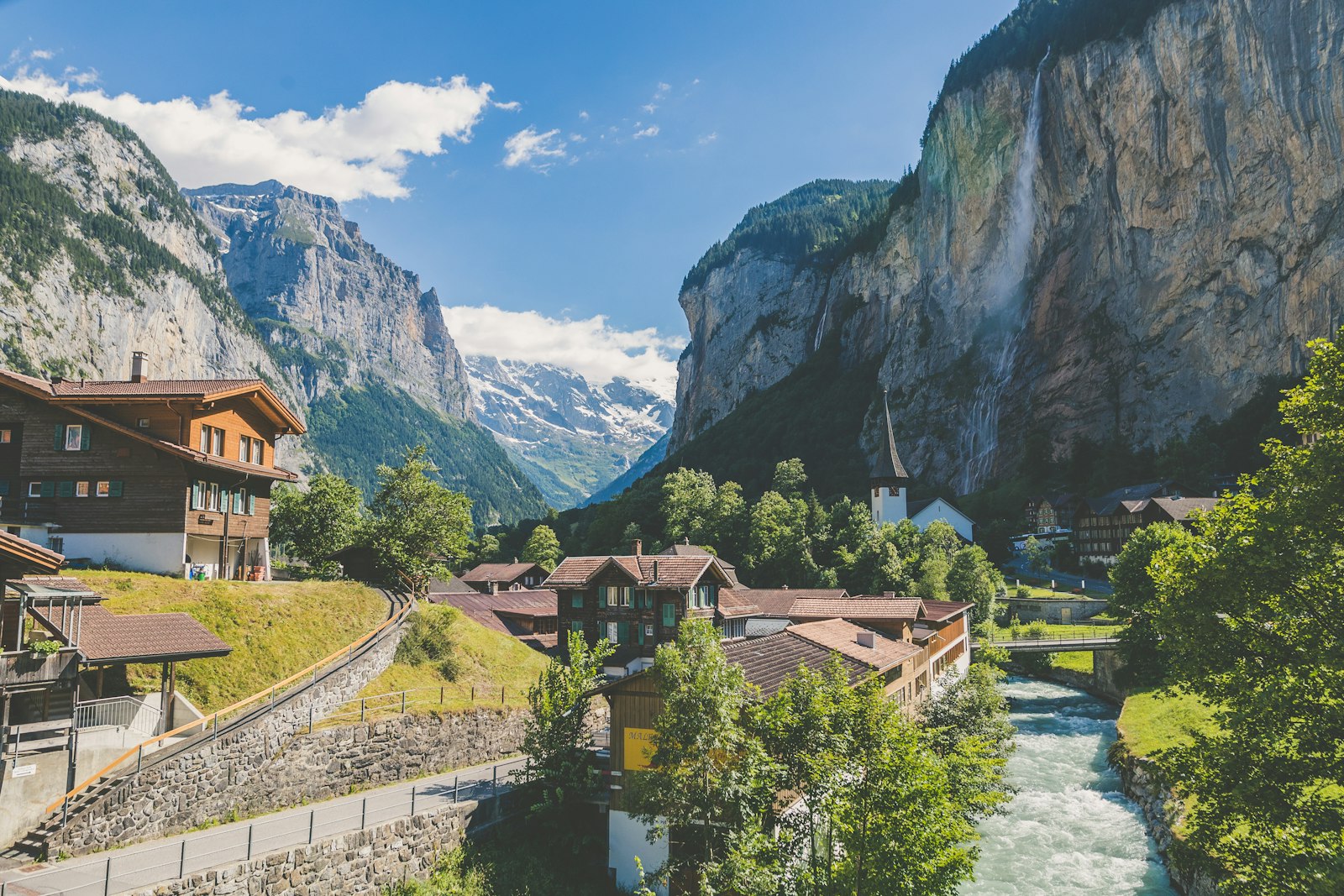
Switzerland in 5 Days: Jungfrau, Lucerne & the Matterhorn
Stand on a 3,454-metre glacier, watch the Matterhorn turn pink at dawn, ride the world's steepest cogwheel railway, and eat CHF 8 supermarket meals that rival most European restaurants. The complete guide with real CHF & USD costs, Half Fare Card strategy, and every mistake to avoid.
Delhi · Visited: Kedarnath, Gangotri, Manali, Shimla, Rishikesh & more · April 2026 · 16 min read
Switzerland is expensive — there is no getting around that. But it is also one of the few countries where even budget travellers can stand on a glacier, swim for free in a glacial lake, and eat a CHF 8 supermarket meal that is genuinely better than most European restaurant meals. Five days gives you the full sweep on any budget.
⚡ What Switzerland Actually Is
Switzerland is a landlocked Alpine country of 8.8 million people, four official languages (German, French, Italian, Romansh), and some of the most dramatic mountain scenery on the planet. The Swiss rail network is arguably the world's best — trains run on time to the second, connect every village, and climb to altitudes that would require a helicopter in most countries. The country is not in the EU but is part of the Schengen Area, so European visa rules apply.
The tourism reality: Switzerland is Europe's most expensive country by a significant margin. A basic restaurant lunch costs CHF 22-35 (~$25-39). A hotel room starts around CHF 120 (~$134). But the Swiss have two secrets that make budget travel viable: supermarkets (Migros and Coop) with restaurant-quality prepared food at a third of restaurant prices, and a rail pass system that can halve your transport costs overnight.
Five days covers Zurich, Lucerne with Mount Pilatus, the Jungfrau region (Interlaken, Grindelwald, Lauterbrunnen), and a choice between Zermatt for the Matterhorn or Bern for the capital experience. The Half Fare Card (CHF 120) pays for itself within the first day and is non-negotiable for any trip longer than 3 days.
ZRH / GVA
Airports
Jun-Sep / Dec-Mar
Best Season
Jungfraujoch 3,454m
Highest Point
CHF 100/day
Budget From
🌡️ Best Time to Visit Switzerland
Jun-Aug — Summer — Best for Hiking
Recommended
15-28°C in valleys, 5-15°C at altitude. All mountain passes, cable cars, and hiking trails are open. The longest days, warmest weather, and the best conditions for Jungfraujoch, the Matterhorn, and Alpine lakes. July-August are peak season with highest prices and busiest trails. June and early September offer the same weather with smaller crowds.
Sep-Oct — Autumn — Quieter, Crisp Views
Best value + views
8-20°C with clear, crisp air. September is arguably the best month: clear Alpine views, thinner crowds, autumn colours beginning in the lower valleys. October brings cooler temperatures and some high-altitude closures but the larch forests turn gold and the light is extraordinary. Hotel prices drop 20-30% from summer peak.
Dec-Mar — Winter — Skiing Season
Skiing & Christmas
Minus 2 to 7°C in valleys, well below zero at altitude. World-class skiing at Zermatt, Verbier, St. Moritz, and Grindelwald. Christmas markets in Zurich, Bern, and Basel. The Matterhorn with snow is even more dramatic than in summer. Lift passes CHF 80-110/day. Budget CHF 300-500/day all-in for a ski trip.
Apr-May — Spring — Shoulder Season
Cities & lakes only
8-18°C but highly variable. Lower valleys are beautiful with wildflowers. However, many mountain cable cars and high passes are closed for maintenance in April-May. Jungfraujoch runs year-round but weather is less reliable. If visiting in spring, focus on cities and lower-altitude lakes. Prices are the lowest of the year outside ski season.
✈️ Getting to Switzerland
Key detail: Switzerland has two main airports — Zurich (ZRH) and Geneva (GVA). Both have direct train connections to the city centre in under 15 minutes. Indian passport holders need a Schengen visa (apply 6+ weeks ahead in summer). US/UK/EU passports enter visa-free for 90 days.
Zurich Airport (ZRH)
Main hubSwitzerland's main international hub. Direct flights from Delhi, Mumbai (Air India, Swiss), London, New York, Dubai, and Singapore. The airport train to Zurich HB (main station) takes 10 minutes and costs CHF 6.80 (~$7.60). From Zurich HB, every major Swiss destination is reachable by train within 3 hours.
Geneva Airport (GVA)
Budget Europe flightsWestern Switzerland hub with strong connections to Paris, London, and budget European airlines (easyJet hub). The free train ticket (Tout Geneve) from the airport to Geneva centre is 7 minutes. Better starting point if combining Switzerland with France. Fewer direct long-haul flights than Zurich.
From India
Direct from DEL/BOMDirect flights from Delhi and Mumbai to Zurich on Swiss/Air India (8-9 hours, from Rs 45,000-80,000 return). One-stop options via Dubai (Emirates), Istanbul (Turkish), or Frankfurt (Lufthansa) are often cheaper at Rs 35,000-55,000 return. Book 2-3 months ahead for best prices. Schengen visa required: apply at VFS Global Switzerland with confirmed bookings.
Swiss Travel Pass & Half Fare Card
Essential for savingsThe Half Fare Card (CHF 120 / ~$134, valid 1 month) gives 50% off every train, bus, boat, and most mountain railways. It pays for itself within the first day. The Swiss Travel Pass (CHF 244/3 days, CHF 354/6 days) covers unlimited travel but costs more. For 5 days, the Half Fare Card wins on value for most itineraries. Buy at any SBB station or online at sbb.ch.
SBB Trains
World-class railThe Swiss Federal Railways (SBB) network connects virtually every town in the country. Trains run on time, are clean, comfortable, and offer some of the most scenic rail journeys in the world. Download the SBB Mobile app for live schedules, platform numbers, and mobile tickets. Second class is perfectly comfortable — first class is a luxury, not a necessity.
📅 5-Day Switzerland Itinerary
This itinerary covers mid-range spending (CHF 200-350/day, ~$224-392). Each day card is expandable. The route runs Zurich → Lucerne/Pilatus → Interlaken/Jungfraujoch → Grindelwald/Lauterbrunnen → Bern or Zermatt. All prices in CHF and USD at ~CHF 1 = $1.12.
- ●Arrive Zurich. Train from ZRH airport to Zurich HB (10 min, CHF 6.80 / ~$7.60). Drop bags at hotel or locker at the station (CHF 9 / ~$10 for a large locker).
- ●Morning: Zurich Altstadt (old town, free). Walk the Lindenhof hill for Limmat river views, the medieval guild houses on Munsterbrucke, Grossmunster cathedral (free exterior, CHF 5 / ~$5.60 for the tower), and the Niederdorf cobblestone quarter. Compact and entirely walkable in 2 hours.
- ●Midday: Lake Zurich swimming (free). The lakeside Strandbader are packed with locals in summer — the water is clean, cold, and remarkably clear for a major city. Lunch from Migros or Coop supermarket (CHF 8-15 / ~$9-17 for a hot meal). Eat on the lakeside benches.
- ●Afternoon: Uetliberg hill (S10 train from Zurich HB, CHF 4.80 / ~$5.40, 20 min). The 871m summit gives a panoramic view over the city, the lake, and on clear days the entire Alpine chain from Santis to Mont Blanc. Free to hike and explore.
- ●Evening: Walk through Zurich West — industrial-turned-creative neighbourhood with the Viadukt market arches, street art, and cafes. Dinner at Zeughauskeller in the old arsenal building (rosti or sausages, CHF 18-25 / ~$20-28) or splurge on fondue at a traditional restaurant (CHF 30-45 / ~$34-50).
- ●8:30am: Train from Zurich HB to Lucerne (CHF 24 / ~$27 standard, CHF 12 / ~$13 with Half Fare Card, 1 hour). Lucerne station opens directly onto the lake — one of the most scenic station arrivals in Europe.
- ●Morning: Kapellbrucke (Chapel Bridge, free) — the 14th-century covered wooden footbridge with interior paintings depicting Swiss history. Then the Lion Monument (Lowendenkmal, free) — the dying lion carved into sandstone, one of the most moving monuments in Europe.
- ●Walk the Lucerne medieval city walls and towers (free) for rooftop and lake views. Lunch on the lakefront from Migros/Coop (CHF 8-12 / ~$9-13) or a Wurst from a street stand (CHF 5-7 / ~$5.60-7.80).
- ●Afternoon: Mount Pilatus (CHF 72 / ~$81 return by gondola from Kriens, CHF 36 / ~$40 with Half Fare Card). The summit at 2,132m offers extraordinary views over Lake Lucerne and the Alps. The world's steepest cogwheel railway runs from the other side. Alternatively, hike down from the summit (4 hours, saves the descent gondola cost).
- ●Evening: Return train to Interlaken (1.5 hours, CHF 30 / ~$34, CHF 15 / ~$17 with Half Fare Card). Check in to Interlaken accommodation.
- ●Check weather at jungfrau.ch before committing to Jungfraujoch (CHF 203 / ~$227 return, CHF 160 / ~$179 with Half Fare Card). The summit webcam updates every 30 minutes. If cloudy, do Harder Kulm instead (CHF 22 / ~$25) — often clear when the summit is in cloud, and arguably a better view of the Eiger-Monch-Jungfrau trio at one-tenth the price.
- ●If clear: 7:30am train from Interlaken Ost to Jungfraujoch (2 hours via Kleine Scheidegg, through the Eiger tunnel). At 3,454m: the Sphinx Observatory, Aletsch Glacier (longest in the Alps at 23km), the Ice Palace, and views to the Black Forest on clear days. Allow 2 hours at the top.
- ●Lunch at the summit restaurant (CHF 25-35 / ~$28-39) or bring food from Interlaken Migros. Descend via Kleine Scheidegg and walk the 45-minute Eiger Trail along the base of the North Face (free, from Eigergletscher station).
- ●Alternative if cloudy: Harder Kulm funicular (CHF 22 / ~$25 return, 10 min). The viewpoint at 1,322m sits directly above Interlaken with the Eiger, Monch, and Jungfrau laid out before you. Then explore Interlaken town — the Hoheweg promenade views are free and spectacular.
- ●Evening: Dinner in Interlaken — Schuh restaurant for Swiss classics (CHF 22-35 / ~$25-39) or cheaper at a hostel restaurant (CHF 12-18 / ~$13-20).
- ●Morning: Train to Lauterbrunnen (CHF 10 / ~$11 return from Interlaken, CHF 5 / ~$5.60 with Half Fare Card, 20 min). Walk the valley floor — 72 waterfalls cascading from 1,000m cliffs. Staubbach Falls (free, 297m) with a path behind the waterfall. Trummelbach Falls (CHF 12 / ~$13) — the only glacial waterfalls accessible inside a mountain.
- ●Cable car to Murren (CHF 15 / ~$17 from Grutschalp, included with Swiss Pass). Murren is car-free, perched at 1,638m on a cliff, with the Eiger North Face directly across the valley. Possibly the most beautiful village in Switzerland.
- ●Lunch in Murren: Hotel Blumental for rosti (CHF 18-25 / ~$20-28) or pack food and eat on the terrace facing the Eiger.
- ●Optional: Schilthorn and Piz Gloria (CHF 90 / ~$101 return from Murren, CHF 45 / ~$50 with Half Fare Card). The revolving restaurant at 2,970m was the Bond villain's headquarters in On Her Majesty's Secret Service. The Bond World 007 exhibition is free with the cable car ticket. The 360-degree panorama includes the Eiger, Monch, Jungfrau, and Mont Blanc.
- ●Afternoon: Return to Interlaken or continue toward Bern/Zermatt for Day 5.
- ●Option A — Zermatt: Train from Interlaken to Zermatt (3 hours via Visp, CHF 100-120 / ~$112-134 return, CHF 50-60 / ~$56-67 with Half Fare Card). Zermatt is car-free — electro-taxis from the station.
- ●Walk to the Findeln hamlet (1 hour, free) for the classic Matterhorn reflection view. The 4,478m pyramid is visible from everywhere in Zermatt on a clear day. Lunch at Whymper Stube (CHF 30-50 / ~$34-56).
- ●Gornergrat rack railway (CHF 90 / ~$101 return, CHF 45 / ~$50 with Half Fare Card, 3,089m) for the classic Matterhorn panorama with Monte Rosa and the Gorner Glacier. Return train toward Zurich for departure or overnight in Zermatt.
- ●Option B — Bern: Train from Interlaken to Bern (50 min, CHF 30 / ~$34, CHF 15 / ~$17 with Half Fare Card). The UNESCO-listed old town, the Aare river swimming (a famous natural lido where the current carries you downstream for free), the Zytglogge clock tower, and the Bear Park. A perfect lower-key final day before flying out of Zurich (Bern to ZRH: 1 hour by train).
- ●Evening: Final Swiss dinner — fondue or raclette at a traditional restaurant (CHF 35-50 / ~$39-56 per person). The one non-negotiable Swiss dining expense.
Free · Personalised · 24hr Reply
Want this Switzerland plan customised for your dates?
Tell us your group size, budget, and travel dates. We'll build a day-by-day plan around you — completely free.
No account · No credit card · Takes 2 minutes
⛰️ Landmark Guide
The most important landmarks and viewpoints ranked by priority. All prices are as of early 2026. Half Fare Card discounts apply to most mountain railways and cable cars.
Jungfraujoch (Top of Europe)
Europe's highest railway station at 3,454m. The Aletsch Glacier, the Sphinx Observatory, and the Ice Palace. Extraordinary on a clear day, a waste of money in cloud. Check the summit webcam at jungfrau.ch before booking. The train journey through the Eiger tunnel is an engineering marvel in itself.
Matterhorn & Gornergrat (Zermatt)
The most iconic mountain silhouette in the world at 4,478m. The Gornergrat rack railway climbs to 3,089m for the classic panorama with Monte Rosa and the Gorner Glacier. The Findeln hamlet walk (free, 1 hour) gives the best reflection-in-lake photograph.
Lauterbrunnen Valley
A glacial valley with 72 waterfalls and 1,000-metre cliffs. The valley floor walk from Lauterbrunnen to Stechelberg is 2 hours and passes Staubbach Falls, Murrenbach Falls, and a dozen unnamed cascades. One of the most beautiful valleys in the world, completely free to walk.
Mount Pilatus (Lucerne)
The summit at 2,132m above Lake Lucerne offers panoramic views of the Alps and the lake. Ascend by gondola, descend by the world's steepest cogwheel railway (48% gradient, built 1889). The golden round trip combines both for the full experience.
Chapel Bridge (Lucerne)
The 14th-century Kapellbrucke is the most photographed bridge in Switzerland and the oldest covered wooden bridge in Europe. The interior paintings depict Swiss history scenes. Walk it slowly — the interior is genuinely interesting and often missed by visitors who just photograph the exterior.
Harder Kulm (Interlaken)
The budget alternative to Jungfraujoch. At 1,322m directly above Interlaken, the viewpoint offers a panoramic view of the Eiger-Monch-Jungfrau trio with both lakes below. Many experienced Swiss travellers argue this is a better view than Jungfraujoch itself — at one-tenth the cost.
Switzerland — Alps, Lakes & Railways
From glacial valleys to the highest railway station in Europe.
📸
Jungfraujoch Summit
Jungfraujoch Summit
Europe's highest railway station at 3,454m — the Aletsch Glacier stretches 23km below and on clear days you can see Germany's Black Forest.
💰 Budget Breakdown
Switzerland is Europe's most expensive country but budget travel is possible with discipline. The Half Fare Card and supermarket meals are non-negotiable for budget travellers. All prices in Swiss Francs (CHF) and USD at ~CHF 1 = $1.12.
| Category (5 days) | 💰 Budget | ✨ Mid-Range | 💎 Luxury |
|---|---|---|---|
| 🏨 Accommodation (5N) | CHF 175-325 (~$196-364) | CHF 750-1,400 (~$840-1,568) | CHF 2,500-8,000 (~$2,800-8,960) |
| 🍽 Food & Drinks | CHF 100-175 (~$112-196) | CHF 300-500 (~$336-560) | CHF 750-1,500 (~$840-1,680) |
| 🚆 Transport (w/ Half Fare) | CHF 100-200 (~$112-224) | CHF 200-400 (~$224-448) | CHF 400-1,500 (~$448-1,680) |
| 🎯 Activities & Mountains | CHF 125-250 (~$140-280) | CHF 250-500 (~$280-560) | CHF 500-2,000 (~$560-2,240) |
| 🎫 Half Fare Card | CHF 120 (~$134) | CHF 120 (~$134) | CHF 120 (~$134) |
| TOTAL (per person) | CHF 620-1,070 (~$694-1,198) | CHF 1,620-2,920 (~$1,814-3,270) | CHF 4,270-13,120 (~$4,782-14,694) |
💚 Budget (CHF 100-190/day)
Hostels (CHF 35-65/night), Migros/Coop supermarket meals (CHF 8-15/meal), Half Fare Card for all transport, and free activities like lake swimming, valley walks, and city exploration. One or two paid mountain excursions per trip.
✨ Mid-Range (CHF 250-450/day)
3-star hotels (CHF 150-280/night), restaurant dinners on 2-3 evenings with supermarket lunches, Jungfraujoch and Gornergrat excursions, boat cruises, and comfortable train travel. The sweet spot for most visitors.
💎 Luxury (CHF 700-2,000+/day)
Grand hotels (CHF 500-1,600/night), private guides, helicopter transfers, Michelin-starred dining, and first-class Glacier Express journeys. Swiss luxury is understated, precise, and extraordinarily high quality.
Get the free travel guide
+ weekly destination tips
Download the Rajasthan 7-Day Guide instantly — day-by-day itinerary, real budgets, local food spots & packing list. Plus weekly guides from 2,400+ travellers' favourite destinations.
No spam, ever. Unsubscribe with one click.
🏨 Where to Stay in Switzerland
Base yourself in Interlaken for the Jungfrau region (Days 2-4), with one night in Zurich on arrival and one night in Zermatt if doing the Matterhorn. Hostels are clean and well-run across Switzerland. Hotels are expensive but quality is consistently high.
Zurich — Hotel Greulich
Design hotel · Zurich West
Modern design hotel in the creative Zurich West district with excellent restaurant and courtyard garden. A 10-minute tram ride from the Altstadt and a 15-minute walk from the main station. Clean, quiet, and well-located for exploring both old and new Zurich.
Lucerne — Hotel des Balances
Riverside boutique · Lucerne old town
Directly overlooking the Chapel Bridge and the Reuss river in the heart of Lucerne's old town. The river-view rooms are worth the premium. Breakfast terrace with mountain views. Walking distance to everything in Lucerne.
Interlaken — Backpackers Villa Sonnenhof
Hostel · Interlaken
The best-rated hostel in the Jungfrau region with mountain views from the garden, clean dorms and private rooms, a communal kitchen (essential for budget travellers), and a 10-minute walk to Interlaken Ost station. Book ahead in summer — it fills up fast.
Zermatt — Hotel Bahnhof
Budget hotel · Zermatt station
Simple, clean rooms directly at Zermatt station with Matterhorn views from the terrace. Run by the same family for decades. The cheapest honest option in Zermatt — dorm beds also available from CHF 42/night (~$47). The restaurant serves solid Swiss-German food at reasonable prices.
Hostels vs Hotels — General Advice
Budget strategy · All Switzerland
Swiss hostels (SJH/HI network) are among the best in Europe: clean, modern, often with mountain views, and always with communal kitchens. A dorm bed averages CHF 35-45 in cities, CHF 40-65 in mountain towns. Private hostel rooms are CHF 80-120. For budget travellers, the kitchen alone saves CHF 30-50/day on food versus restaurants.
🍽️ Where to Eat in Switzerland
The single most important food rule in Switzerland: Migros and Coop supermarkets are your lifeline. Their prepared food counters serve hot meals (CHF 8-15 / ~$9-17), sushi, sandwiches, and salads at a fraction of restaurant prices — and the quality is genuinely high. Have restaurant dinners on 2-3 evenings and self-cater the rest.
Fondue at a Traditional Restaurant
Swiss classic · Everywhere
The one non-negotiable Swiss dining experience. Melted Gruyere and Vacherin cheese in a communal pot with bread cubes. CHF 25-45 / ~$28-50 per person at most traditional restaurants. In Zurich try Zeughauskeller or Le Dezaley; in Lucerne try Stadtkeller; in Zermatt try Whymper Stube. Winter fondue is an entirely different experience from summer — both are excellent.
Raclette
Melted cheese classic · Mountain towns
Half a wheel of cheese melted under a heat source and scraped onto boiled potatoes, pickles, and onions. CHF 22-35 / ~$25-39 per serving. Street raclette stalls in Christmas markets are cheaper (CHF 10-14 / ~$11-16). Raclette at a mountain hut after a hike is one of the best food experiences in Switzerland.
Rosti
Swiss-German comfort food · German-speaking Switzerland
Grated potato, pan-fried into a golden crispy cake, topped with cheese, bacon, or a fried egg. The Swiss equivalent of hash browns but elevated to an art form. CHF 15-22 / ~$17-25 at most restaurants. Available everywhere in German-speaking Switzerland — less common in the French-speaking west.
Migros / Coop Supermarkets
Budget lifeline · Every town
The secret weapon of budget travel in Switzerland. Hot meals from CHF 8-15 / ~$9-17, fresh sushi CHF 8-12 / ~$9-13, sandwiches CHF 5-8 / ~$5.60-9. The quality is genuinely excellent — better than most budget restaurants in neighbouring countries. Every Swiss town has at least one. Open late in cities, earlier in villages.
Mountain Hut Dining (Bergrestaurant)
Alpine experience · Mountain trails
Swiss mountain huts serve hot meals, soups, and drinks at altitude. A bowl of Alp-Makkaroni (Alpine macaroni with applesauce — trust the combination) costs CHF 15-22 / ~$17-25. A beer with a Matterhorn view at Gornergrat or a soup at a Pilatus summit hut is a quintessentially Swiss experience that no supermarket can replace.
Where to Stay in Switzerland
Verified prices · Instant booking
Backpackers Villa Sonnenhof
Hostel · Interlaken
Hotel Greulich
Design Hotel · Zurich
Hotel des Balances
Boutique Hotel · Lucerne
Hotel Bahnhof Zermatt
Budget Hotel · Zermatt
Affiliate links — we earn a small commission at no extra cost to you. Helps keep our guides free.
Things to Do in Switzerland
Tours & experiences · Instant confirmation
Jungfraujoch Top of Europe Day Trip
Must doMount Pilatus Golden Round Trip
ScenicInterlaken Paragliding Tandem
AdventureZermatt Gornergrat Matterhorn Tour
Affiliate links — we earn a small commission at no extra cost to you.
❌ Mistakes to Avoid
Not getting the Swiss Half Fare Card
The Half Fare Card (CHF 120 / ~$134, valid 1 month) gives 50% off virtually every train, bus, boat, and most mountain railways. A single Zurich-Interlaken-Zermatt circuit costs CHF 200+ at full price. With the Half Fare Card, you save CHF 100+ on trains alone, and every mountain excursion is half price. It pays for itself within the first day. Do not visit Switzerland for 5+ days without one.
Buying Jungfraujoch tickets without checking weather
Jungfraujoch costs CHF 203 / ~$227 return. In cloud or fog — which happens frequently, even in summer — you arrive at 3,454m and see nothing but grey mist. Check the summit weather forecast at jungfrau.ch before booking. The summit webcam updates every 30 minutes. If cloudy, visit Harder Kulm instead (CHF 22 / ~$25, often clear when the summit is in cloud).
Eating at restaurants every meal
Switzerland's single biggest budget drain is restaurant food. A basic restaurant lunch is CHF 22-35 / ~$25-39. Dinner with wine is CHF 45-80 / ~$50-90 per person. Migros and Coop supermarkets have excellent prepared food (hot meals CHF 8-15 / ~$9-17). Have restaurant dinners on 2-3 evenings and self-cater the rest — you will save CHF 50-100 / ~$56-112 per day.
Buying individual train tickets at full price
Swiss trains are expensive at full price. The Half Fare Card (CHF 120) or Swiss Travel Pass (CHF 244/3 days) transforms the economics. Also check SBB Supersaver tickets (available online 60 days ahead, up to 50% off fixed routes) and the SBB Day Pass (CHF 52 / ~$58 on certain dates for unlimited second-class travel nationwide).
Paying in Euros instead of Swiss Francs
Many tourist businesses accept Euros but at a poor exchange rate, typically 5-10% worse than the actual rate. Always pay in CHF. Withdraw from Postomat ATMs (Swiss Post offices) which are often fee-free for international cards. Revolut, Wise, and similar travel cards offer near-perfect exchange rates.
Trying to see too many mountain peaks in one trip
Jungfraujoch, Schilthorn, Pilatus, Titlis, and Gornergrat are all spectacular but doing more than 2-3 in 5 days becomes exhausting and expensive. Pick your top 2 paid excursions and fill the rest with free valley walks and lake swimming. The free experiences in Switzerland are often as memorable as the expensive ones.
💡 Pro Tips for Switzerland
Harder Kulm vs Jungfraujoch
Jungfraujoch is CHF 203 / ~$227. Harder Kulm is CHF 22 / ~$25. From Harder Kulm at 1,322m, you see the entire Eiger-Monch-Jungfrau chain with Interlaken and both lakes below. Many experienced Swiss travellers say it is a better view than Jungfraujoch itself. Do Harder Kulm on arrival, then decide whether Jungfraujoch is worth the additional CHF 181 / ~$203.
Free swimming everywhere
Swimming is deeply embedded in Swiss culture. Every lake and river has free access — Lake Zurich, Lake Lucerne, Lake Thun, the Aare river in Bern (a famous natural lido where the current carries you downstream). The water is clean, cold, and entirely free. Swiss people of all ages swim outdoors from May to September.
Lauterbrunnen is free and extraordinary
The Lauterbrunnen Valley — 72 waterfalls, 1,000m cliffs, the sound of rushing water from every direction — is completely free to walk through. The valley floor path from Lauterbrunnen to Stechelberg is 2 hours and costs nothing beyond the train fare to get there (CHF 10 / ~$11 from Interlaken, CHF 5 / ~$5.60 with Half Fare Card).
Download the SBB app
The SBB Mobile app is the best travel companion in Switzerland. Live train schedules, platform numbers, mobile tickets, connection alerts, and delay notifications. Buy the Half Fare Card at the station then link it to the app for discounted mobile tickets. The app also shows the cheapest fare options for every route.
Free hiking is world-class
Switzerland has 65,000km of marked hiking trails, all free. The Eiger Trail from Eigergletscher station (45 min), the Lauterbrunnen valley walk (2 hrs), the Five Lakes Trail in Zermatt (2.5 hrs), and the Uetliberg panorama walk in Zurich (1 hr) are all among the best hikes in the Alps and cost nothing.
Tap water is exceptional
Swiss tap water is among the cleanest in the world — often sourced from mountain springs. Every public fountain in Switzerland dispenses drinkable water unless explicitly marked otherwise. Carry a reusable bottle and refill everywhere. This alone saves CHF 5-10 / ~$5.60-11 per day versus bottled water.
📸 Been to Switzerland?
Share your photos and get featured in this guide with full credit. Your real photos help thousands of travellers plan better trips.
❓ Frequently Asked Questions
Plan your Switzerland trip
You Might Also Like


Questions & Comments
Been there? Planning a trip? Drop it below — we reply to everything.
Have you visited this destination?
Any tips you'd add to this guide?
Questions before your trip?
Want a personalised itinerary?
We'll build your day-by-day plan in 24 hours — free.