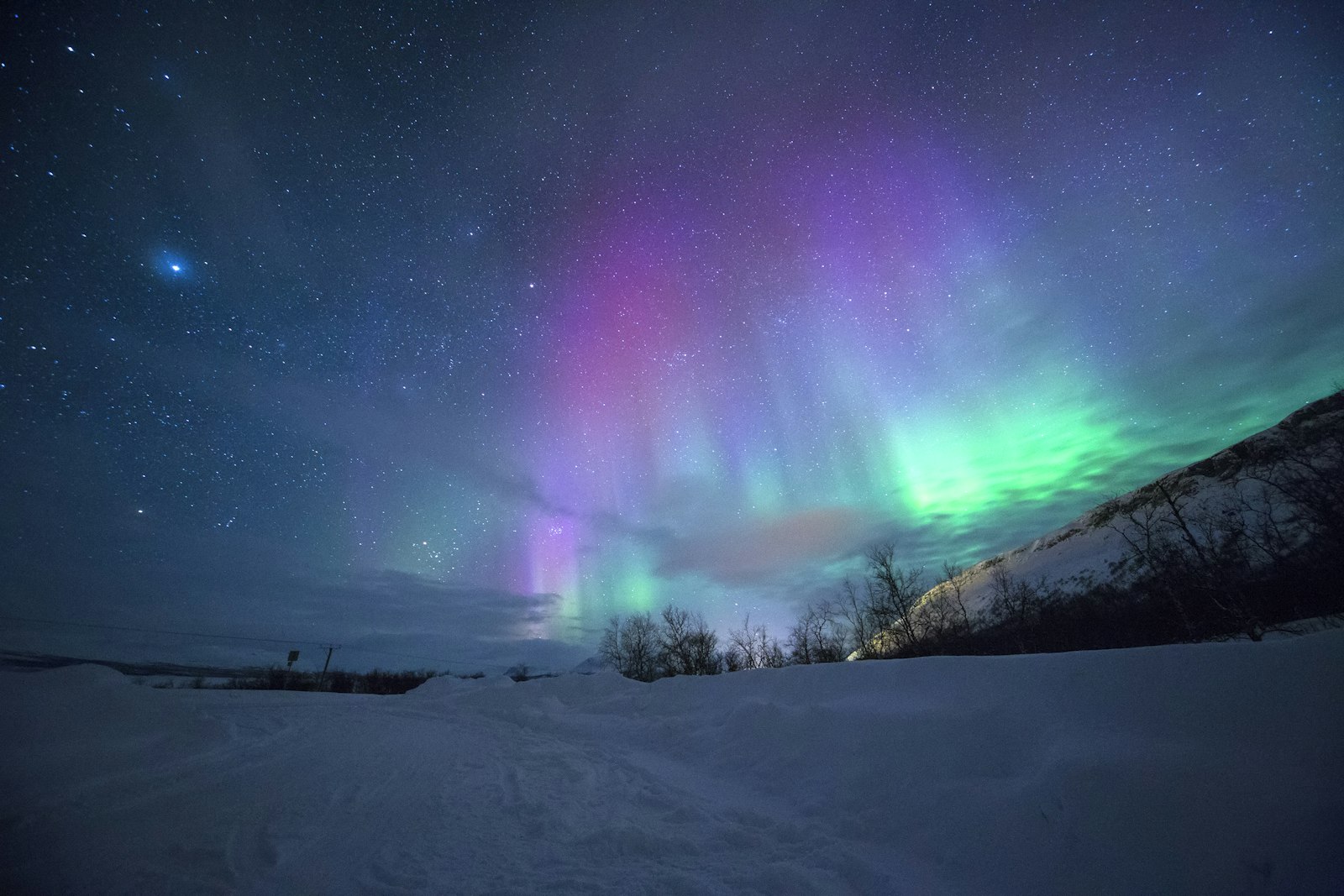
Iceland in 7 Days: Ring Road, Northern Lights & Glaciers
Waterfalls off clifftops onto black sand beaches, geysers on a timer, icebergs calving into a lagoon, and on clear winter nights a sky that turns green and violet. The complete Ring Road guide — real ISK prices, no filler.
Delhi · Visited: Kedarnath, Gangotri, Manali, Shimla, Rishikesh & more · April 2026 · 18 min read
Iceland in seven days is a loop around one of the most otherworldly landscapes on earth — a country where waterfalls drop off clifftops into black sand beaches, geysers erupt every eight minutes on schedule, glaciers calve icebergs onto shores you can walk barefoot, and on clear winter nights the sky turns green and violet.
⚡ What Iceland Actually Is
Iceland sits on the Mid-Atlantic Ridge — the exact boundary where the North American and Eurasian tectonic plates are pulling apart at 2cm per year. The result is a landscape of active volcanoes, geysers, lava fields, glaciers, and waterfalls that feels closer to another planet than anywhere else in Europe. The country is roughly the size of Kentucky with a population of 380,000 — and half of them live in Reykjavík.
The Ring Road (Route 1) circles the entire island at 1,332km. Seven days gives you enough time to complete it properly — roughly 3–4 hours of driving per day — with meaningful time at the Golden Circle, South Coast, Jökulsárlón Glacier Lagoon, Lake Mývatn, and the Snæfellsnes Peninsula. You will not see everything. Iceland rewards slow travel. But seven days will leave you with no doubt about why people return.
The single most important logistical fact: you need a rental car. Iceland has essentially no public transport outside Reykjavík, and the best experiences — walking behind Seljalandsfoss, standing at Jökulsárlón before dawn, chasing the northern lights at 11pm — all require your own vehicle and the freedom to move when conditions are right.
KEF Keflavík
Airport
Jun–Aug or Sep–Mar
Best Season
1,332 km
Ring Road
ISK 20,000/day
Budget From
🌡️ Best Time to Visit Iceland
Jun–Aug — Summer — Midnight Sun
Best access & road conditions
The sun barely sets — you get 20–24 hours of daylight. Temperatures 10–18°C, all roads accessible, puffins nesting at Borgarfjörður eystri (mid-May to mid-August), wildflowers on lava fields. Peak prices and busy popular sites are the trade-offs. Kirkjufell at 11pm in perpetual golden-hour light is extraordinary.
Sep–Mar — Winter — Northern Lights
Best for northern lights
The aurora borealis season. September and February–March are the sweet spots: enough darkness for northern lights but temperatures not yet extreme. October–January brings 18–20 hours of night for maximum aurora hunting but also -10 to -15°C, potential F-road closures, and shorter days for sightseeing.
Apr–May — Spring — Transition Season
Good value, fewer crowds
Days lengthening, snow melting from Highland routes. Fewer crowds than summer, lower prices. Occasional aurora still visible through mid-April on clear nights. Some F-roads remain closed until June. The waterfalls run at full force from snowmelt — Skógafoss and Gullfoss are at their most powerful.
Nov–Jan — Deep Winter — Maximum Aurora
Experienced travellers only
Longest nights for aurora hunting but extreme conditions: -15°C possible, roads may close without warning, only 4–5 hours of grey daylight. Rock-bottom prices, completely empty popular sites, and on a clear night the northern lights are incomparable. Not recommended for first-time Iceland visitors without winter driving experience.
✈️ Getting to Iceland
Key detail: Keflavík International Airport (KEF) is 50km from Reykjavík city centre. The Flybus from KEF to Reykjavík's BSÍ bus terminal costs ISK 3,999 one-way and takes 45–50 minutes. Book at re.is or flybus.is. A taxi costs ISK 17,000–22,000. Pick up your rental car at the airport on arrival — returning to KEF separately to collect it wastes half a day.
Fly into Keflavík (KEF)
Only viable optionKEF is Iceland's only major international airport. Direct flights from London (2h 45m), Amsterdam (3h), Copenhagen (3h), New York (6h 30m), and Toronto (7h 30m). Icelandair serves most European hubs. Book 3–4 months ahead for summer; 6–8 weeks for winter shoulder season.
Flybus KEF → Reykjavík (ISK 3,999)
Recommended airport transferThe Flybus departs from outside arrivals at KEF every 30–45 minutes. It connects to the BSÍ terminal in Reykjavík, from where connecting minibuses run to most central hotels. Total door-to-hotel time: 60–75 minutes. Book online at flybus.is or re.is — significantly cheaper than a taxi.
Rental Car from KEF (ISK 15,000–25,000/day)
Essential for Ring RoadAll major rental companies have desks in KEF arrivals. Budget 2WD: ISK 15,000–18,000/day from Sadcars or Geysir — fine for summer Ring Road on paved roads. Mid-range 4WD: ISK 20,000–25,000/day from Hertz or Budget — essential if you plan any F-road or Highland routes. Always take the gravel protection insurance. Check safetravel.is for current road conditions before each driving day.
Visa Requirements
Check requirements earlyIceland is a Schengen Area member (not EU). EU/EEA, USA, UK, Canada, Australia, and New Zealand passport holders enter visa-free up to 90 days (UK and non-EU need ETIAS from 2025, €7 at etias.eu.int). Indian passport holders need a Schengen C visa: €80 fee, 15–45 days processing through VFS Global. Required: bank statements showing €120+/day, confirmed hotel/car bookings, return flights, travel insurance covering minimum €30,000 medical.
📅 7-Day Iceland Ring Road Itinerary
Each day card is collapsible. The route runs clockwise from Reykjavík — the standard direction that keeps the South Coast's best light in front of you. Estimated driving: 2–4 hours per day. All prices in ISK as of 2026.
- ●Arrive at KEF and collect your rental car from the arrivals hall immediately. Budget 2WD (ISK 15,000–18,000/day, Sadcars or Geysir): adequate for summer Ring Road with gravel protection. 4WD (ISK 20,000–25,000/day, Hertz or Budget): required for any F-road detours. Drive 50km to Reykjavík — 45 minutes on Route 41 via the Reykjanes lava fields.
- ●Hallgrímskirkja church — the 74-metre concrete tower is free to photograph from outside. The observation deck costs ISK 1,000 and gives the best panorama in Reykjavík: colourful corrugated-iron rooftops, the Esja mountain across the bay, Harpa Harbour below. Arrive at opening (9am) for the light.
- ●Harpa Concert Hall — the glass-façade building on the waterfront is free to enter. Olafur Eliasson's honeycombed glass panels catch Reykjavík's extraordinary northern light differently at every hour. Ten minutes minimum.
- ●Hot dog at Bæjarins Beztu Pylsur — three minutes' walk from Harpa. One hot dog costs ISK 620 with everything: mustard, remoulade, raw onion, crispy onion, ketchup. Operating since 1937. Bill Clinton ordered 'one with everything' in 2004 and the framed photo is still on the wall. Do this. It is the best value-per-bite meal in all of Iceland.
- ●Laugardalslaug geothermal pool (ISK 1,100 adults) — the largest public pool in Iceland, 4km from the city centre. Heated to 38–44°C by geothermal energy. The six outdoor hot pots at graduated temperatures are where Reykjavík residents genuinely socialise — bring a newspaper and stay an hour.
- ●Evening: Bónus supermarket (yellow pig logo, open until 11pm) for self-catering supplies. Skyr ISK 200, lamb soup packet ISK 500, bread and cheese. The grocery strategy saves ISK 3,000–5,000/day versus restaurants — significant over a week. For dinner out, try Matur og Drykkur (Grandagarður, modern Icelandic) or the Reykjavík rooftop bar scene on Laugavegur.
- ●Þingvellir National Park — free entry, UNESCO World Heritage Site. Drive 50km east from Reykjavík on Route 36. This rift valley sits where the North American and Eurasian tectonic plates are visibly pulling apart — you can walk the floor of the Almannagjá gorge with a continent on either side. The world's oldest parliament (Alþingi) was founded here in 930 AD. Walk the canyon at opening (9am) when the angled light hits the gorge walls.
- ●Silfra fissure snorkelling (optional, ISK 20,000+ with Dive.is or Arctic Adventures) — the fissure runs between the two tectonic plates, filled with glacial meltwater filtered through lava for 30–100 years. Visibility is 80+ metres. Water is 2–4°C year-round; drysuits provided. One of the clearest water experiences on earth.
- ●Geysir geothermal area — free entry. The original Geysir rarely erupts, but Strokkur erupts every 5–10 minutes to 15–40 metres. Stand upwind — there are no barriers. The ground around the geysers is scalding; stay on marked paths.
- ●Gullfoss waterfall — free entry. The 'Golden Falls' drops 32 metres in two tiers into a 70-metre canyon. The spray cloud is visible from the car park. Walk to the upper viewing platform for the full scale; the lower path brings you to the canyon rim where the power is overwhelming. Best in afternoon light when spray creates a rainbow.
- ●Secret Lagoon at Flúðir (ISK 3,000, 30 minutes south of Gullfoss) — a natural geothermal pool maintained at 38–40°C. Far cheaper and more atmospheric than the Blue Lagoon. A small geysir on the pool's edge erupts every few minutes. The wooden changing rooms date to 1891. Book ahead at secretlagoon.is — it does fill up.
- ●Return to Reykjavík base or drive south and camp. Wild camping is legal in Iceland outside designated national parks. A campsite with facilities: ISK 1,500–2,500/person/night.
- ●Seljalandsfoss waterfall — free (ISK 900 car park). The 60-metre curtain waterfall is famous because you can walk completely behind it through a cave in the cliff face. The path is wet year-round — a waterproof jacket is essential. Best in morning light when the sun backlit through the water sheet is extraordinary. Arrive before 9am to walk behind it without a crowd.
- ●Gljúfrabúi — 200 metres north of Seljalandsfoss, almost nobody visits. A hidden waterfall inside a slot canyon, reached by wading a knee-deep stream. Free. The waterfall fills the entire narrow canyon ceiling above you — one of Iceland's best-kept secrets. Waterproof trousers help; determination is sufficient.
- ●Skógafoss waterfall — free. 25 metres wide, 60 metres tall, one of Iceland's most powerful falls. Climb the 430 steps up the cliffside for the view south over the black sand plain to the sea. At the base, the spray drenches everything within 30 metres — your waterproof jacket earns its keep twice today.
- ●Sólheimasandur plane wreck — free. In 1973 a US Navy Douglas Super DC-3 crash-landed on the black sand beach. The fuselage remains, slowly sinking. Park at the marked car park on Route 221, walk 1 hour each way across a flat volcanic plain. Bring a windproof layer — wind across this exposed plain routinely hits 50–70km/h.
- ●Reynisfjara Black Sand Beach — free. Jet-black basalt columns, sea stacks, pounding Atlantic surf. SAFETY: sneaker waves at Reynisfjara have killed tourists as recently as 2022. The waves travel 15–20 metres up the beach without warning and the undertow will pull an adult off their feet instantly. Stay well beyond the marker stones. Do not turn your back on the ocean. The sign at the beach entrance is not decorative.
- ●Jökulsárlón Glacier Lagoon — free shore access. Drive 255km east from Vík on Route 1 (approximately 3 hours). The lagoon fills with icebergs calved directly from Breiðamerkurjökull glacier — some bergs are 15 metres tall. Seals haul out on them. The ice colour shifts from white to deep blue depending on density and light. Arrive before 8am in summer for the lagoon entirely to yourself.
- ●Amphibious boat tour (ISK 7,500, 45 minutes) — the duck boats weave between icebergs with the glacier visible behind. The captain explains how the glacier has retreated 1.5km since 1935. Optional but adds context to what you're seeing.
- ●Diamond Beach — free. Cross the road bridge from the lagoon to the black sand beach opposite. Icebergs washed here from the lagoon sparkle like cut glass against the black volcanic sand. The visual contrast is unlike anywhere else on earth. Polarising filter recommended for photography.
- ●Glacier hike with a certified guide (ISK 10,000–15,000/person) — MANDATORY for safety. Glaciers are heavily crevassed and conditions change without warning. Companies: Glacier Guides (glacierguides.is), Extreme Iceland, Local Guide. The 3-hour standard glacier walk includes crampons and ice axe instruction. One of the most physically memorable experiences Iceland offers.
- ●Stay at Fosshotel Glacier Lagoon (ISK 38,000–45,000/night) — the only hotel within 1km of Jökulsárlón. Book 4–6 months ahead for summer. Alternative: Hólmur campsite (ISK 1,800/person). At 5am tomorrow, walk to the lagoon before the coaches arrive.
- ●Drive the East Fjords — Route 1 hugs the coastline through a series of dramatic fjords that most Ring Road travellers rush through or skip entirely via the inland shortcut. This is a mistake. The East Fjords are Iceland's quietest region: fishing villages of 200–400 people, reindeer on hillsides (introduced from Norway in 1787), and puffin colonies at Borgarfjörður eystri from mid-May to mid-August.
- ●Djúpivogur harbour — the Eggs of Merry Bay installation: 34 granite eggs on the harbourside representing 34 species of nesting birds. Free, odd, and beautiful. A 10-minute stop.
- ●Stöðvarfjörður — Petra's Stone Collection: a private garden filled with 70 years of collected Icelandic minerals and crystals (ISK 1,500, open May–October). One of Iceland's most eccentric and genuinely impressive small-scale attractions.
- ●Fáskrúðsfjörður — a fjord village where French fishermen worked seasonally in the 19th century. Street signs remain bilingual in French and Icelandic. The small French-Icelandic museum (ISK 1,500) is unexpectedly moving.
- ●Wild reindeer sighting — scan hillsides between Breiðdalsvík and Egilsstaðir from late afternoon. Herds of 20–50 animals are routinely seen close to the road. Egilsstaðir (population 2,400, the largest East Iceland town) is the logical overnight stop — the local pool is ISK 900 and almost always empty.
- ●Dettifoss waterfall — free. Drive north from Egilsstaðir via Route 1 then Route 862 (approximately 90 minutes). The most powerful waterfall in Europe: 193m³ per second drops 44 metres into the Jökulsárgljúfur canyon. Audible 1km away. Approach from the west bank (Route 862, gravel road) for the best unobstructed viewpoint. Arrive before 9am to beat the tour coaches.
- ●Námaskarð geothermal field — free. A boiling landscape of sulphur vents, bubbling mud cauldrons, and steam jets 4km east of Lake Mývatn. The sulphur smell is strong. Stay on marked paths — the crust over boiling mud is thin in places. The landscape is the closest thing to Mars that Iceland offers.
- ●Hverfjall tephra crater — free. A 2,500-year-old crater 1km in diameter. Climb the rim path (40 minutes) for views into the perfect circular bowl and across Lake Mývatn. Best in late afternoon when the crater walls glow red-brown.
- ●Mývatn Nature Baths (ISK 5,500) — the northern alternative to the Blue Lagoon: geothermal mineral-rich silica water at 36–40°C, far fewer visitors, more authentic atmosphere. The milky-blue water is the same mineral composition as the Blue Lagoon at roughly half the price. Book ahead at jardbodin.is — it does sell out in peak summer.
- ●Grjótagjá lava cave — free. A geothermal hot spring inside a lava cave, used for bathing until volcanic activity raised the water temperature to 50°C+ in the 1970s. Now a photo stop — the turquoise water lit by gaps in the cave ceiling is beautiful and eerie. Filming location for Game of Thrones Season 3, Episode 5.
- ●Snæfellsjökull glacier and volcano — free to view. Jules Verne placed the entrance to the centre of the earth here in his 1864 novel. The 1,446-metre glacier-capped stratovolcano dominates the entire peninsula. Snæfellsjökull National Park (free to enter) has several hiking trails around the glacier base — the Snæfellsjökulsvegur trail takes 3–4 hours for the full circuit.
- ●Kirkjufell mountain — free. The 463-metre arrowhead peak is the most photographed mountain in Iceland. The definitive shot: Kirkjufellsfoss waterfall in the foreground, mountain behind. Arrive before 7am in summer for the mountain to yourself — by 9am there are 40+ photographers at the viewpoint. In autumn, orange heather turns on the hillside for extraordinary colour.
- ●Arnarstapi harbour village — basalt sea arch formations along a 30-minute cliff walk from the car park. Free. Some of the most dramatic coastal geology on the peninsula.
- ●Djúpalónssandur beach — free. A wild pebble beach with four traditional lifting stones: fishermen had to lift the 54kg 'full strength' stone to qualify for a crew berth. Rusted debris from the British trawler Epine (wrecked 1948) is scattered across the shore.
- ●Blue Lagoon (ISK 9,990 standard entry, 20 minutes from KEF) — book at bluelagoon.com months ahead if you want this. You cannot walk in without a reservation. The electric-blue silica water in the black lava field is striking and deeply Instagrammable. If you haven't pre-booked, skip it — the Secret Lagoon (ISK 3,000) and Mývatn Nature Baths (ISK 5,500) are better value and less crowded.
- ●Return to Reykjavík (1.5 hours from Snæfellsnes tip, 45 minutes from Blue Lagoon). Final dinner: one more hot dog at Bæjarins Beztu (ISK 620) or lamb soup (kjötsúpa, ISK 2,500) at a local restaurant. Drop the rental car at KEF that evening or the following morning for early departures.
Free · Personalised · 24hr Reply
Want this Iceland plan customised for your dates?
Tell us your group size, budget, and travel dates. We'll build a day-by-day plan around you — completely free.
No account · No credit card · Takes 2 minutes
🏔️ Iceland Landmark Guide
The most important stops in priority order with real entry costs. Most of Iceland's best sites are free — the country charges no national park entry fees at the majority of locations.
Þingvellir National Park
The Mid-Atlantic rift valley where North America and Eurasia visibly pull apart. Walk the Almannagjá gorge between two tectonic plates. Site of the world's oldest parliament (930 AD). Optional Silfra fissure snorkelling (ISK 20,000+) offers 80m visibility in 2–4°C glacial meltwater.
Geysir & Gullfoss
Strokkur geyser erupts every 5–10 minutes to 15–40 metres — no barriers, stand upwind. Gullfoss drops 32 metres in two tiers into a 70-metre canyon. Both are on the Golden Circle, 10km apart. Best combined in a full Golden Circle day.
Seljalandsfoss
The 60-metre curtain waterfall you can walk completely behind. The cave path behind the fall is wet year-round — waterproof jacket essential. Morning backlight through the water sheet is extraordinary. Walk Gljúfrabúi (200m north) immediately after — the hidden slot-canyon waterfall almost nobody visits.
Reynisfjara Black Sand Beach
Black basalt columns, Atlantic sea stacks, pounding surf. The most dramatic beach in Iceland — and the most dangerous. Sneaker waves have killed tourists here. Stay beyond the marker stones; never turn your back on the ocean. Best in overcast light when black sand and white surf contrast is maximum.
Jökulsárlón Glacier Lagoon
The iceberg lagoon where Breiðamerkurjökull glacier calves directly into a lake. At 5am in summer the lagoon is completely empty — icebergs glowing orange-pink in first light. Diamond Beach across the road: icebergs on black sand. Arrive early. Stay longer than you planned.
Blue Lagoon
The iconic electric-blue silica geothermal pool on the Reykjanes lava field, 20 minutes from KEF. Photogenic and genuinely striking — but overpriced and crowded. You cannot walk in without a reservation; it sells out months ahead in peak season. Better value alternatives: Secret Lagoon (ISK 3,000), Mývatn Nature Baths (ISK 5,500).
Mývatn Nature Baths
The northern Iceland geothermal pool alternative: same mineral-rich silica water as the Blue Lagoon at roughly half the price, far fewer visitors. Set against the volcanic landscape of the Mývatn region. Combine with Dettifoss, Námaskarð, Hverfjall, and Grjótagjá for a full extraordinary day.
Kirkjufell Mountain
The 463-metre arrowhead peak on Snæfellsnes — Iceland's most photographed mountain. Classic shot from the Kirkjufellsfoss waterfall viewpoint. Sunrise at 5–6am: mountain entirely to yourself in golden light. By 9am: dozens of photographers. In autumn, orange heather creates 10 minutes of perfect colour.
Iceland — Glaciers, Waterfalls & the Northern Lights
Ring Road landscapes from Reykjavík to Jökulsárlón and back.
📸
Jökulsárlón Glacier Lagoon
Jökulsárlón Glacier Lagoon
Icebergs calved from Breiðamerkurjökull glacier floating in the lagoon — some 15 metres tall, glowing blue in any light.
💰 Budget Breakdown
Iceland is expensive — but many of its best experiences are free. Þingvellir, Geysir, Gullfoss, all South Coast waterfalls, Reynisfjara, and Jökulsárlón shore cost nothing. The main expenses are the rental car, fuel (ISK 250–280/litre), and accommodation. Self-catering from Bónus or Krónan supermarkets cuts food costs by ISK 3,000–5,000 per person per day.
| Category | Budget | Mid-Range | Luxury |
|---|---|---|---|
| 🚗 Car rental (per day) | ISK 15,000–18,000 | ISK 20,000–28,000 | ISK 35,000–60,000 |
| ⛽ Fuel (per day) | ISK 2,500–4,500 | ISK 4,000–7,000 | ISK 6,000–10,000 |
| 🏨 Accommodation (per night) | ISK 4,000–8,000 | ISK 20,000–38,000 | ISK 55,000–120,000 |
| 🍽 Food (per day) | ISK 1,500–3,500 | ISK 7,000–14,000 | ISK 18,000–40,000 |
| 🎯 Activities (per day avg) | ISK 2,000–5,000 | ISK 8,000–18,000 | ISK 25,000–80,000 |
| TOTAL (per person/day) | ISK 20,000–30,000 | ISK 50,000–90,000 | ISK 120,000–250,000+ |
💚 Budget (ISK 20,000–30,000/day)
Budget car from Sadcars, campsites (ISK 1,500–2,500/night), self-cater from Bónus, stick to free attractions. The free sites are Iceland's best: Þingvellir, Geysir, Gullfoss, all South Coast waterfalls, Jökulsárlón shore access.
🌟 Mid-Range (ISK 50,000–90,000/day)
4WD rental, guesthouse accommodation, one glacier activity per day, Mývatn Nature Baths, Secret Lagoon, meals at local restaurants. The sweet spot for genuine Icelandic comfort.
💎 Luxury (ISK 120,000+/day)
Hotel Borg or Ion Adventure Hotel, private guides and super-jeep tours, Dill restaurant tasting menu (ISK 22,000–28,000), helicopter South Coast tour, private ice cave access. Iceland luxury is genuinely world-class.
Get the free travel guide
+ weekly destination tips
Download the Rajasthan 7-Day Guide instantly — day-by-day itinerary, real budgets, local food spots & packing list. Plus weekly guides from 2,400+ travellers' favourite destinations.
No spam, ever. Unsubscribe with one click.
🏨 Where to Stay in Iceland
Iceland's accommodation ranges from campsites (ISK 1,500–2,500/person/night) through farm guesthouses to design hotels. The Ring Road network of family-run farm guesthouses is the best-kept accommodation secret in the country — local cooking, genuine hospitality, and a connection with Icelandic life that no chain hotel replicates. Book everything 3–6 months ahead for summer.
Hotel Borg Reykjavík
Luxury 4-star · Austurvöllur Square, City Centre
Reykjavík's most storied hotel, opened in 1930 and renovated to a very high standard. Art Deco interiors, one minute from Harpa Harbour and central Reykjavík. The bar and brasserie are Reykjavík institutions. Book 4–6 months ahead for summer dates at booking.com?aid=2820480.
KEX Hostel Reykjavík
Boutique hostel · Skúlagata, Old Harbour area
The best hostel in Iceland — a converted biscuit factory with a lively bar, excellent common spaces, and an international crowd. Dormitory beds are clean; private rooms are well designed. The on-site bar serves Icelandic craft beer and attracts locals and travellers equally. Book 6–8 weeks ahead.
Fosshotel Glacier Lagoon
Design hotel · Jökulsárlón area, Southeast Iceland
The only hotel within walking distance of Jökulsárlón. Lobby windows face toward the glacier. Northern lights visible from the car park in winter. Essential for anyone doing the Ring Road seriously — the ability to walk to the lagoon at 5am without driving is worth the premium. Book 4–6 months ahead.
Ring Road Farm Guesthouses
Farm stays · Various locations along Route 1
Family-run guesthouses along the Ring Road offer home-cooked meals (lamb soup, skyr, smoked trout from the farm), genuine warmth, and connections with Icelandic rural life. Examples: Efstadalur II at Laugarvatn (geothermal hot pot overlooking the lake), Guesthouse Steinsholt (south coast), Hótel Laki (Kirkjubæjarklaustur). Book directly with each property.
🍽️ Where to Eat in Iceland
Eating out in Iceland is expensive: ISK 3,000–5,000 for a restaurant main course, ISK 22,000–28,000 for a tasting menu. The practical strategy is to self-cater breakfast and lunch from Bónus or Krónan, then spend on one or two excellent dinners. The hot dog at Bæjarins Beztu at ISK 620 is the single best value food experience in the country.
Bæjarins Beztu Pylsur
Hot dog stand · Tryggvagata 1, Reykjavík Harbour
Operating since 1937. One hot dog with everything (ISK 620): mustard, remoulade, raw onion, crispy onion, ketchup. Bill Clinton ate here in 2004 — the framed photo is on the wall. Open until 1am on weekends. This is the only food in Iceland where the experience-to-price ratio is genuinely exceptional. Go at least twice.
Dill Restaurant
1 Michelin Star · Hverfisgata 12, Reykjavík
The restaurant that launched New Nordic cuisine in Iceland. Chef Gunnar Karl Gíslason's 5–7-course tasting menu (ISK 22,000–28,000) uses foraged Icelandic ingredients, fermented dairy, lamb, and Arctic char in a menu that changes by season. The birch wine pairing is extraordinary. Book 4–6 weeks ahead at dillrestaurant.is. One of the top 5 restaurants in Scandinavia.
Matur og Drykkur
Modern Icelandic · Grandagarður 2, Old Harbour
Modern interpretations of traditional Icelandic recipes — dried fish with cultured butter, 12-hour slow-cooked lamb neck, cod's head with seaweed. The restaurant uses historical Icelandic cookbooks as direct source material. ISK 4,500–7,000 for mains. More accessible than Dill but equally serious. Reservations recommended at maturogdrykkur.is.
Pakkhús (Höfn)
Seafood · Krosseyri 3, Höfn in Hornafjörður
Höfn is the langoustine capital of Iceland and Pakkhús is the town's benchmark restaurant. Langoustine soup (humarsúpa, ISK 2,800) and langoustine tails (ISK 5,500) sourced directly from the fjord outside. Even on a strict budget, one meal here is worth the exception — you are eating the local speciality at its source. No reservations needed outside peak summer.
Where to Stay in Iceland Ring Road
Verified prices · Instant booking
Hotel Borg Reykjavík
Luxury 4-star · Austurvöllur Square
Fosshotel Glacier Lagoon
Design hotel · Jökulsárlón area
KEX Hostel Reykjavík
Boutique hostel · Old Harbour
Ion Adventure Hotel
Design hotel · South Iceland lava field
Affiliate links — we earn a small commission at no extra cost to you. Helps keep our guides free.
Things to Do in Iceland Ring Road
Tours & experiences · Instant confirmation
Northern Lights Small Group Tour
Must doGlacier Hike Vatnajökull
Most popularGolden Circle Full Day Tour
Crystal Ice Cave Tour Vatnajökull
Affiliate links — we earn a small commission at no extra cost to you.
❌ Mistakes to Avoid in Iceland
Visiting Blue Lagoon Without Booking Months Ahead
The Blue Lagoon sells out weeks or months in advance in peak season. If you arrive without a reservation you will be turned away — guaranteed. Book at bluelagoon.com the moment your flights are confirmed. The standard entry is ISK 9,990. Cheaper and equally good alternatives that require less advance booking: Secret Lagoon (ISK 3,000) and Mývatn Nature Baths (ISK 5,500).
Driving F-Roads in a 2WD Rental Car
F-roads require 4WD vehicles with high clearance capable of unbridged river crossings. Driving a 2WD on an F-road is illegal, voids your rental insurance entirely, and the recovery and rescue bill (ISK 500,000–2,000,000) is entirely your personal responsibility. Rental companies check GPS logs and will charge you. If you want Highland routes — Landmannalaugar, Þórsmörk, Kjölur — book a 4WD. It costs ISK 5,000–8,000/day extra. Spend it.
Ignoring Sneaker Wave Warnings at Reynisfjara
Sneaker waves at Reynisfjara have killed tourists as recently as 2022. They hit without warning, travel 15–20 metres up the beach, and the undertow pulls adults off their feet immediately. Stay well beyond the marker stones at all times. Do not turn your back on the ocean to take a photograph. The warning signs at the beach entrance are not decorative — this is one of the most dangerous beaches in the world for wave incidents.
Not Checking the Northern Lights Forecast App
The Vedur.is app (Icelandic Meteorological Office, free) shows real-time cloud cover maps overlaid with KP index forecasts updated hourly. Without it you will drive out at 11pm into total cloud cover and see nothing. The app shows which parts of Iceland currently have clear skies — sometimes a 40-minute drive in a specific direction reveals a gap. Check it from 8pm onwards every night between September and March.
Not Filling Up Before Remote Sections
Petrol stations in the East Fjords, Westfjords, and Highlands can be 100–150km apart. Running out of fuel in Iceland's interior in winter is genuinely life-threatening. Fill up whenever the tank drops to half in remote areas. Use the free Gasvaktin app to find the cheapest station near you — N1 is typically most expensive; Orkan and the Costco near Reykjavík are significantly cheaper. Always fill up in Egilsstaðir before the East Fjords circuit.
💡 Pro Tips for Iceland
Northern Lights: 11pm–2am, 20km from City Lights
Drive at least 20km from Reykjavík to escape light pollution. Good spots: Grótta lighthouse peninsula, Þingvellir National Park, any Route 1 turnoff south of the city. You need KP index 2.5+, clear sky, and patience. Long-exposure photography captures greens and purples more vividly than the naked eye. Check Vedur.is from 8pm — cloud gaps move fast.
Jökulsárlón at 5am for Private Icebergs
Coach tours arrive from 9am. At 5am in summer (the sun has been up since 3am), the lagoon is completely empty and icebergs glow orange-pink in low light. Park, walk to the water, and have one of the world's most extraordinary landscapes entirely to yourself for an hour. This is non-negotiable if you are a photographer.
Kirkjufell at 6am: Mountain to Yourself
By 9am there are 40+ photographers at the Kirkjufellsfoss viewpoint. At 6am in summer you have the arrowhead mountain in morning light with no competition for the foreground. The autumn version (orange heather, golden light) lasts about 10 minutes each morning and is Iceland's most photographable moment outside the aurora.
Download Offline Maps Before Leaving Each City
Mobile signal disappears in large sections of the Ring Road — the East Fjords, Westfjords, and anywhere in the Highlands. Download full Iceland map offline in Maps.me or Google Maps before leaving Reykjavík. Check roads.is every morning in winter for live road conditions and closures. F-road closures are updated in real time.
Bónus Supermarket Is Your Ring Road Lifeline
The Bónus chain (yellow pig logo) has Iceland's lowest grocery prices. Skyr (ISK 200), lamb soup packets (ISK 500), bread, cheese, instant noodles. Self-catering breakfast and lunch saves ISK 3,000–5,000/day per person. Bónus stores are in Reykjavík, Akureyri, Egilsstaðir, and most large Ring Road towns. Buy 2 days of supplies at a time in remote regions.
Gljúfrabúi: The Hidden Waterfall Nobody Finds
Two hundred metres north of the Seljalandsfoss car park, a narrow slot canyon hides a waterfall reached by wading a knee-deep stream. Almost nobody goes. The waterfall fills the entire canyon ceiling above you in a way that Seljalandsfoss — famous and crowded — cannot match. Waterproof trousers help; stubbornness is sufficient. Free, extraordinary, 10 minutes from your car.
📸 Been to Iceland?
Share your photos and get featured in this guide with full credit. Your real photos help thousands of travellers plan better trips.
❓ Frequently Asked Questions
Plan your Iceland trip
You Might Also Like


Questions & Comments
Been there? Planning a trip? Drop it below — we reply to everything.
Have you visited this destination?
Any tips you'd add to this guide?
Questions before your trip?
Want a personalised itinerary?
We'll build your day-by-day plan in 24 hours — free.