India Budget Travel Guide 2026: The ₹1,500/Day Formula
Golden Triangle (Delhi–Agra–Jaipur), sleeper trains at ₹200–500, dorm beds at ₹400–800, unlimited thalis at ₹80–150. The real breakdown for backpackers in 2026 — scams included.

Delhi · Visited: Kedarnath, Gangotri, Manali, Shimla, Rishikesh & more · April 2026 · 18 min read
India can cost ₹1,500 per day or ₹15,000 per day — and the experience is often better at the lower end. The chaotic train compartments, the ₹40 thali that beats any restaurant, the ₹500 guesthouse run by a family who treat you like a guest — budget travel in India isn't a compromise. It's the real thing.
💰 What This Guide Actually Covers
This is a practical money guide for the Golden Triangle — Delhi, Agra, and Jaipur — plus principles that apply across India. We cover what things actually cost in 2026, not optimistic minimums. Every figure here is based on real prices: auto-rickshaw fares, current hostel dorm rates, the actual cost of a thali, and what foreign nationals pay at the Taj Mahal (₹1,100, not the ₹50 Indians pay).
The Golden Triangle is the most-visited circuit in India for good reason — it packs three UNESCO-adjacent monuments (Taj Mahal, Agra Fort, Amber Fort), a living Mughal walled city (Delhi's Old City), and Jaipur's Pink City into a roughly 700km triangle that's well served by trains. For first-timers to India, it's also the most budget-friendly introduction: competition between hostels and guesthouses keeps prices honest, and the food scene is exceptional from ₹80 upward.
₹1,500/day
Budget From
Oct–Mar
Best Months
DEL / BOM / BLR
Main Airports
₹200–500
Sleeper Train
🌡️ Best Time to Visit India on a Budget
Oct–Nov — Post-Monsoon — Best Value
Best budget window
22–32°C across the north. Crowds are below peak, prices are 15–25% lower than December–January, and the air is cleaner after the monsoon. October is arguably the single best month to visit the Golden Triangle — comfortable temperatures, manageable tourist crowds, and good photographic light. The shoulder season sweet spot.
Dec–Jan — Peak Season — Most Expensive
Book well ahead
15–22°C in the north — genuinely pleasant days but cold nights (Delhi can hit 5°C in January). This is peak tourist season: hotels cost 30–50% more, hostels fill weeks ahead, and major sites like the Taj Mahal are crowded from 7am. Book accommodation 3–4 weeks in advance if traveling in December.
Feb–Mar — Late Winter — Excellent Value
Recommended
18–28°C and warming. February and March are another budget sweet spot: pleasant temperatures, thinning crowds post-January, and good accommodation availability. Holi falls in March (date varies) — colourful and memorable, but book transport and accommodation early as Indian domestic tourism peaks for the festival.
Apr–Sep — Hot & Monsoon — Cheapest
For heat-tolerant travellers
April–June: 38–46°C across Rajasthan and the north — genuinely dangerous heat. If you must travel, start all outdoor activities before 9am and stay indoors noon–4pm. July–September: monsoon brings relief from the heat but transport delays. Hotel prices drop 30–40%. Not recommended for a first India trip.
✈️ Getting There & Getting Around
Key detail: Delhi's Indira Gandhi International Airport (DEL) is the main entry point for the Golden Triangle. The airport metro (Line 8 — Orange Line) runs directly to New Delhi Railway Station and central Delhi — ₹60–100, 20–25 minutes. Skip the airport taxis unless you have heavy luggage.
Indian Railways — The Budget Backbone
RecommendedSleeper class (SL) is the cheapest way between cities: Delhi–Agra ₹200–300 (2 hrs), Agra–Jaipur ₹280–450 (4 hrs), Delhi–Jaipur ₹280–430 (5 hrs). Book on the IRCTC Rail Connect app — register with phone and email (10 minutes). Book 2 weeks ahead minimum for confirmed seats. Tatkal quota (1 day before, 1.5–2x price) for last-minute travel.
State & Private Buses
Good backupRSRTC (Rajasthan) and UP Roadways buses connect all Golden Triangle cities. Slower than trains but more frequent departures. Delhi–Jaipur: Volvo AC bus ₹600–900 (5–6 hrs), departs from ISBT Kashmere Gate and ISBT Sarai Kale Khan. Useful when trains are fully booked. Private operators like RedBus run reliable overnight services.
In-City Transport — Rapido, Ola & Auto-Rickshaws
Use apps alwaysRapido (bike taxi, ₹30–80 for short trips), Ola and Uber (metered autos and cabs) are the best options in all three cities. Always check the app price before flagging an auto — street autos often quote 2–3x the app fare. In Agra, the electric tuk-tuks (e-rickshaws) to the Taj Mahal area cost ₹20–30 and are the only vehicles allowed near the East and West Gate areas.
Essential Apps to Download Before You Arrive
Download before landingIRCTC Rail Connect (train booking — mandatory), Ola and Rapido (city transport), Zomato (find restaurants with real reviews), Paytm or GPay (UPI payments — accepted almost everywhere including street stalls), Google Translate with Hindi offline pack. Get a Jio or Airtel SIM at the airport: ₹300–400 for 28 days with 1.5GB/day data.
📅 Golden Triangle: Day-by-Day Budget Itinerary
Seven days covers the Golden Triangle comfortably on a budget. Each day card is expandable — click to see the full breakdown including transport and food costs. All prices are for a single traveller; many costs drop further per person in pairs.
- ●Arrive at Indira Gandhi International Airport (DEL). Take the Airport Metro (Orange Line) to New Delhi station — ₹60–100, 20 minutes, far cheaper than taxis. Check into your hostel in Paharganj (dorms ₹400–700) or Karol Bagh (private budget rooms ₹700–1,200).
- ●Afternoon: Old Delhi exploration — walk or take the Delhi Metro to Chandni Chowk station (₹35–50). The old spice market (Khari Baoli), Kinari Bazaar (wedding market), and the area around Jama Masjid are free to walk and genuinely overwhelming in the best way. Jama Masjid entry: ₹100 for non-Muslims (free for Muslims). Photography fee: ₹300.
- ●Red Fort entry: ₹650 for foreigners / ₹35 for Indians. The sound-and-light show at 7:30pm (₹80) is worth attending if you arrive in time — it covers the history of the Mughal emperors who built and used the fort.
- ●Dinner at Karim's near Jama Masjid (Delhi's most famous Mughal restaurant since 1913) — mutton korma, dal, naan for ₹350–500. Or eat at Paranthe Wali Gali (bread-fried snacks lane in Chandni Chowk) for ₹80–150. Both are the real thing.
- ●SIM card: pick up a Jio or Airtel tourist SIM from any airport kiosk or Paharganj shop — ₹300–400 for 28 days with 1.5GB/day. Bring your passport; activation takes 2–4 hours.
- ●Morning: Qutub Minar — Delhi's UNESCO World Heritage Site and the world's tallest brick minaret (73 metres). Entry: ₹650 foreigners / ₹35 Indians. Budget 1.5–2 hours. Best visited at opening (7am) before the heat builds. The complex includes the Iron Pillar (1,600 years old, has not rusted) and the ruins of the first mosque built in India after the Muslim conquest.
- ●Late morning: Humayun's Tomb (₹650 foreigners / ₹35 Indians) — the Mughal architectural precursor to the Taj Mahal, built in 1572. Less visited than the Taj but arguably more beautiful in its proportions. The surrounding Charbagh garden (four-quadrant Persian garden) is the template for all subsequent Mughal garden architecture.
- ●Afternoon: Lodi Garden — 90 acres of landscaped park containing the tombs of Lodi and Sayyid dynasty rulers from the 15th century. Completely free to enter. Popular with Delhi locals for picnics and morning walks. Worth a 45-minute wander. Nearby: Khan Market for good cafes if you need a break (Cafe Turtle, ₹200–400 for coffee and food).
- ●Evening: India Gate and Kartavya Path (formerly Rajpath) — the war memorial at the heart of New Delhi. Free to visit. The broad avenue at dusk, with the Presidential Palace in the distance, is one of the few genuinely grand civic vistas in India. Street vendors sell roasted corn (bhutta) for ₹30–50.
- ●Total transport for the day via Metro: ₹80–120. Total entry fees: ₹1,300 foreigners / ₹70 Indians. Meals: ₹200–400.
- ●Early morning train from Hazrat Nizamuddin or New Delhi station to Agra Cantonment. The Gatimaan Express (superfast, 1 hr 40 min, ₹755 chair car / ₹1,505 executive) is the most comfortable. Regular trains take 2–3 hrs (₹200–350 sleeper). Book on IRCTC app. Arrive Agra by 10–11am.
- ●Check into your hostel or guesthouse near the Taj Mahal (Zostel Agra dorms ₹500–700; private budget guesthouses ₹700–1,200). The best stays are within a 10-minute walk of the East or South Gate to avoid e-rickshaw costs.
- ●Afternoon rest — the Taj Mahal in midday heat is genuinely punishing. Eat lunch at a local restaurant: Pinch of Spice (near Sadar Bazaar) is a reliable mid-range option for North Indian food — thali ₹200–350. Or try the hotel rooftop restaurants near the South Gate for Taj views over food (₹300–500 — you're paying for the view).
- ●Taj Mahal entry: ₹1,100 for foreigners / ₹50 for Indians. Timed entry tickets are available (no extra charge) — book online at asitickets.gov.in. The monument is open sunrise to sunset (closed Fridays). The late afternoon light (4–5pm) is often the best for photography — the white marble turns golden.
- ●Stay for sunset from the Taj — the light on the dome changes every 15 minutes as the sun drops. The view from the main gateway (free to access) at dusk, with the Taj framed by the arch, is as iconic as it gets.
- ●5am: Taj Mahal at sunrise. This is the single best version of the Taj — the pink light at dawn is extraordinary, crowd sizes are at their lowest (though still significant in peak season), and the air is clear. Your ticket from Day 3 is valid for the same day only; purchase a fresh ticket at the East Gate kiosk (it opens at 6am). The gardens open at sunrise.
- ●9am: Agra Fort (₹650 foreigners / ₹40 Indians, 2 km from Taj Mahal). The red sandstone fort on the Yamuna River served as the main residence of the Mughal emperors before Shah Jahan's obsession with the Taj. It's vast, beautifully maintained, and less crowded than the Taj. Inside: Jahangiri Mahal (the oldest palace structure), Diwan-i-Aam, Diwan-i-Khas, and the marble rooms from which Shah Jahan could see the Taj from his prison window (he was confined here by his own son in his final years).
- ●Afternoon: Fatehpur Sikri (40 km from Agra, 1 hour by bus ₹60 or shared taxi ₹150–200 per person). The ghost city built by Emperor Akbar in 1571, abandoned 15 years later due to water shortage, perfectly preserved. Entry: ₹610 foreigners / ₹35 Indians. The Buland Darwaza (Gate of Magnificence) at 54 metres is the tallest mosque gateway in the world. Budget 2 hours.
- ●Return to Agra in the evening. Dinner near Sadar Bazaar: Shankar Sweets for kulfi and sweets (₹30–80); local dhabas near the fort for dal makhani and roti (₹80–150).
- ●Morning train from Agra Cantonment to Jaipur Junction: 4–5 hours, ₹280–450 sleeper class or ₹600–1,000 AC chair car. Several trains daily. Book on IRCTC. Arrive Jaipur early afternoon.
- ●Check into accommodation near the old city: Zostel Jaipur (dorms ₹500–700, private rooms ₹1,400–2,200) or budget guesthouses in the old city area near Hawa Mahal (₹600–1,100 for a double). The Pink City (walled old city) is where you want to be based for walking access to the main sights.
- ●Late afternoon: Hawa Mahal (Palace of Winds) — the iconic five-storey pink sandstone facade with 953 small windows. Entry: ₹200 foreigners / ₹50 Indians. The facade is best photographed from the tea stall opposite in the late afternoon light. Climb to the top for views over the old city and bazaars below.
- ●Evening: Johari Bazaar and Bapu Bazaar — the main old city markets for textiles, jewellery, block-print fabrics and lac bangles. No obligation to buy anything; the markets are a free spectacle. The Pink City streets at dusk, lit by shop lights and full of traffic and vendors, are deeply photogenic.
- ●Dinner in the old city: LMB (Laxmi Misthan Bhandar) on Johari Bazaar — a Jaipur institution since 1954 for North Indian sweets and thali (₹200–400). Or eat at the rooftop restaurants facing Hawa Mahal for views with your food (₹300–600).
- ●7am: Amber Fort (Amer Fort) — 11 km from Jaipur city, reached by Ola/Uber (₹200–280) or local bus 5 (₹20). Entry: ₹100 foreigners and Indians (currently subsidised — one of the best-value major monuments in Rajasthan). The fort is best visited early before coach tours arrive. The Sheesh Mahal (Hall of Mirrors), Ganesh Pol gateway, and the views over Maota Lake make Amber the most visually stunning of Rajasthan's forts.
- ●10am: City Palace (in the heart of Jaipur old city) — the royal family's palace, partially converted to a museum. Entry: ₹700 foreigners (standard) / ₹135 Indians. The Mubarak Mahal (textile museum) and the Diwan-i-Khas (with the two enormous silver urns — recorded in the Guinness Book as the world's largest silver objects) are the highlights.
- ●12pm: Jantar Mantar — directly next to City Palace (combined ticket available). The world's largest stone sundial complex, built by Maharaja Jai Singh II in 1734. Entry included in City Palace combined ticket or ₹200 foreigners separately. The Samrat Yantra sundial is accurate to 2 seconds — genuinely astonishing for 18th-century engineering.
- ●Afternoon rest through the heat (noon–3pm). Iced lassi at Lassiwala on MI Road (₹40–70 for a clay cup — one of Jaipur's most famous street food institutions, open since 1944).
- ●4:30pm: Nahargarh Fort — 15 km from the city, reached by Ola/Uber (₹250–350). Entry: ₹50. The fort sits on the ridge above Jaipur and offers the best panoramic view of the Pink City — especially at sunset when the city lights begin. Less visited than Amber, more atmospheric at dusk.
- ●Morning: Tripolia Bazaar for textiles and block-print fabrics (some of India's best, and directly produced in Rajasthan). Nehru Bazaar for juttis (Rajasthani leather shoes, ₹300–800 per pair). Johari Bazaar for silver jewellery (buy from fixed-price government emporiums if unsure about quality).
- ●Breakfast at a local dhaba near the old city gates: poha, kachori, and masala chai for ₹40–70. Kachori-sabzi (flaky pastry with potato curry) is specifically a Jaipur breakfast speciality — eaten standing at roadside stalls from 7–10am.
- ●Departure: Jaipur to Delhi by Shatabdi Express (4 hrs, ₹700–1,300 chair car or executive) — book in advance on IRCTC. Or take a bus from ISBT Sindhi Camp (Volvo AC ₹500–800, 5–6 hrs). Jaipur International Airport (JAI) has direct flights to many Indian cities if continuing the journey.
- ●Total Golden Triangle trip cost per person (budget tier, 7 days): accommodation ₹3,500–5,500, transport ₹2,000–4,000, entry fees ₹5,500–6,500 (foreigners) or ₹500–700 (Indians), food ₹1,400–2,800. Total: ₹12,400–18,800 for foreigners, ₹7,400–13,000 for Indian nationals.
Free · Personalised · 24hr Reply
Want this India plan customised for your dates?
Tell us your group size, budget, and travel dates. We'll build a day-by-day plan around you — completely free.
No account · No credit card · Takes 2 minutes
🏙️ City-by-City Budget Guide
Key budget facts for each Golden Triangle city. All prices are 2026 figures — entry fees for foreigners and Indians differ significantly.
Delhi
India's capital has an enormous range of free sights — India Gate, all the ghats, Old Delhi's bazaars and streets. The Metro is the best budget transport (₹10–60 per journey). Stay in Paharganj for budget (dorms ₹400–700) or South Delhi for a mid-range base (private rooms ₹1,800–3,500). Avoid guesthouses with no online presence near the railway station — overcharging is common.
Agra
Agra is the most tourist-targeted city in the Golden Triangle — touts, fixed-price scam guesthouses, and overpriced transport surround the Taj Mahal area. The rule: book your hotel online in advance (Zostel Agra or a Booking.com-listed guesthouse with 8.0+ reviews), use Ola/Uber for all transport, and eat away from the Taj Gate area. The local food in Sadar Bazaar is both cheaper and better.
Jaipur
Rajasthan's capital is the most liveable and most budget-friendly of the three cities. Food is cheaper than Delhi, the old city bazaars are extraordinary, and Amber Fort is the best-value major monument in the Golden Triangle at ₹100 for foreigners. The Pink City walled area has the best concentration of guesthouses, restaurants and sights. Jaipur also has India's best block-print fabric shopping — buy directly from production workshops in Bagru and Sanganer for the best prices.
India Budget Travel — Golden Triangle Highlights
The monuments, markets and meals that define budget travel in North India.
📸
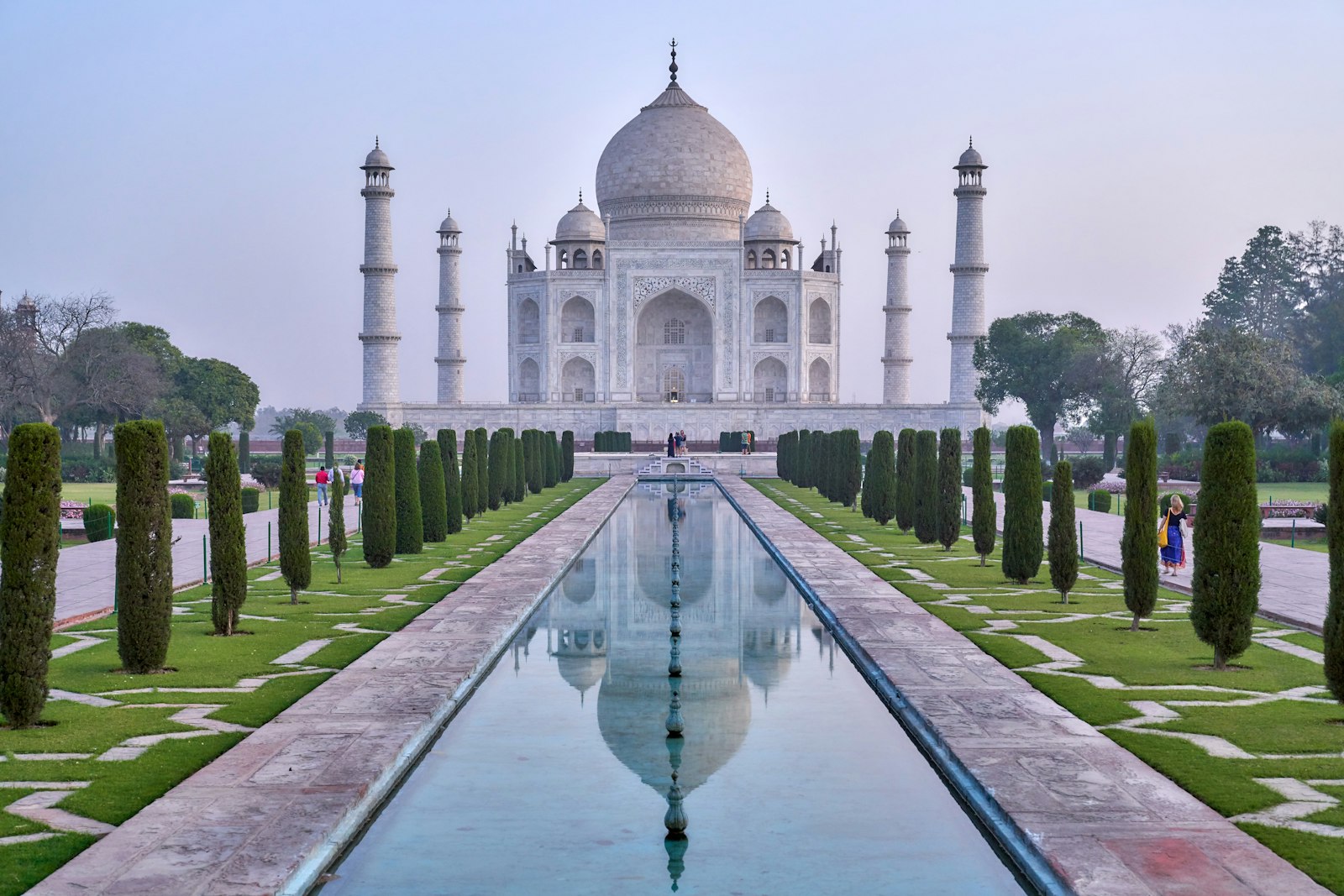
Taj Mahal at Sunrise
Taj Mahal at Sunrise
The Taj Mahal in the first light of dawn — the white marble turns gold and pink as the sun rises over the Yamuna.
📊 Budget Breakdown by Tier
Real 2026 prices per person per day across North India. Note: entry fees for foreign nationals are significantly higher and are included in the activities column. Indian nationals will find their totals substantially lower.
| Tier | Accommodation | Food | Transport | Activities | Daily Total |
|---|---|---|---|---|---|
| 🏕️ Backpacker (dorm + overnight trains) | ₹350–600 | ₹200–350 | ₹80–200 | ₹50–200 | ₹680–1,350 |
| 💰 Budget (private room, local transport) | ₹550–900 | ₹300–500 | ₹120–250 | ₹100–300 | ₹1,070–1,950 |
| ✨ Mid-Range (AC hotel, Ola/Uber) | ₹1,200–2,500 | ₹600–1,000 | ₹300–600 | ₹300–700 | ₹2,400–4,800 |
| 🏛️ Heritage Boutique (private room, guided) | ₹2,000–4,500 | ₹800–1,500 | ₹500–1,200 | ₹500–1,200 | ₹3,800–8,400 |
| 💎 Luxury (palace hotel, private car) | ₹6,000–18,000 | ₹2,000–5,000 | ₹1,500–3,500 | ₹2,000–6,000 | ₹11,500–32,500 |
💚 Backpacker (₹1,500–2,500/day)
Hostel dorms, overnight sleeper trains (saving accommodation nights), thali meals and street food, public buses and metro. This is entirely comfortable and produces the most authentic India experience.
🌟 Mid-Range (₹3,000–5,000/day)
Private AC hotel room, Ola/Uber for transport, sit-down restaurants from Zomato's top picks. Comfortable travel without budget stress. The 8.0+ Booking.com guesthouse in the ₹1,200–1,800 range hits the sweet spot.
👑 Luxury (₹10,000+/day)
India's palace hotels and heritage properties offer genuine 5-star luxury at 30–50% of equivalent Western prices. Taj Hotels, Oberoi, and ITC have properties across all three Golden Triangle cities that are worth the splurge for at least one night.
Get the free travel guide
+ weekly destination tips
Download the Rajasthan 7-Day Guide instantly — day-by-day itinerary, real budgets, local food spots & packing list. Plus weekly guides from 2,400+ travellers' favourite destinations.
No spam, ever. Unsubscribe with one click.
🏨 Where to Stay in the Golden Triangle
The best-value accommodation options across Delhi, Agra, and Jaipur. Prices are per room/dorm per night in 2026 and vary by season — expect 30–50% surcharges in December and January peak season.
Zostel Delhi (Paharganj)
Budget hostel · Paharganj, New Delhi
The most reliably reviewed hostel chain in India. The Delhi property in Paharganj is well-located (5-minute walk from New Delhi Railway Station), clean, and has a reliable community of solo travellers. The rooftop common area is excellent for meeting other backpackers. Book ahead via Booking.com or Zostel's own site.
OYO Rooms (All Three Cities)
Budget private rooms · Multiple locations
OYO is India's largest budget hotel aggregator — standardised, clean private rooms at consistent prices across the country. Quality control is uneven at the very lowest price points; filter to OYO Townhouse or OYO Premium listings for more reliable quality. Book via their app for the best prices. Useful when hostels are full.
Zostel Agra (Taj Ganj area)
Budget hostel · Near Taj Mahal South Gate
Well-positioned within walking distance of the Taj Mahal South Gate — saves e-rickshaw cost to the monument each morning. Clean, well-reviewed, and with a rooftop view of the Taj from some areas. The common area has a good crowd and reliable information sharing about Agra's main sights.
Pink City Heritage Guesthouses (Jaipur)
Family-run heritage guesthouses · Old City
The walled old city of Jaipur has dozens of family-run guesthouses in historic havelis (courtyard mansions). Staying in the old city means walking access to Hawa Mahal, Johari Bazaar and the main temples. Look for properties with 8.5+ Booking.com ratings and recent reviews — quality varies enormously. Pearl Palace Heritage near Hawa Mahal and Zostel Jaipur are consistently well-reviewed.
🍽️ Where to Eat on a Budget in the Golden Triangle
The best indicator of a good budget restaurant in India: it's full of local working people at lunchtime. A dhaba packed with truck drivers, office workers, and labourers is the single most reliable quality signal you will encounter. Tourist restaurants near monuments are almost always worse and more expensive.
Karim's (Delhi, near Jama Masjid)
Old Delhi institution · Near Jama Masjid
Operating since 1913, Karim's is Delhi's most famous Mughal restaurant. The mutton korma, seekh kebabs, and nihari (slow-cooked meat stew) are extraordinary by any standard. Meals ₹300–600 for two. It's in a lane behind Jama Masjid — narrow, no grand signage, packed at lunch. Worth finding.
Paranthe Wali Gali (Delhi, Chandni Chowk)
Street food lane · Old Delhi
A narrow lane in Chandni Chowk entirely dedicated to fried parathas — flatbreads stuffed with potato, paneer, rabri (sweet khoya), or kachalu. Eaten at plastic tables from metal plates. ₹60–120 for two parathas with pickle and sabzi. Lunch here is one of the most distinctly Delhi food experiences you can have for under ₹150.
Pinch of Spice (Agra, Sadar Bazaar)
Mid-range North Indian · Agra
The best non-tourist restaurant near the Taj Mahal area — a proper sit-down restaurant with a full North Indian menu, good dal makhani, butter chicken, and tandoori roti. ₹200–400 for a full meal for one. No touts outside and no one will hassle you for a commission-based guesthouse recommendation. Zomato 4.2+.
Lassiwala (Jaipur, MI Road)
Street food institution · M.I. Road, Jaipur
Open since 1944, Lassiwala serves one thing: thick Rajasthani lassi in clay cups. ₹40–70 per cup. Queue forms from 8am; they often sell out by 11am. This is one of India's most authentic street food experiences — a 75-year-old institution that has not changed its recipe, its clay cups, or its prices significantly.
LMB Restaurant (Jaipur, Johari Bazaar)
Rajasthani cuisine institution · Old City
Laxmi Misthan Bhandar, open since 1954. Famous for its Rajasthani thali (₹350–500), sweets counter (try ghewar and imarti), and the reliable quality that has made it the go-to for both locals and informed travellers. The ground floor sweet shop alone is worth a visit. AC seating upstairs.
Where to Stay in Golden Triangle India
Verified prices · Instant booking
Zostel Delhi (Paharganj)
Best-reviewed budget hostel in Delhi
Pearl Palace Heritage (Jaipur)
Boutique heritage guesthouse · Old City
Zostel Agra
Budget hostel near Taj Mahal South Gate
Taj Hotel & Convention Centre (Agra)
Luxury · Taj Mahal view pool rooms
Affiliate links — we earn a small commission at no extra cost to you. Helps keep our guides free.
Things to Do in Golden Triangle India
Tours & experiences · Instant confirmation
Taj Mahal Sunrise Private Tour with Guide
Most bookedGolden Triangle 7-Day Guided Tour
Best value guidedOld Delhi Food Walk (Chandni Chowk)
Top ratedJaipur Block-Printing Workshop
Affiliate links — we earn a small commission at no extra cost to you.
❌ Scams & Mistakes to Avoid
Tourist taxi touts at airports, stations and monuments
Pre-paid tourist taxis at major tourist spots charge 3–5x market rates. At Delhi and Agra railway stations, men will aggressively offer to take you to your guesthouse — these are invariably commission-based arrangements at inflated prices. Download Ola before you land. In Agra, use only the official prepaid e-rickshaw stands near monument gates.
The 'your hotel is closed / flooded / moved' scam
A specific and common scam near Agra Railway Station: a driver or tout tells you your pre-booked guesthouse is closed, burnt down or moved, then takes you to a commission guesthouse instead. Counter: have your hotel's phone number saved and call them in front of the driver. Your booking is almost always fine.
Not knowing foreigner vs Indian ticket prices
Foreign nationals pay significantly more at most ASI heritage sites. Taj Mahal: ₹1,100 foreigners vs ₹50 Indians. Budget accordingly — a 5-day Golden Triangle itinerary can cost ₹5,500–7,000 in monument entry fees alone for foreigners. Indian nationals pay ₹300–500 total for the same circuit. Carry your Aadhaar for Indian ticket queues (usually shorter).
Assuming UPI or cards work everywhere
UPI (GPay, PhonePe, Paytm) is accepted at most urban food stalls, shops, and auto-rickshaws. But rural dhabas, local markets, small guesthouses, and many auto-rickshaw drivers outside app coverage still need cash. Always carry ₹2,000–3,000 in cash. State Bank of India ATMs are the most reliable for both Indian and foreign cards.
Not booking trains at least two weeks in advance
Indian Railways sells out weeks ahead, especially on popular routes (Delhi–Agra, Delhi–Jaipur) during October–February peak season. Book on the IRCTC Rail Connect app. If all seats are WL (waitlisted), check if the waitlist number is low enough to likely confirm. Tatkal quota opens 1 day before at 1.5–2x price but guarantees a berth.
Eating at restaurants adjacent to monuments
Any restaurant with a direct view of the Taj Mahal, Red Fort, or Hawa Mahal prices itself for tourists with no competition. The food is usually mediocre. Walk five minutes in any direction from any major monument and prices drop 50–70%. The best quality indicator: a dhaba full of local working people at lunchtime.
💡 Pro Tips for Budget India Travel
Overnight trains eliminate accommodation nights
An overnight sleeper train (SL class) from Delhi to Varanasi costs ₹350–450 and takes 12 hours. You sleep in transit, arrive at dawn, and skip one full night of accommodation. On a 2-week trip, 3–4 overnight trains save ₹2,000–4,000. Sleeper class is crowded but safe — bring a small padlock for your bag's zip.
The unlimited thali is the best meal in India
A thali restaurant serves a metal tray with dal, two sabzis, rice, roti, papad and sweet — and refills when you finish. ₹80–160 for a complete, satisfying meal. Ask 'ek aur roti dijiye' (one more bread please) for a refill. This is the backbone of budget eating across the country and often the best meal you'll have on a given day.
Master four apps before you land
IRCTC Rail Connect (train booking — mandatory, register before arrival), Ola and Rapido (city transport — always check before flagging an auto), Zomato (find where locals actually eat), GPay or Paytm (UPI for everything). Download Google Translate with the Hindi offline pack. These four apps reduce cost and friction significantly.
Shoulder seasons save 20–35% on accommodation
October–November and February–March are the budget sweet spots. Weather is good, crowds are below peak, and hotels drop prices significantly. December–January peak season pushes accommodation costs 30–50% higher. June–August monsoon is India's cheapest season — 40% lower prices, fewer tourists, but possible transport disruptions.
Negotiation basics that actually work
Anything without a printed price tag is negotiable in India: auto-rickshaws (outside app coverage), market shopping, guesthouse rates for 3+ nights, boat rides, and guided tours. Start at 50–60% of the opening quote and settle around 65–75%. Always smile and stay friendly — negotiation here is commerce, not conflict. Walking away often brings the price down immediately.
Get travel insurance — food poisoning is real
Travel insurance for India costs ₹2,000–5,000 for 2 weeks. Medical costs are low by global standards, but food poisoning requiring IV treatment can run ₹5,000–15,000. A broken bone: ₹30,000–60,000. Emergency evacuation from a remote hill area without insurance can cost ₹2–5 lakh. It is not optional.
📸 Been to India?
Share your photos and get featured in this guide with full credit. Your real photos help thousands of travellers plan better trips.
❓ Frequently Asked Questions
Plan your India trip
You Might Also Like


Questions & Comments
Been there? Planning a trip? Drop it below — we reply to everything.
Have you visited this destination?
Any tips you'd add to this guide?
Questions before your trip?
Want a personalised itinerary?
We'll build your day-by-day plan in 24 hours — free.