Egypt in 7 Days: Pyramids, Luxor, Nile & Abu Simbel
The Giza plateau at 8am, Karnak's hypostyle hall, a felucca on the Nile at sunset, and Ramesses II's cliff-carved colossi at Abu Simbel. Seven days covering three civilisations with real costs in EGP & USD, visa info, and the mistakes that ruin most Egypt trips.
Delhi · Visited: Kedarnath, Gangotri, Manali, Shimla, Rishikesh & more · April 2026 · 18 min read
Seven days in Egypt is enough to see three civilisations at once — the Pharaonic world of the pyramids and Karnak, the Islamic splendour of Cairo's old city, and the Nubian warmth of Aswan's riverbanks. The Nile still flows through it all, unhurried, and Abu Simbel still faces the sunrise at the same angle Ramesses II commanded 3,200 years ago.
⚡ What Egypt Actually Is
Egypt is a country of 105 million people living almost entirely along a single river. The Nile Valley and Delta account for roughly 5% of Egypt's land area but hold 95% of the population. Everything else is Saharan desert. The tourist circuit — Cairo, Luxor, Aswan, Abu Simbel — follows this narrow green strip from north to south, and the density of monumental architecture along it is unmatched anywhere on earth.
The tourism reality: Egypt is chaotic, overwhelming, and occasionally exhausting in ways that Southeast Asia is not. Cairo is one of the world's most intense cities — 22 million people, relentless traffic, and a vendor culture at tourist sites that is aggressive by any standard. But the monuments are staggering in a way that photographs never convey. The Great Pyramid is not a postcard — it is 2.3 million limestone blocks assembled with sub-millimetre precision 4,500 years ago. Karnak's hypostyle hall has 134 columns, some 23 metres tall, covered in hieroglyphic reliefs that still hold their paint.
Seven days covers Cairo (Giza, Egyptian Museum, Islamic Cairo), Luxor (Karnak, Valley of the Kings), Aswan (Philae, Nubian culture) and Abu Simbel. A Nile cruise between Luxor and Aswan is the best way to connect the two cities if your budget allows. The exchange rate in 2026 is approximately $1 = 50 EGP.
CAI (Cairo)
Airport
Oct\u2013Apr
Best Season
7
UNESCO Sites
$35/day
Budget From
🌡️ Best Time to Visit Egypt
Oct–Nov — Early Season — Best Overall
Recommended
Temperatures of 22–30°C in Cairo, slightly cooler in Upper Egypt. The Abu Simbel sun alignment falls on October 22. Crowds are moderate, prices are reasonable, and the light across the Nile Valley is extraordinary. October and November are arguably the two best months to visit Egypt.
Dec–Feb — Peak Winter — Best Weather
Peak season, best temperatures
20–26°C across the main circuit. The most comfortable temperatures, especially for the Giza plateau and Valley of the Kings where shade is nonexistent. February 22 brings the second Abu Simbel sun alignment. This is peak tourist season — prices for Nile cruises and hotels increase 30–50%.
Mar–Apr — Shoulder Season — Good Value
Good value, warming
25–32°C with increasing warmth. March can bring khamsin sandstorms (hot desert winds) that reduce visibility. April is warmer but manageable. Good value as peak-season prices drop. Ramadan dates shift yearly — check the calendar, as some restaurants and services operate reduced hours.
May–Sep — Summer — Extreme Heat
Avoid if possible
Cairo regularly hits 40–45°C. Luxor and Aswan exceed 45°C. The Valley of the Kings adds geothermal heat from the tombs. Heat exhaustion is a genuine medical risk. Hotel prices are at their lowest, but the experience is compromised. Visit only if there is no alternative — and carry electrolytes, a serious hat, and litres of water.
✈️ Getting to Egypt
Key detail: Cairo International Airport (CAI) is the main gateway. Terminal 2 handles most international arrivals. Indian passport holders need an e-Visa ($25, apply at evisa.eg.gov.eg). Most Western passports can get a visa on arrival ($25) or apply online.
From India
5–6 hrs directDirect flights from Delhi and Mumbai to Cairo on EgyptAir and Air India (5–6 hours). Fares: ₹18,000–₹35,000 return if booked 2–3 months ahead. Connecting flights through Dubai, Doha, or Abu Dhabi on Emirates, Qatar Airways, or Etihad are often cheaper (₹14,000–₹25,000) with a 2–4 hour layover. E-Visa required ($25, apply 5–7 days before travel).
From Europe, USA & UK
Visa on arrival availableDirect flights from London (5 hrs), Paris (4.5 hrs), Frankfurt (4 hrs), New York (11 hrs). EgyptAir, British Airways, Lufthansa, and budget carriers like Wizz Air serve Cairo. Visa on arrival at Cairo airport ($25) or e-Visa in advance. Return fares from Europe start around $250–$450.
Internal flights & trains
Budget flights from $30Cairo to Luxor: flight 1 hour ($30–80 on EgyptAir/Air Cairo) or overnight sleeper train (EGP 450–700, ~$9–14). Luxor to Aswan: train 3 hours (EGP 100–200, ~$2–4). Aswan to Abu Simbel: shared minibus convoy ($30–50) or flight ($150–200 return). For comfort, the Nile cruise Luxor–Aswan covers the river segment beautifully.
Cairo airport to city centre
Use Uber/CareemUber or Careem from the airport to central Cairo costs EGP 150–250 (~$3–5, 30–45 minutes). Do not use the airport taxi touts in the arrivals hall — they charge EGP 500–800 for the same ride. Walk past them, exit to the car park area, and book via the app. The new Cairo Metro Line 3 now connects Terminal 2 to downtown (EGP 10, ~$0.20).
📅 7-Day Egypt Itinerary
This itinerary follows the classic Cairo → Luxor → Aswan → Abu Simbel route. Costs are per person at mid-range spending. All entry fees in EGP with USD equivalent at ~$1 = 50 EGP (2026 rate).
- ●Arrive at the Giza Pyramids complex at 8am sharp when it opens. Entry: EGP 450 (~$9). The light is golden, the vendors are still setting up, and you have 30 minutes before the tour buses arrive. Walk the full plateau at your own pace — the Great Pyramid of Khufu, Khafre’s pyramid with its surviving limestone cap, and the smallest Menkaure pyramid.
- ●Entering the Great Pyramid: EGP 100 extra (~$2). The ascending passage is cramped, hot, and claustrophobic — but the King’s Chamber with its granite sarcophagus is historically staggering. Solar Boat Museum: EGP 100 (~$2). Budget tip: choose one interior entry, Khufu is the most impressive.
- ●The Sphinx — entry included in the main Giza ticket. Walk the full perimeter of the enclosure. The best photograph angle is from the eastern viewing platform at 9–10am with the pyramid rising behind it.
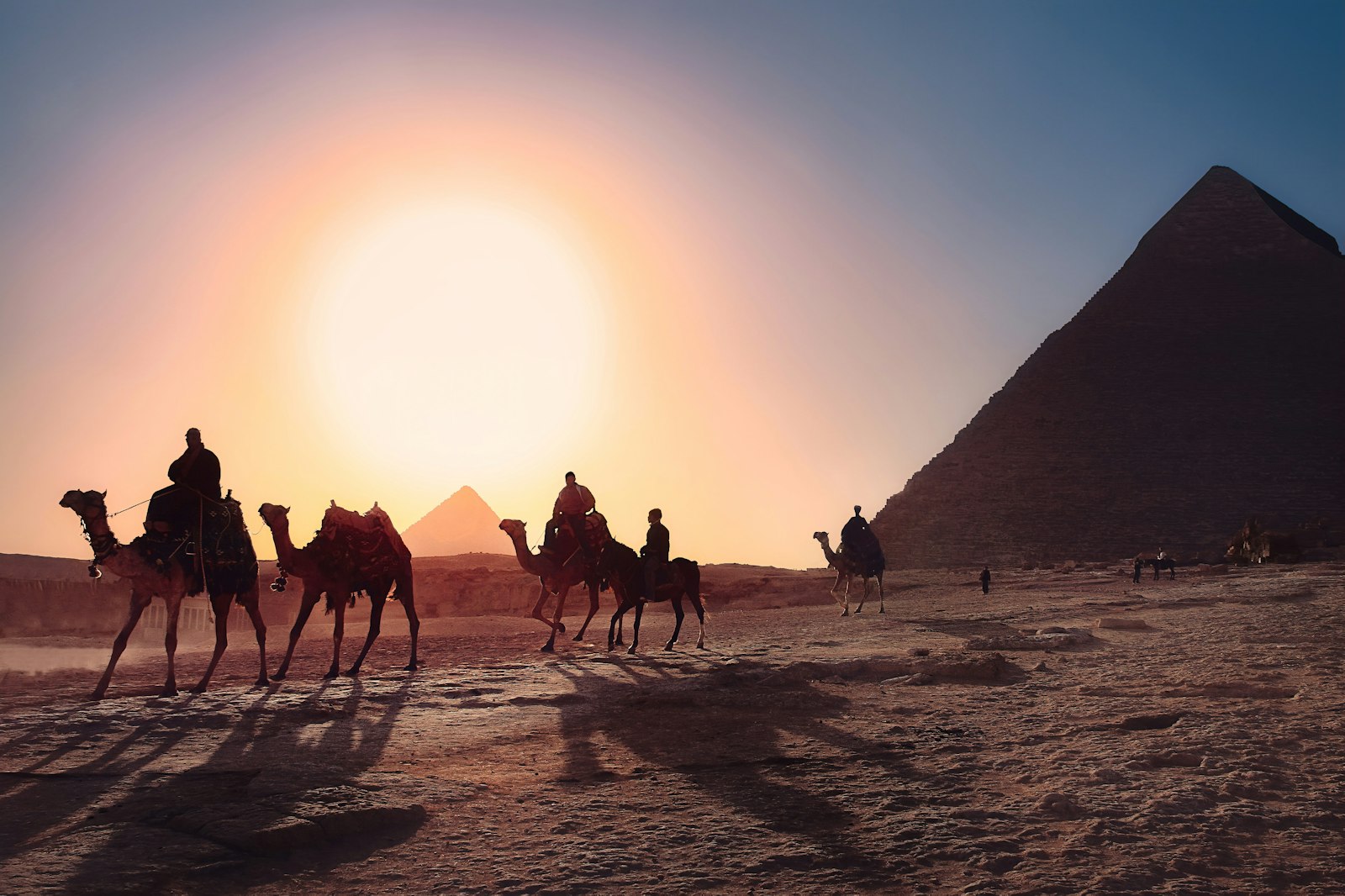
- ●Afternoon — Camel ride on the plateau perimeter: EGP 150–300 (~$3–6) for a short circuit. Agree on price and duration before mounting, and confirm there is no ‘extra fee to get off.’ This is optional but atmospheric if you negotiate well.
- ●Evening — Giza Sound and Light Show at the pyramids (EGP 250, ~$5). Theatrical but genuinely atmospheric with the pyramids illuminated against the night sky. Dinner at a local restaurant near Giza or in central Cairo.
- ●Morning — Egyptian Museum in Tahrir Square. Entry: EGP 200 (~$4). The Royal Mummies Room is EGP 300 extra (~$6) and worth every piastre — 11 royal mummies including Ramesses II. The Tutankhamun treasures fill two upper rooms: the golden death mask, the innermost gold coffin, the alabaster canopic jars. Give it 3 hours minimum.
- ●Alternatively: the Grand Egyptian Museum (GEM) near Giza, if fully open during your visit, houses the complete Tutankhamun collection in a purpose-built modern facility. Entry: EGP 400–600 (~$8–12). Check current opening status before planning your day.
- ●Afternoon — Khan el-Khalili bazaar after 2pm. Free to walk, endlessly atmospheric. Perfume shops, spice stalls, copperware, papyrus, silver jewellery. Haggle everything — the first quoted price is always 3–5x the actual selling price. Start at 20% of the ask and meet in the middle.
- ●Islamic Cairo — Mohammed Ali Mosque at the Citadel of Saladin (EGP 180, ~$3.60 for the Citadel complex). The alabaster mosque interior with brass lamps and sweeping views over Cairo. Al-Muizz Street — the medieval Islamic spine of old Cairo, one of the finest open-air museum streets in the world.
- ●Coptic Cairo — Hanging Church (free), Coptic Museum (EGP 100), Ben Ezra Synagogue (free). The oldest part of Cairo, built within the walls of a Roman fortress. A quiet contrast to the intensity of the rest of the city.
- ●Travel Cairo to Luxor: budget flight on EgyptAir or Air Cairo ($30–50, 1 hour) or overnight sleeper train departing Cairo Ramses Station (EGP 450–700, ~$9–14). The train is an experience in itself; the flight is faster.
- ●Morning — Karnak Temple complex. Entry: EGP 220 (~$4.40). The largest religious building ever constructed. 134 columns in the Hypostyle Hall, some 23 metres tall, covered in hieroglyphic reliefs. The Sacred Lake, the obelisks of Hatshepsut, and 2,000 years of construction from the Middle Kingdom through the Ptolemaic period. Allow 2–3 hours.
- ●The recently excavated Avenue of Sphinxes connecting Karnak to Luxor Temple is now fully walkable — a 2.7km processional road lined with sphinx statues, one of the great archaeological restorations of the decade.
- ●Evening — Luxor Temple. Entry: EGP 160 (~$3.20). Visit in the late afternoon (4–6pm) and stay for the illumination after dark — the ochre sandstone turns gold under spotlights and the atmosphere is extraordinary. Open until 10pm. This is one of the finest evening experiences in all of Egypt.
- ●Dinner on the Luxor corniche overlooking the Nile. A full Egyptian meal: EGP 80–150 (~$1.60–3). Koshary, grilled meats, fresh bread, and hibiscus juice (karkade).
- ●Early morning — Cross to the West Bank. Colossi of Memnon: free. Two enormous seated statues of Amenhotep III, 18 metres tall, guarding the entrance to the ancient necropolis. The best photo angle is from the road at sunrise.
- ●Valley of the Kings — EGP 240 (~$4.80) covers entry to three tombs. Tutankhamun’s tomb is EGP 100 extra (~$2) — small but contains the original sarcophagus. Ramesses VI’s tomb (KV9) is included in the standard ticket and has the most spectacular astronomical ceiling in the valley. No photography inside the tombs.
- ●Hatshepsut Temple (Deir el-Bahari) — EGP 140 (~$2.80). The three-tiered mortuary temple of Egypt’s greatest female pharaoh, set against sheer limestone cliffs. The colonnaded terraces and painted reliefs of the Punt expedition are extraordinary. Visit in the morning before the heat becomes intense.
- ●Optional: hot air balloon over the West Bank at dawn ($80–120/person, 45-minute flight). Sunrise from 300 metres over the Valley of the Kings, Hatshepsut Temple, and the Nile is one of Egypt’s defining experiences. Book the evening before through your hotel.
- ●Afternoon — Felucca on the Nile at sunset. EGP 50–100 (~$1–2) per hour for the whole boat. Arrange at the corniche. Watch the West Bank cliffs turn pink and the river go silver as the sun drops. The best EGP 80 you will spend in Egypt.
- ●Travel Luxor to Aswan by train (EGP 100–200, ~$2–4, 3 hours) or minibus (EGP 80, scenic Nile road). Aswan is smaller, quieter, and many travelers find it the most beautiful part of Egypt — the Nile here is dotted with green islands and Nubian villages.
- ●Philae Temple — EGP 180 (~$3.60) + EGP 60 (~$1.20) for the motorboat from Shellal dock. The temple of Isis on its island, rebuilt after the Aswan High Dam flooded the original site. One of the great stories of archaeological rescue. Visit in the morning light when the reflections on the lake are clearest.
- ●Aswan High Dam — EGP 60 (~$1.20). The Soviet-era dam that created Lake Nasser and changed Egypt forever. The scale is genuinely impressive. Combined visit with the Unfinished Obelisk (EGP 80, ~$1.60) — the largest ancient obelisk ever attempted, abandoned in the quarry when it cracked.
- ●Afternoon — Nubian Village. Hire a small motorboat from the corniche (EGP 50–80 return, ~$1–1.60) to visit a Nubian village on Elephantine Island or across the river. Colourful painted houses, strong tea, friendly locals, and souvenir shopping at fair prices. Nubians are significantly less pushy than Cairo vendors.
- ●Evening — Walk the Aswan corniche at sunset. The Nile between Aswan’s islands — Elephantine, Sehel, the Botanical Garden — is lined with palms and granite boulders. The most peaceful evening in the itinerary.
- ●Abu Simbel day trip from Aswan. This is non-negotiable — it is the single most important detour in Egyptian travel. The temple is 300km south of Aswan in the Nubian desert.
- ●Transport options: shared minibus convoy departs 3–4am from Aswan ($30–50/person, 3–4 hours each way, convoy for security). The convoy system is reliable and well-organised. Budget flight on EgyptAir ($150–200 return, 45 minutes) for comfort.
- ●Abu Simbel — EGP 450 (~$9). Four colossal 20-metre statues of Ramesses II carved into the cliff face, plus the interior hall with painted reliefs of the Battle of Kadesh. The smaller Temple of Nefertari next to it is equally remarkable. Spend 2 hours minimum.
- ●The sun alignment: on February 22 (Ramesses’ birthday) and October 22 (his coronation), the rising sun penetrates the entire 60-metre length of the inner sanctuary and illuminates three of the four statues at the back — the god of darkness remains in shadow. Plan your dates around this if at all possible.
- ●Return to Aswan by afternoon. Evening — Aswan souq for Nubian textiles, hibiscus tea (karkade), saffron, and handmade crafts. The best market in Egypt, less aggressive than Khan el-Khalili with comparable quality.
- ●Option A — Nile cruise segment: if you booked a 2–3 night Luxor–Aswan cruise earlier in the trip, Day 7 is your final morning on the river. The cruise covers Kom Ombo (dual temple), Edfu (best-preserved Ptolemaic temple), and the lock system at Esna. All-inclusive cruises start from $200/person for budget, $400+ for mid-range.
- ●Option B — Cairo return and farewell: fly Aswan to Cairo ($50–100, 1.5 hours). Cairo Tower (EGP 200, ~$4) for panoramic views of the city and the Nile. Al-Azhar Park (EGP 30, ~$0.60) — a beautiful Islamic garden with views over Islamic Cairo.
- ●Afternoon — Final visit to any missed Cairo sites. The Muizz Street walk, a traditional ahwa (coffee house) for backgammon and mint tea, or the Cairo Opera House precinct for bookshops and galleries.
- ●Departure from Cairo airport — budget at least 3 hours before international flights. The airport is sprawling and security queues can be long. Uber from central Cairo: EGP 200–300 (~$4–6, 40–60 minutes). Do not use airport taxis — they charge EGP 500–800 for the same ride.
Free · Personalised · 24hr Reply
Want this Egypt plan customised for your dates?
Tell us your group size, budget, and travel dates. We'll build a day-by-day plan around you — completely free.
No account · No credit card · Takes 2 minutes
🏛️ Landmark Guide
The essential monuments and archaeological sites in priority order. All entry fees are as of early 2026. A licensed Egyptologist guide (EGP 500\u2013800/half day, ~$10\u201316) transforms the experience at every major site.
Great Pyramid of Khufu (Giza)
The oldest and largest of the Seven Wonders — 2.3 million limestone blocks, 146 metres tall when built, assembled with sub-millimetre precision 4,500 years ago. Interior entry is EGP 100 extra. The King’s Chamber is a plain granite room with an empty sarcophagus — hot, claustrophobic, and conceptually staggering. Visit at 8am for golden light and thin crowds.
Karnak Temple Complex (Luxor)
The largest religious building ever constructed. The Hypostyle Hall alone — 134 columns, 23 metres tall, covering 5,000 square metres — took multiple pharaohs over a century to complete. The Sacred Lake, Hatshepsut’s obelisks, and the Avenue of Sphinxes to Luxor Temple make this the single most impressive temple complex in Egypt.
Valley of the Kings (Luxor West Bank)
62 royal tombs cut into the limestone cliffs of the Theban Hills. Ramesses VI’s tomb (KV9) has the finest astronomical ceiling. Tutankhamun’s tomb (EGP 100 extra) is small but contains the original sarcophagus. Seti I’s tomb (EGP 1,000 extra) is the most elaborate but rarely visited due to cost. No photography inside.
Abu Simbel (Aswan / Nubia)
Ramesses II’s greatest monument — four 20-metre statues carved into the cliff face overlooking Lake Nasser. The interior hall has painted reliefs of the Battle of Kadesh. The entire temple was relocated 65 metres higher in the 1960s to save it from the rising waters of Lake Nasser. The engineering feat of the rescue is nearly as impressive as the original construction.
Philae Temple (Aswan)
The temple of Isis on a lake island, reached by motorboat. Another rescued monument — the original island was submerged by the Aswan Dam and the temple was dismantled and rebuilt on higher ground. The reliefs depicting Isis, Osiris, and Horus are among the finest in Egypt. Morning light on the water creates extraordinary reflections.
Egyptian Museum / Grand Egyptian Museum
The Tahrir Square museum houses 120,000 artefacts including the Royal Mummies and Tutankhamun’s treasures. The new Grand Egyptian Museum (GEM) near Giza is a modern, purpose-built facility for the complete Tutankhamun collection. Check which is open and plan accordingly — either is essential.
Egypt — Pyramids, Temples & the Nile
Five thousand years of monumental architecture along the world's longest river.
📸
Great Pyramids of Giza
Great Pyramids of Giza
The last surviving Wonder of the Ancient World — 4,500 years old and still the most recognisable monument on earth.
💰 Budget Breakdown
Egypt is one of the most affordable major travel destinations in the world. Budget travellers can see every major site for $35\u201360/day, mid-range for $100\u2013200/day, and luxury for $350\u20131,200+/day. All prices in EGP and USD at approximately $1 = 50 EGP (2026).
| Category (7 days) | 💰 Budget | ✨ Mid-Range | 💎 Luxury |
|---|---|---|---|
| 🏨 Accommodation (7N) | EGP 2,800–7,000 ($56–140) | EGP 17,500–35,000 ($350–700) | EGP 70,000–210,000 ($1,400–4,200) |
| 🍽 Food & Drinks | EGP 2,800–5,250 ($56–105) | EGP 7,000–14,000 ($140–280) | EGP 17,500–52,500 ($350–1,050) |
| 🚗 Transport | EGP 3,500–7,000 ($70–140) | EGP 7,000–14,000 ($140–280) | EGP 17,500–52,500 ($350–1,050) |
| 🎯 Activities & Sites | EGP 3,500–7,000 ($70–140) | EGP 8,750–17,500 ($175–350) | EGP 35,000–140,000 ($700–2,800) |
| TOTAL (per person) | $245–420 | $700–1,400 | $2,450–8,400+ |
💚 Budget ($35\u201360/day)
Hostels and budget hotels (EGP 400\u20131,000/night), local restaurants and street food (EGP 40\u201380/meal), shared transport and trains, and all major sites. Egypt at this level is one of the cheapest major travel destinations on earth.
✨ Mid-Range ($100\u2013200/day)
3\u20134 star hotels (EGP 2,500\u20135,000/night), licensed Egyptologist guides, domestic flights, Nile cruise ($200\u2013400/person), and restaurant dining. The sweet spot for comfort and historical depth.
💎 Luxury ($350\u20131,200+/day)
5-star properties like the Old Cataract Aswan or Four Seasons Cairo, private guides, luxury Nile cruises (Sanctuary, Oberoi), Abu Simbel by charter flight, and VIP tomb access. Egypt luxury travel rivals any destination globally.
Get the free travel guide
+ weekly destination tips
Download the Rajasthan 7-Day Guide instantly — day-by-day itinerary, real budgets, local food spots & packing list. Plus weekly guides from 2,400+ travellers' favourite destinations.
No spam, ever. Unsubscribe with one click.
🏨 Where to Stay in Egypt
Stay in central Cairo (Downtown or Garden City) for the museum and Islamic Cairo. In Luxor, the East Bank corniche has the best hotel selection. Aswan's corniche hotels overlook the Nile islands. If doing a Nile cruise, it replaces 2\u20133 nights of hotel accommodation between Luxor and Aswan.
Kempinski Nile Hotel
Luxury · Cairo Garden City
Nile-facing 5-star in Garden City with rooftop pool overlooking the river. Walking distance to the Egyptian Museum and Tahrir Square. The Osmanly restaurant serves excellent Egyptian cuisine. The best balance of luxury and location in Cairo for first-time visitors.
Cairo Downtown Hostels
Budget · Cairo Downtown
Downtown Cairo has dozens of well-rated hostels and budget hotels within walking distance of the Egyptian Museum. Look for properties rated 8+ on Booking.com near Talaat Harb Square. Breakfast is often included. The area is noisy but perfectly located for exploring the city on foot.
Steigenberger Nile Palace
Mid-range · Luxor
Nile-facing hotel on the East Bank corniche with pool, gardens, and direct views across to the West Bank. Walking distance to Luxor Temple. The rooftop bar at sunset with the West Bank cliffs turning pink is one of the great hotel views in Egypt.
Sofitel Legend Old Cataract
Luxury · Aswan
The most storied hotel in Nile Valley travel. Agatha Christie wrote here, and the terrace overlooking the Nile cataracts and Elephantine Island is one of the finest hotel views in the world. Victorian architecture, butler service, and a swimming pool perched above the river. Worth a splurge for at least one night.
Nile Cruise (Luxor–Aswan)
All-inclusive · Nile Valley
A Nile cruise replaces individual hotel nights in Luxor and Aswan while covering all the temples between the two cities with an onboard Egyptologist. Budget cruises from $200/person, mid-range (Movenpick, Sonesta) $300–500, luxury (Sanctuary, Oberoi) $500–1,000+. The river itself is the highlight — temples from the deck at sunset.
🍽️ Where to Eat in Egypt
Egyptian food is hearty, flavourful, and extraordinarily cheap. The national dish is koshari \u2014 a layered bowl of pasta, rice, lentils, chickpeas, tomato sauce, and crispy fried onions. Ful medames (slow-cooked fava beans) is the breakfast of 100 million Egyptians. Street food is safe, fresh, and everywhere.
Abou Tarek
Koshari institution · Cairo Downtown
Cairo’s most famous koshari restaurant, serving nothing else since 1950. Four floors, always packed, and the koshari is genuinely the best in the city. A large bowl costs EGP 40–60 (~$0.80–1.20). The crispy onions are made fresh every hour. This is the single most essential eating experience in Egypt — cheap, filling, and completely authentic.
Ful & Tameya Street Carts
Street food · Everywhere
Ful medames (slow-cooked fava beans with tahini, lemon, and cumin) and tameya (Egyptian falafel made from fava beans, not chickpeas) are served from carts across every city from dawn. A ful sandwich: EGP 10–20 (~$0.20–0.40). Three tameya in bread: EGP 15–25 (~$0.30–0.50). This is what Egyptians actually eat for breakfast, and it is delicious.
Grilled Meats & Kebab Houses
Egyptian grill · Cairo, Luxor, Aswan
Kofta (spiced minced meat), shish tawook (marinated chicken), and mixed grill platters are served at local restaurants across Egypt. A full grilled meat plate with bread, salads, tahini, and rice: EGP 100–200 (~$2–4). Look for places with high local turnover and a charcoal grill visible from the street. Avoid the tourist-menu restaurants near the sites.
Sequoia (Zamalek, Cairo)
Fine dining · Nile-front
Cairo’s most atmospheric restaurant, set on the northern tip of Zamalek Island with the Nile flowing on both sides. Egyptian and Mediterranean cuisine, cocktails, and a view that justifies the price. EGP 500–1,500/person (~$10–30). This is the finest dinner setting in the capital — reserve for your last night.
Karkade & Sahlab
Egyptian drinks · Everywhere
Karkade (hibiscus tea, served hot or iced) is Egypt’s national drink — tart, refreshing, and available at every cafe for EGP 10–20 (~$0.20–0.40). Sahlab (warm milk drink thickened with orchid flour, topped with cinnamon and nuts) is the winter speciality. Fresh sugarcane juice from street vendors: EGP 5–10 (~$0.10–0.20). Egypt’s drink culture is as rich as its food.
Where to Stay in Egypt
Verified prices · Instant booking
Kempinski Nile Hotel Cairo
5-Star Luxury · Cairo
Steigenberger Nile Palace Luxor
4-Star · Luxor Corniche
Sofitel Legend Old Cataract Aswan
5-Star Heritage · Aswan
Movenpick Resort Aswan
4-Star Island Resort · Aswan
Affiliate links — we earn a small commission at no extra cost to you. Helps keep our guides free.
Things to Do in Egypt
Tours & experiences · Instant confirmation
Giza Pyramids & Sphinx Guided Tour
Must doLuxor: Valley of the Kings & Hatshepsut Temple
EssentialAbu Simbel Day Trip from Aswan
Non-negotiableNile Cruise Luxor to Aswan (3–4 Nights)
Affiliate links — we earn a small commission at no extra cost to you.
❌ Mistakes to Avoid
Visiting the Pyramids without a licensed guide
The Giza plateau without a guide means 30–40 vendors following you from the gate. A licensed Egyptologist guide (EGP 500–800 for a half day, ~$10–16) keeps vendors at distance, provides context, and transforms the visit. The cost is negligible against the improvement.
Visiting in summer (May–September)
Cairo in July hits 45°C. The Giza plateau has zero shade. The Valley of the Kings adds geothermal heat. Heat exhaustion is a real risk. October through April is when Egypt is meant to be visited — 20–28°C, blue skies, and manageable crowds.
Skipping Abu Simbel because it’s ‘too far’
The most common regret of Egypt travelers. The 3–4 hour convoy costs $30–50 and the experience — four 20-metre cliff-carved colossi — is arguably more staggering than the pyramids. It exists nowhere else on earth. It is the single non-negotiable detour.
Buying ‘papyrus’ from tourist shops
99% of papyrus sold in bazaars and outside temples is made from banana leaves or dried reeds. It looks and feels like papyrus but is worthless in 10 years. Authentic papyrus is only reliably sold at the Dr. Ragab Papyrus Institute near Cairo. The price difference is minimal; the quality difference is permanent.
Skipping Aswan to fly straight back from Luxor
Many itineraries fly Cairo–Luxor and back, missing Aswan entirely. This is the wrong choice. Aswan is the most peaceful and beautiful part of the Nile Valley — the Nubian culture, Philae Temple, and Abu Simbel are all here. Adding two nights costs almost nothing but transforms the trip.
Not downloading Uber/Careem before arrival
Airport taxi touts in Cairo charge EGP 500–800 for rides that cost EGP 150–250 on Uber or Careem. The same applies everywhere in Cairo. Download both apps, buy a local SIM at the airport (EGP 100–200 for 10–20GB data on Vodafone or Orange), and never negotiate with a street taxi again.
💡 Pro Tips for Egypt
Arrive at Giza at 8am — opening time
The Great Pyramid complex opens at 8am. The light is warm gold, the plateau is not yet packed, and vendors are still setting up. By 11am, 30 tour buses have arrived. The first hour is a completely different experience from the rest of the day.
Abu Simbel sun alignment: Feb 22 & Oct 22
Ramesses II engineered the temple so that twice a year the rising sun penetrates the entire 60-metre sanctuary and illuminates three of four statues — the god of darkness stays in shadow. Plan your trip around these dates if at all possible.
Luxor Temple at night is non-negotiable
Luxor Temple is open until 10pm and illuminated after dark. The golden sandstone columns and ancient sphinxes take on a theatrical, deeply atmospheric quality at night. Far less crowded than daytime. Combine with dinner on the corniche.
Felucca at sunset in Aswan
A private felucca for an hour at sunset costs EGP 50–100 (~$1–2). The Nile between Aswan’s islands is lined with palms, Nubian villages, and ancient granite boulders. The light at 5pm turns everything amber. No motor noise, just the river and the wind.
Haggling is the system, not an option
Prices are not fixed unless on a government board. Opening bazaar price: 3–5x the final price. Camel ride ask: always 3x fair price. Rule: smile, offer 20% of the ask, shake hands, meet in the middle. Never get angry — it is commerce, not confrontation.
Carry water everywhere — seriously
Even in the cooler months, the sun at Giza, Karnak, and the Valley of the Kings is relentless. Carry at least 2 litres per person for any outdoor site visit. Bottled water costs EGP 5–10 (~$0.10–0.20) from shops — buy it before reaching the sites where it costs 3x more.
📸 Been to Egypt?
Share your photos and get featured in this guide with full credit. Your real photos help thousands of travellers plan better trips.
❓ Frequently Asked Questions
Plan your Egypt trip
You Might Also Like


Questions & Comments
Been there? Planning a trip? Drop it below — we reply to everything.
Have you visited this destination?
Any tips you'd add to this guide?
Questions before your trip?
Want a personalised itinerary?
We'll build your day-by-day plan in 24 hours — free.