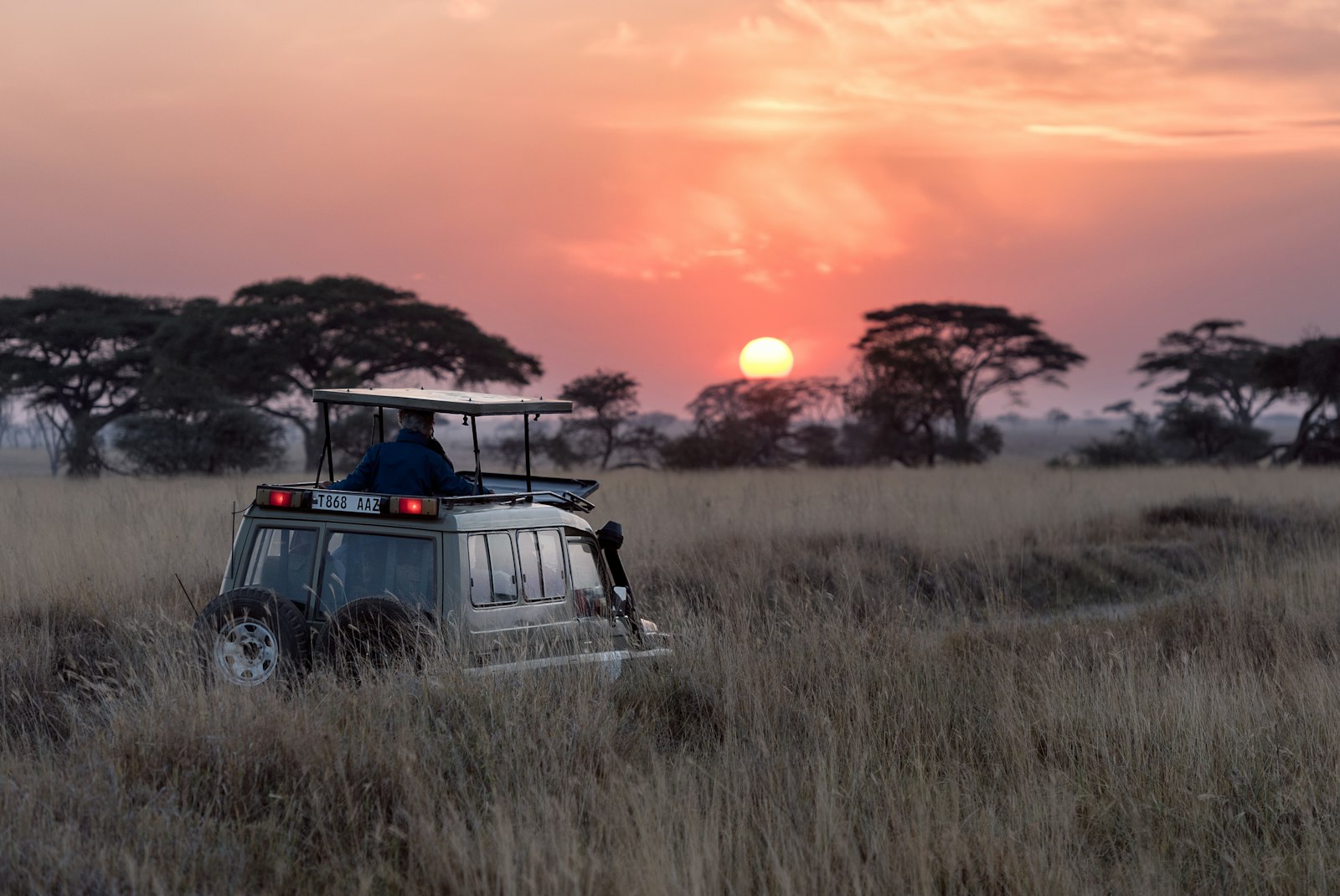
Kruger National Park in 5 Days: Big Five, Self-Drive Safari & the Panorama Route
20,000 sq km of wilderness where a leopard walks across your bonnet and a lioness carries her cub past your window at dawn. Africa's original safari park — and still its greatest.
Delhi · Visited: Kedarnath, Gangotri, Manali, Shimla, Rishikesh & more · April 2026 · 14 min read
Kruger is the best self-drive safari on earth — you park on a tar road at dawn, cut the engine, and a pride of twelve lions crosses 10 metres in front of you. No ranger. No script. Just you and the animals and 20,000 square kilometres of bush that couldn't care less you're there.
🦁 What Kruger Actually Is
Kruger National Park is the oldest and largest national park in South Africa — 19,485 square kilometres of savanna, thornveld, and mopane woodland straddling Limpopo and Mpumalanga provinces. It shares an unfenced border with Mozambique's Limpopo National Park and Zimbabwe's Gonarezhou, forming the Great Limpopo Transfrontier Park, one of the largest wildlife conservation areas in the world.
The park was proclaimed by President Paul Kruger in 1898 and opened to the public as a motor game reserve in 1926 — making it the pioneer of the self-drive safari concept that now defines African wildlife tourism. Today it hosts an estimated 147 mammal species, 507 bird species, 114 reptile species, and the full Big Five: lion, leopard, elephant, Cape buffalo, and white rhinoceros.
What makes Kruger uniquely accessible is its infrastructure. Tar roads connect the main camps, there are no dangerous river crossings without bridges, GPS works throughout, and the SANParks (South African National Parks) rest camps offer a range of accommodation from basic huts to air-conditioned chalets — all inside the park fence. You genuinely do not need a guide. You drive yourself, at your own pace, and find your own lion. When you do — and you will — it is completely unforgettable.
MQP / HDS
Nearest Airport
May–Sep
Best Season
147+
Mammal Species
$120/day
Budget From
🌡️ Best Time to Visit Kruger
May–Sep — Dry Season — Best for Wildlife
Recommended
The definitive safari season. Vegetation is stripped bare, animals concentrate at permanent waterholes, and morning temperatures are cool (8–18°C). Lion sightings from the road are at their most frequent. June–August is peak, booked months in advance. The park gates open at 5:30am and the golden hour drive is extraordinary.
Oct–Nov — Spring — Good & Less Crowded
Good value
Temperatures rise (22–34°C), the first rains arrive in November, and the bush begins to green. Animal sightings are still excellent, particularly elephant. Newborn impala and other prey species fill the plains — which keeps predators active. Fewer visitors than peak dry season, meaning shorter queues at popular waterholes.
Dec–Feb — Wet Season — Lush but Harder
For birders / budget
The green season transforms the landscape into thick bush — beautiful to look at, but animals are spread across large areas and visibility through dense vegetation is limited. Malaria risk is higher. Birdwatching peaks as migratory species arrive. Accommodation is significantly cheaper. The park is much quieter.
Mar–Apr — Late Wet / Shoulder — Mixed
Underrated
Still lush and warm (25–35°C). Animals begin moving back toward waterholes as the rains taper. Good for predators that have had a season of easy hunting among the newborns. April specifically is underrated — the rains end, temperatures drop, and sightings improve rapidly. Conservation fee is ZAR 412/person/day year-round.
✈️ Getting to Kruger
Key detail: There are two airports serving Kruger. Kruger Mpumalanga International Airport (MQP / KMIA) near Nelspruit/Mbombela is closest to the southern gates (Numbi, Paul Kruger, Phabeni). Hoedspruit (HDS) serves the central/northern camps and private reserves including Sabi Sands. Flying from Johannesburg (O.R. Tambo) takes about 1 hour to either.
Fly Johannesburg → KMIA / Hoedspruit (recommended)
Best optionO.R. Tambo International (JNB) has multiple daily flights to KMIA (~1 hr, from $70 one-way) and Hoedspruit (HDS, ~1 hr, from $90). Collect a hire car at the airport — Toyota Corolla from $35/day, no 4WD needed on Kruger's tar roads. From KMIA to Paul Kruger Gate: 45 minutes. From Hoedspruit to Orpen Gate: 35 minutes.
Self-Drive from Johannesburg (budget option)
Budget / flexibleJNB to Numbi Gate via the N4 highway: approximately 470km, 5–5.5 hours. The N4 is well-maintained and straightforward. Petrol stations are available en route and at Komatipoort near the southern border gate. Driving yourself from Joburg is the most flexible budget option — you arrive at the gate on your own schedule.
Bus to Nelspruit + local transfer
BudgetIntercape and Greyhound run daily coaches from Johannesburg to Nelspruit (Mbombela), roughly 5 hours and from ZAR 280. From Nelspruit, hire a car or take a shuttle to your gate. This is viable for budget travellers who can manage without a hire car — some camps are walkable from the gate, though very limited without transport inside the park.
Private charter or lodge transfer (luxury)
Luxury / seamlessMost private lodges in Sabi Sands and the northern reserves (Singita, Lion Sands, Londolozi) arrange lodge-to-lodge charter flights from Johannesburg or Cape Town directly to bush airstrips — typically 1.5–2 hrs and included in the lodge package or from $300 supplement. The most seamless option for luxury travellers.
📅 5-Day Kruger Itinerary
Each day card is expandable. The itinerary follows the classic southern-to-central Kruger route — maximising lion and leopard country. The conservation fee (ZAR 412/day for foreign adults) is paid per person per day at the gate and is non-negotiable.
- ●Fly into KMIA (Nelspruit) or drive from Johannesburg via the N4. Collect your hire car — a Toyota Corolla or Fortuner is sufficient for all of Kruger's tar roads. No 4WD required unless you plan extensive gravel loops.
- ●Enter via Paul Kruger Gate or Numbi Gate — the two main southern entrances, closest to Skukuza. Pay the daily conservation fee (ZAR 412/adult/day for foreigners) at the gate. Get your SANParks day map from the gate kiosk — free and essential.
- ●Afternoon game drive on the H1-1 between Paul Kruger Gate and Skukuza: elephants, impala, wildebeest and zebra are almost guaranteed within the first 30 minutes. Drive at 20–30km/h and stop at every waterhole.
- ●Check into Skukuza Rest Camp (from ZAR 650/$35/night for a 2-bed hut; ZAR 1,100/$60 for an air-conditioned chalet). Skukuza is the largest camp in Kruger — restaurant, shop, petrol station, and wi-fi. Book via sanparks.org, up to 11 months in advance.
- ●Sundowner on the camp's restaurant deck overlooking the Sabie River. Hippos grunt below and occasionally surface. Order a Windhoek lager and a boerewors roll (ZAR 80) and watch the river turn orange. This is Kruger at its most accessible and it's extraordinary.
- ●Gate opens 5:30am (May–Sep). Be in your car by 5:15am. Drive the H4-1 from Skukuza towards Lower Sabie — this 40km tar road along the Sabie River is the single best leopard road in all of Kruger. Drive slowly. Scan every tree along the riverbank.
- ●Nkhulu picnic site (H4-1 km 23): cheetah are sometimes spotted in the open thornveld east of the picnic site in the early morning. Stop and scan for 10 minutes. The same area produces regular lion sightings near the Mlondozi waterhole just north.
- ●Lower Sabie waterhole (in front of the camp): elephant herds crossing the Sabie River in single file — often 60 to 80 animals — is one of the most extraordinary wildlife spectacles in Africa. Time your arrival at the waterhole for 7:30–9am and again at 3:30–5pm.
- ●Lunch at Lower Sabie camp restaurant (ZAR 120–180) on the elevated deck directly above the hippo pools. Hippos surface and spar below while you eat. Pick up a cold picnic pack from the camp shop (ZAR 60) if you prefer to eat in the bush.
- ●Afternoon: drive the S28 loop — a slow gravel track south of Lower Sabie through mixed thornveld. Lions sleep in the long grass alongside this road in the wet season; in the dry season they use the track itself as a path. Close all windows and drive at walking speed.
- ●Book a SANParks sunset guided drive from Lower Sabie camp reception (ZAR 400/$22) — open vehicle, ranger with radio contact, departing 3:30pm. Night drives (ZAR 500/$27) are also available and reveal civets, genets, and sometimes leopards hunting.
- ●Dawn drive north on H1-2 from Lower Sabie to Satara (84km, 2 hrs with stops). This stretch of open thornveld has the highest lion density of any road in Kruger. Early mornings between July and September often see lions finishing a night's hunt at the roadside.
- ●Stop at Tshokwane picnic site (midway) for coffee and a boerewors roll (ZAR 45). The picnic site is popular with vervet monkeys and baboons — keep windows closed. The sightings board here often has morning lion reports from rangers.
- ●Satara Rest Camp sits in open, flat thornveld — the most lion-dense region in the park. Check in (from ZAR 750/$40 for an air-conditioned chalet). The camp's sightings board is your single best intelligence source for the afternoon drive. Rangers and self-drivers update it every few hours with precise road names and kilometre markers.
- ●Afternoon: drive the Satara Lion Triangle — S100 south loop, S41 west, and the H6 north. Lions are visible in the open in the dry season, often resting under a solitary tree within metres of the road. White rhino are frequently seen near the Gudzani waterhole on the S41.
- ●Night drive from Satara camp (ZAR 500/$27; book at camp reception, maximum 20 people, departing 7pm). The ranger uses a filtered spotlight. Lions hunting, spotted hyenas on the roads, honey badgers, and the occasional civet crossing in the headlights. One of the definitive Kruger experiences.
- ●Drive north from Satara on H1-4 (62km, 90 mins with stops). Olifants Rest Camp is the most spectacular camp in all of Kruger — perched on a 100-metre sandstone cliff above the Olifants River, with a panoramic terrace view over a wide bend in the river.
- ●The terrace at Olifants (open to day visitors as well as camp guests, ZAR 50 day entry fee) overlooks an active waterhole and river crossing. Elephant herds, cape buffalo in large aggregations (500+ animals during the dry season), and large crocodile colonies are visible from the cliff throughout the day.
- ●Morning loop: drive the S90 and S91 roads along the Olifants River. These quiet gravel roads produce white rhino sightings regularly — often solitary bulls or mother-calf pairs grazing the riverine woodland. Large hippo pods are visible from several designated viewing points.
- ●Birdwatching from the Olifants terrace: African fish eagle calling from the leadwood trees, Goliath heron stalking the shallows, and — for the lucky — Pel's fishing owl roosting in the sycamore fig trees above the river. The terrace at dawn is exceptional for birders.
- ●Check into Olifants Rest Camp chalet (ZAR 750/$40/night). The camp has a restaurant, small shop, and petrol. Sunset from the terrace looking west over the river bend is perhaps the most cinematic view in the entire park — bring a sundowner drink and watch it.
- ●Final 2-hour dawn game drive from Olifants — exit through Phalaborwa Gate (10 minutes north) or drive south to exit via Orpen Gate (45 minutes south). Gate opens at 5:30am; plan to be driving by 5:15am for the last lion chance.
- ●Drive the Panorama Route — one of South Africa's great scenic drives (R532 from Hoedspruit/Orpen area). Allow 3 hours for the full loop. Bourke's Luck Potholes: cylindrical rock potholes carved by swirling water at the confluence of the Blyde and Treur rivers. Entry ZAR 242 per vehicle.
- ●Blyde River Canyon viewpoints: the Three Rondavels — three massive cylindrical rock formations rising from the canyon floor — are the iconic image of the Panorama Route. God's Window: stand at 1,800m altitude and look down through clouds to the Lowveld escarpment 1,000 metres below. The scale is hard to process.
- ●Graskop town: a small forestry town that has become a culinary stop on the Panorama Route. The Graskop Gorge Lift — a glass-sided gondola descending 50m into a lush forested gorge — costs ZAR 280 and takes 25 minutes.
- ●Dinner at Harrie's Pancakes in Graskop — a local institution since 1984. Both sweet (caramel, banana, local jams) and savoury (chicken curry, smoked salmon) pancakes at ZAR 90–140. Incredibly popular with South Africans and international visitors alike — arrive before 6pm to avoid a queue.
Free · Personalised · 24hr Reply
Want this Kruger National Park plan customised for your dates?
Tell us your group size, budget, and travel dates. We'll build a day-by-day plan around you — completely free.
No account · No credit card · Takes 2 minutes
🐆 Camp & Landmark Guide
The most important camps and viewing areas in order of priority. Conservation fee (ZAR 412/adult/day for foreign visitors) is payable at entry gates, separate from accommodation costs.
Skukuza Rest Camp
The largest SANParks camp in Kruger, situated on the Sabie River. Full facilities including restaurant, petrol, ATM, and doctor. The river below the camp terrace produces hippo and crocodile sightings year-round. Best base for southern Kruger — closest to Paul Kruger Gate and the Sabie River leopard roads.
Lower Sabie Rest Camp
Smaller and more intimate than Skukuza, sitting above the Sabie River 40km east. The camp's waterhole produces elephant sightings daily. The H4-1 road between Skukuza and Lower Sabie is the definitive Kruger leopard road. Book 6–8 months in advance for dry season.
Satara Rest Camp
Set in open thornveld in the central zone, Satara has the highest lion density of any region in Kruger. The camp's sightings board is updated constantly and is your best tool for finding predators. Night drives from Satara are consistently the best in the park for nocturnal animals.
Olifants Rest Camp
Perched on a 100m sandstone cliff above the Olifants River — the most scenically spectacular camp in Kruger. The open terrace looks over a wide river bend with permanent elephant, buffalo, and crocodile activity. The S90/S91 loops below produce white rhino and hippo sightings reliably.
Berg-en-Dal Rest Camp
Kruger's southernmost camp, located in rocky mountain bushveld near the Malelane Gate. The region has good rhino and leopard populations. The dam at the camp entrance is productive for white rhino and elephants. Quieter and less visited than Skukuza — a good alternative if Skukuza is full.
Singita Boulders Lodge (Sabi Sands)
One of Africa's most acclaimed private lodges, set on the Sand River in the Sabi Sands Game Reserve adjoining Kruger's western border. Off-road tracking is permitted (unlike Kruger). Leopard sightings are near-daily. Maximum 6 vehicles per sighting. Fully inclusive: accommodation, all meals, twice-daily game drives, and conservation fees.
Lion Sands Ivory Lodge (Sabi Sands)
Six-suite private lodge on the Sand River with glass-walled suites overlooking a permanent waterhole — elephants drink 30m from your bed. Private guided game drives in open vehicles, bush walks with an armed ranger, and the famous Chalkley Treehouse — sleep under the stars in an elevated platform in a fever tree. One of South Africa's iconic safari experiences.
Kruger National Park — Big Five & the African Bush
20,000 sq km of savanna where lions cross the road at dawn.
📸
Sabie River Lion Sighting
Sabie River Lion Sighting
A lion pride crossing the Sabie River at dawn — the H4-1 road between Skukuza and Lower Sabie is the definitive Kruger Big Cat road.
💰 Budget Breakdown
Kruger ranges from one of Africa's most affordable safari destinations (self-drive in SANParks camps) to one of its most expensive (Singita or Londolozi). The conservation fee (ZAR 412/$22/day for foreigners) is unavoidable and charged per person per day inside the park.
| Category | Budget Self-Drive | Mid-Range | Private Luxury |
|---|---|---|---|
| ✈️ Flights (JNB → MQP return) | $140–180 | $140–180 | $200–400 (charter) |
| 🚗 Hire car (5 days) | $175–250 | $225–300 | Included / $300+ |
| ⛽ Fuel (Kruger + Panorama) | $80–120 | $80–120 | N/A |
| 🎟 Conservation fee (5 days) | $110 (ZAR 2,060) | $110 | Included in lodge |
| 🏕 Accommodation (5 nights) | $175–275 (SANParks) | $400–600 (lodge) | $4,000–10,000 (private) |
| 🍽 Food & drink (5 days) | $75–125 | $175–250 | Included |
| 🦁 Night drives / activities | $55–80 | $100–180 | Included |
| TOTAL (per person) | $815–1,040 | $1,230–1,740 | $4,500–11,000+ |
💚 Budget ($120–170/day)
SANParks rest camps (ZAR 600–900/night), self-cater where possible, self-drive only. Completely viable and genuinely excellent — the self-drive experience is irreplaceable.
⭐ Mid-Range ($200–310/day)
Hazyview or Hoedspruit guesthouse (ZAR 1,200–2,000/night), hire car, add one night at Sabi Sands from $180. The best balance of comfort and wildlife quality.
💎 Luxury ($700–1,500/day)
Singita, Lion Sands, or Londolozi — all inclusive from $800/night. Off-road tracking, dedicated ranger and tracker, private game drives. The benchmark of the African safari experience.
Get the free travel guide
+ weekly destination tips
Download the Rajasthan 7-Day Guide instantly — day-by-day itinerary, real budgets, local food spots & packing list. Plus weekly guides from 2,400+ travellers' favourite destinations.
No spam, ever. Unsubscribe with one click.
🏕️ Where to Stay in & Around Kruger
Accommodation falls into three categories: SANParks rest camps inside the park (the most immersive, booked via sanparks.org), private lodges just outside the fence (comfortable, mid-range), and the extraordinary private game reserves sharing Kruger's western boundary — Sabi Sands being the most famous.
Skukuza Rest Camp
SANParks camp · Inside the park · Southern zone
The largest SANParks camp in Kruger, on the Sabie River. Full restaurant, petrol, ATM, and wi-fi. The river view from the terrace produces daily hippo sightings. Huts from ZAR 650, air-conditioned cottages from ZAR 1,100. Book 6–11 months ahead for June–August.
Lower Sabie Rest Camp
SANParks camp · Inside the park · Southern zone
Smaller, quieter camp on the Sabie River 40km east of Skukuza. The camp waterhole and adjacent H4-1 road are the best leopard habitat in Kruger. The deck restaurant above the hippo pools is one of the best lunch spots in Africa.
Olifants Rest Camp
SANParks camp · Inside the park · Central zone
The jewel of the SANParks camps — 100m above the Olifants River, with panoramic views over a wide bend where elephant, buffalo, and crocodile are visible all day. The sunset from the terrace is genuinely cinematic. Book early for any dry season dates.
Singita Boulders Lodge
Private luxury · Sabi Sands Game Reserve
Eight suites on the Sand River with private plunge pools and decks overlooking the water. Fully inclusive: gourmet meals, premium drinks, twice-daily game drives in open Land Rovers, a dedicated tracker, and all conservation fees. Leopard sightings are near-daily. One of the world's definitive safari lodges.
Lion Sands Ivory Lodge
Private luxury · Sabi Sands Game Reserve
Six suites on the Sand River, each with glass walls facing a permanent waterhole — elephants drink outside your window. The Chalkley Treehouse (bookable separately, from $400/night) lets you sleep under the stars in an elevated platform in a fever tree. Bush walks, twice-daily drives, and private dining included.
🍽️ Where to Eat in & Around Kruger
Dining inside Kruger ranges from the surprisingly good SANParks camp restaurants (ZAR 80–180 for a full meal) to the exceptional private lodge dining in Sabi Sands — multi-course boma dinners under the stars. Outside the park, Hazyview and Graskop have proper restaurants.
Cattle Baron Restaurant, Skukuza
Steakhouse · Skukuza Rest Camp
The best restaurant inside Kruger proper — an outdoor terrace overlooking the Sabie River with a full steakhouse menu. Kruger boerewors (ZAR 95), kudu carpaccio (ZAR 120), and the obligatory Springbok burger (ZAR 140) are the picks. Sundowners here with hippos visible in the river below are a legitimate Kruger highlight. Book ahead in peak season.
Lower Sabie Camp Restaurant
Camp restaurant · Lower Sabie
A simple but well-positioned deck restaurant directly above the hippo pools on the Sabie River. The menu is standard SANParks fare (grills, salads, toasted sandwiches, ZAR 80–160) but the setting is world-class — hippos surface and grunt below while you eat. The best lunch stop on the H4-1 leopard road.
Harrie's Pancakes, Graskop
Pancakes · Graskop town
A Graskop institution since 1984 — the benchmark pancake restaurant in South Africa. Both sweet (banana, caramel, peach, lemon curd, local jams) and savoury (chicken curry, smoked salmon, mushroom, feta) pancakes at ZAR 90–140. Always busy. The queue is worth it. Go before 6pm.
Saffron Restaurant, Perry's Bridge (Hazyview)
Fine dining · Hazyview
The best restaurant in the Hazyview area — inside the Perry's Bridge Trading Post complex. Contemporary South African cuisine: Karoo lamb chops (ZAR 280), wood-fired kingklip (ZAR 320), and a good South African wine list heavy on Stellenbosch and Franschhoek labels. ZAR 200–350 for a full dinner.
Boma Dinner at Sabi Sands Lodges
Private lodge dining · Sabi Sands
Most private Sabi Sands lodges serve their main dinner as a boma meal — a traditional circular fireside enclosure, with a set menu of three to five courses, South African wine, and the sounds of the bush at night. Singita and Lion Sands both include a dedicated sommelier and a rotating seasonal menu. Fully included in lodge rates.
Where to Stay in Kruger National Park South Africa
Verified prices · Instant booking
Singita Boulders Lodge
Private luxury · Sabi Sands · Fully inclusive
Lion Sands Ivory Lodge
Private luxury · Sabi Sands · Sleeps under the stars
Skukuza Rest Camp
SANParks camp · Inside Kruger · Best location
Olifants Rest Camp
SANParks camp · Cliff terrace · River panoramas
Affiliate links — we earn a small commission at no extra cost to you. Helps keep our guides free.
Things to Do in Kruger National Park South Africa
Tours & experiences · Instant confirmation
Kruger Big Five Self-Drive Safari — Full Day
Most popularKruger Night Drive — Nocturnal Wildlife
Essential experiencePanorama Route Full Day Tour
Blyde CanyonSabi Sands Game Drive — Leopard Country
Leopard guaranteedAffiliate links — we earn a small commission at no extra cost to you.
❌ Mistakes to Avoid in Kruger
Missing the Dawn Drive Window
Kruger gates open at 5:30am (winter) and 4:30am (summer). The golden hour — 5:30 to 8:00am — is the single best time for predator activity. Lions finish their night hunts, cheetah move in the open, and leopards descend from their trees. Arriving at 8am when the sun is high means sleeping lions in deep shade. The dawn drive is not optional.
Driving at 50km/h Through the Park
The speed limit is 50km/h on tar roads and 40km/h on gravel. Every experienced self-driver slows to 20km/h on roads with good wildlife habitat, and to walking pace when scanning riverine forest. A leopard 3 metres off the road is invisible at 50km/h. A lion sleeping in the grass alongside the S100 is invisible unless you're crawling. Slow down or you will drive past everything.
Not Booking SANParks Camps 6–11 Months Ahead
SANParks camps open bookings 11 months in advance at sanparks.org. Lower Sabie, Satara, Olifants, and Skukuza sell out for peak season (June–September) within days of the booking window opening. If you're visiting in dry season, set a calendar reminder and book the morning your 11-month window opens. Last-minute availability does not exist in peak season.
Expecting the Same Sightings in Summer
The wet season (November–March) produces lush, beautiful scenery and near-zero visibility through dense vegetation. Animals are spread across the park, waterholes are everywhere, and you can drive for 2 hours without a single sighting. If you can only travel in summer, go anyway — but manage your expectations and focus on birdwatching and the green landscapes rather than Big Five checks.
Skipping Malaria Prophylaxis
Kruger is a malaria-endemic area year-round, with risk higher in the wet season (November–April). Take Malarone (atovaquone/proguanil) or doxycycline — start before you arrive, continue after departure per the prescription. Use DEET 50% repellent at dawn and dusk when mosquitoes are active. This is not optional. Most visitors are fine, but untreated malaria is potentially fatal.
💡 Pro Tips for Kruger
Read the Sightings Board at Every Camp
Each SANParks camp has a sightings board updated by rangers and self-drivers every few hours. It shows exactly where lions, leopards, cheetah, and wild dog were spotted that morning — with precise road names and kilometre markers. This board is your best navigation tool. Check it when you arrive and when you leave every camp.
Park at Waterholes and Wait
In the dry season, animals must drink. Park at a permanent waterhole (Gudzani, Mlondozi, the Lower Sabie camp waterhole) at 7am or 4pm and switch off the engine. You will see lion, elephant, rhino, buffalo, and giraffe all come to drink within 45 minutes. The best wildlife photography in Kruger is done from a stationary car at a waterhole.
Follow the Traffic Cluster
If you see 8–12 cars stationary on a Kruger road, do not drive past. Stop. A cluster of stopped vehicles in Kruger means a predator sighting. Rangers share locations by radio and self-drivers follow. Join the cluster, switch off your engine, and wait. The animal will either move into view or you'll hear what's happening from the car in front.
Book a Night Drive — It's a Different World
Night drives from Satara or Lower Sabie (ZAR 400–500/$22–27; book at camp reception, 20 people maximum) reveal a completely parallel ecosystem: civets stalking insects, genets hunting in the roadside grass, spotted hyenas with their peculiar lope, and occasionally leopards hunting in the red spotlight beam. One of the best experiences in Africa.
Do the H4-1 Twice
The 40km tar road between Skukuza and Lower Sabie along the Sabie River is Kruger's most productive wildlife road. Drive it eastbound at dawn on Day 2 and westbound on the late afternoon of Day 2 or morning of Day 3. Animals follow a daily routine — the leopards that use this corridor appear at specific trees and waterpoints at predictable times.
Pack Your Own Food for Day Drives
SANParks picnic sites (Tshokwane, Nkuhlu, Afsaal) are well-maintained and have braai facilities, but some require you to bring your own food. Buy cold drinks, biltong, fruit, and sandwiches from the Spar in Hazyview or Hoedspruit the night before. Eating a packed lunch parked at a waterhole — watching elephants drink 20m away — is one of the best meals you will ever have.
📸 Been to Kruger National Park?
Share your photos and get featured in this guide with full credit. Your real photos help thousands of travellers plan better trips.
❓ Frequently Asked Questions
Plan your Kruger safari
You Might Also Like


Questions & Comments
Been there? Planning a trip? Drop it below — we reply to everything.
Have you visited this destination?
Any tips you'd add to this guide?
Questions before your trip?
Want a personalised itinerary?
We'll build your day-by-day plan in 24 hours — free.