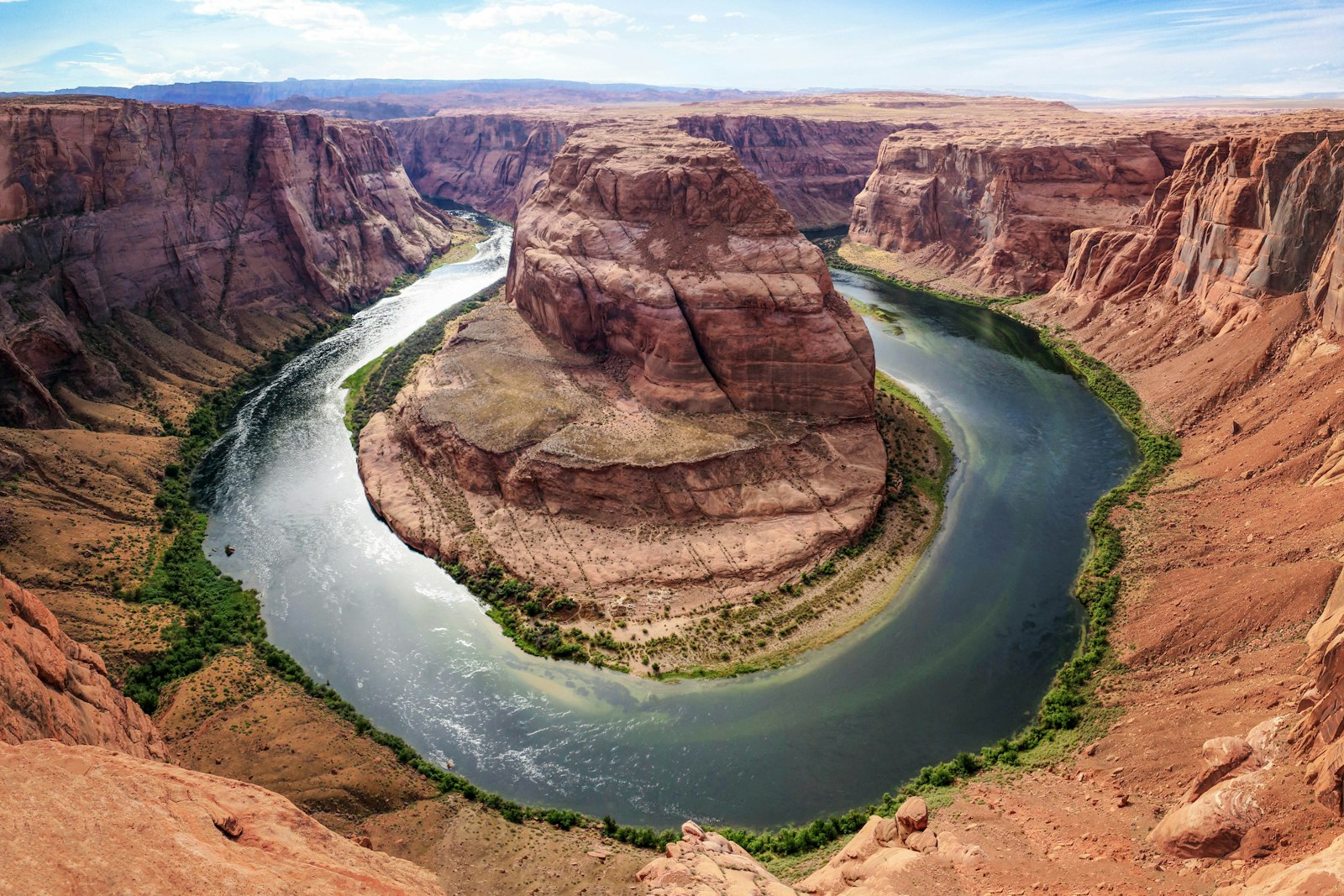
Grand Canyon in 3 Days: Hikes, Viewpoints & the Colorado River
446 km long, 1,800 m deep, and 5 million years in the making. Three days gives you South Rim sunrises, Bright Angel Trail, Desert View Drive, and the canyon at its most extraordinary. The complete guide.

Delhi · Visited: Kedarnath, Gangotri, Manali, Shimla, Rishikesh & more · April 2026 · 14 min read
Standing at the rim of the Grand Canyon for the first time is one of the few moments in travel that genuinely stops people mid-sentence. The canyon is 446 km long, up to 29 km wide, and more than 1,800 metres deep — numbers that mean nothing until you're looking at them.
⚡ What the Grand Canyon Actually Is
The Grand Canyon is not just a big hole in the ground. It is a 446-kilometre-long geological record of nearly two billion years of Earth's history, carved by the Colorado River over 5–6 million years. The canyon exposes rock formations from the Proterozoic era at its deepest point — the Vishnu Basement Rocks at 1.84 billion years old are among the oldest exposed rocks on the planet's surface. Above them, in visible bands of red, orange, tan, and grey, is the Cambrian, Devonian, Permian, and Triassic sequence, each layer representing hundreds of millions of years.
The South Rim is where most visitors go: open year-round, easily accessible from Flagstaff (1.5h), Phoenix (3.5h), and Las Vegas (4.5h), and home to the majority of viewpoints, trails, and facilities. The North Rim is 365 metres higher, significantly less visited, and open only mid-May to mid-October. First-timers should do the South Rim. The park charges $35 per vehicle, valid for 7 days. If you're visiting multiple national parks on the same trip, the America the Beautiful annual pass ($80) covers all US national parks for 12 months and pays for itself at three parks.
Three days is the right amount of time to see the canyon properly — enough to do the iconic South Rim viewpoints, hike genuinely into the canyon, drive Desert View Drive with its eight panoramas, and have at least one sunrise and one sunset on the rim. Less than two full days and you're grazing the surface. More than four and you're either deep hiking or exploring beyond the South Rim.
4 hrs
From Las Vegas
Mar–May, Sep–Nov
Best Months
1,800 m
Canyon Depth
$80/day
Budget From
🌡️ Best Time to Visit the Grand Canyon
Mar–May — Spring — Best Season
Recommended
15–25°C on the rim, 25–35°C in the canyon — ideal for hiking. Wildflowers appear on the rim and in the canyon corridors. Crowds are moderate; accommodation is more available than summer. North Rim opens mid-May. The best all-round window.
Sep–Nov — Autumn — Second Best
Sweet spot
October is arguably the sweet spot: summer crowds drop 30–40%, hiking temperatures are perfect (15–25°C rim, 25–35°C canyon), and autumn colour appears in North Rim aspen groves. North Rim closes mid-October — go early in the month if you want both rims.
Jun–Aug — Summer — Avoid Midday Hiking
Caution
Most visited season (peak crowds, book accommodation 6–13 months ahead). Rim temperatures hit 35°C; canyon floor exceeds 48°C. The NPS explicitly advises against rim-to-river day hikes June through August. Hike only before 10am or after 4pm. Sunrises and evenings are still spectacular.
Dec–Feb — Winter — Quiet & Beautiful
For solitude
Fewest crowds, lowest prices, and a genuinely stunning canyon when snow dusts the red rock formations. Rim temperatures often drop below freezing. The South Rim is open year-round; the North Rim is closed December through mid-May. Winter hiking is possible with proper gear.
🚗 Getting to the Grand Canyon
Key detail: The Grand Canyon South Rim entrance is on AZ-64, about 1.5 hours south of Flagstaff and 4 hours from Las Vegas. There is no commercial airport at the canyon — fly into Flagstaff (FLG), Phoenix (PHX, 3.5h), or Las Vegas (LAS, 4h).
Drive from Las Vegas (recommended for most)
Most popular routeLas Vegas to Grand Canyon South Rim: 4 hours via US-93 to I-40 East, then north on AZ-64. One of the great American Southwest road trips. Stop at Hoover Dam (30 min detour, $10 parking) en route. Rental cars from Las Vegas: $45–90/day. Park entry: $35/vehicle (valid 7 days).
Tour bus from Las Vegas
No rental car neededDay-tour buses and multi-day packages from Las Vegas to the South Rim depart daily. Cost: $45–120/person depending on operator and inclusions. Companies include Gray Line and many Las Vegas hotel concierge options. One-day tours are rushed (4h drive each way, 2–3h at the rim) — at minimum book a 2-day tour with an overnight stay.
Fly into Flagstaff (FLG)
Best for East Coast travelersFlagstaff Regional Airport has direct flights from LA, Phoenix, and Dallas. Rental car from Flagstaff to South Rim: 1.5 hours south on US-89 and AZ-64 through Kaibab National Forest — a beautiful approach drive. The Grand Canyon Shuttle from Flagstaff runs twice daily ($30 return, 2 hours).
Grand Canyon Railway from Williams
Most atmosphericWilliams, AZ (1h south of the rim on I-40) is the terminus of the historic Grand Canyon Railway. Vintage steam/diesel trains depart daily at 9:30am, arrive at the canyon at 11:45am, depart at 3:30pm. Cost: $67–226 return depending on class. The train journey itself is an experience — live music, cowboy characters, and high desert scenery.
📅 3-Day Grand Canyon Itinerary
Each day card is expandable. The itinerary is structured around the canyon's light — sunrise and golden hour are when the South Rim is at its most extraordinary, and the midday heat (especially in summer) is best spent in shade or on the shaded north-facing trails.
- ●Arrive at South Rim via your chosen route. Pay the $35/vehicle park entry fee at the entrance station on AZ-64 — valid for 7 days. The America the Beautiful annual pass ($80) covers all US national parks for 12 months and pays for itself in 3 parks. If arriving on foot or by bicycle, the fee is $20/person.
- ●Drop bags at Mather Campground ($18–44/night, book via recreation.gov months in advance) or at Grand Canyon International Hostel in Flagstaff ($30–50/night — a practical base for budget travellers who commute in each day). Mid-range: Yavapai Lodge ($150–220/night) is the best value inside the park for non-historic accommodation.
- ●First stop: Mather Point — the most visited viewpoint on the South Rim, and for good reason. The main viewing platform juts out on a peninsula directly over the canyon. Give yourself 30–45 minutes. The sheer scale of what you're looking at takes time to register — the South Rim is 2,100 metres above sea level and the canyon drops more than a kilometre below you.
- ●Walk the Rim Trail east toward Yavapai Point (1.6 km from Mather, flat, paved). The Yavapai Geology Museum here (free, open daily) has the best cross-section displays in the park, explaining the 1.8-billion-year rock sequence visible in the canyon walls. Worth 30 minutes inside before continuing to the viewpoint.
- ●Sunset at Yavapai Point: faces west with a wide, unobstructed sweep across the canyon. Less crowded than Mather Point at sunset. The light on the Redwall Limestone at golden hour turns the canyon walls deep orange and crimson. Arrive 30 minutes before sunset to claim a good position.
- ●Dinner at Canyon Village Market & Deli (Yavapai Lodge area) — grab sandwiches, trail snacks, and tomorrow's breakfast supplies ($12–20). Budget tip: every sit-down restaurant inside the park charges a 30–40% location premium. Cook at camp or eat from the market to keep costs controlled.
- ●Evening: the South Rim is a certified International Dark Sky Park. Walk back to Mather Point after 9pm — the Milky Way is visible from late spring through summer with no light pollution for hundreds of kilometres in any direction.
- ●5:30am — Sunrise at Mather Point. Set the alarm. The canyon at first light — when colour bleeds from grey to gold to orange across the layered buttes — is the single best thing you will see here. Crowds don't arrive until 8am. Bring a jacket; rim temperatures at dawn are 10–15°C cooler than midday.
- ●7:00am — Bright Angel Trailhead (Grand Canyon Village, catch the free Village Route shuttle from the Visitor Centre). This is the canyon's most famous hiking trail — and one of the most dangerous in America in the wrong conditions. The cardinal rule: DO NOT attempt to hike rim to river and back in one day. The round trip to the Colorado River is 24 km with 1,400 m of elevation change. People die attempting this every year, almost always from heat exhaustion and hyponatremia in summer.
- ●The safe budget hike: descend to the 1.5-Mile Resthouse (3 km down, 290 m descent) and turn back. This takes 2–2.5 hours round trip, puts you genuinely inside the canyon with walls rising above you on both sides, and is safely achievable for most hikers. Seasonal water at the resthouse — check current availability at the Visitor Centre. For fitter hikers: the 3-Mile Resthouse (9.6 km round trip, 4–5 hours, 550 m descent) is more rewarding.
- ●Water discipline: drink 500 ml before you start, carry at least 2 litres, drink 1 litre per hour while hiking. The canyon's dry desert air evaporates sweat before you feel wet — by the time you feel thirsty, you're already mildly dehydrated. The ranger rule: turn around at the halfway point of your water supply, not the halfway point of your time.
- ●11:00am — Desert View Drive: drive (or take the free East Rim shuttle in summer) the 45 km eastern route along the South Rim through eight viewpoints: Yaki Point, Grandview Point, Moran Point, Tusayan Ruin (free Ancestral Puebloan site c. 1185 AD), Lipan Point (arguably the best river view on the South Rim), Navajo Point, and Desert View itself. Each reveals a completely different angle on the canyon.
- ●Desert View Watchtower: the far eastern end of the South Rim, at the highest point (2,363 m). This 21-metre stone tower built by Mary Colter in 1932 sits on the rim with panoramic views east toward the canyon's wider mouth and the Colorado River. Climb to the top — free, included in park entry. The interior murals by Hopi artist Fred Kabotie (1933) are exceptional.
- ●Sunset: return to Grand Canyon Village. Hopi Point (free Hermit Road shuttle, seasonal) is widely regarded as the best sunset viewpoint on the South Rim — faces due west, unobstructed horizon. Alternatively, Bright Angel Lodge porch: the oldest continually operating accommodation at the canyon has rocking chairs on the rim that face the canyon. Coffee there at dusk is one of the great simple pleasures in American travel.
- ●Dinner: Bright Angel Restaurant (inside Bright Angel Lodge, $18–32/person, no reservation needed) — the most accessible mid-priced sit-down option inside the park. Or splurge at El Tovar Dining Room ($45–70/person, 1905 historic lodge on the rim — book 6 months ahead).
- ●Morning ritual before departure: Mather Point one final time, or the Bright Angel Lodge porch with coffee at 6am. The canyon at dawn never gets old.
- ●Option A — IMAX Theatre Tusayan ($15, opens 8:30am): The IMAX film 'Grand Canyon: The Hidden Secrets' at Tusayan (10 km south of the rim) is a surprisingly good primer — aerial footage taken in formations inaccessible on foot gives the canyon's scale context that even three days on the rim doesn't fully deliver. A good first-morning activity before driving out.
- ●Option B — Helicopter Tour ($200–280/person, 30–40 min): Maverick Helicopters and Grand Canyon Scenic Airlines operate from Grand Canyon National Park Airport in Tusayan. The aerial view reveals the canyon's true scale — the Colorado River snaking along the floor, side canyons invisible from the rim, formations accessible only from above. Book online 1–2 weeks ahead; same-day availability is rare.
- ●Option C — Skywalk at the West Rim ($60 with shuttle, Hualapai Nation): The glass-bottomed walkway extending 21 m over the canyon floor at Eagle Point is 217 km west of the South Rim (2.5h drive). The Hualapai Nation's Grand Canyon West package ($60–80 includes shuttle + entry) also includes Guano Point and Hualapai Ranch. Different canyon, same overwhelming scale. Photos on personal cameras are not permitted on the Skywalk itself.
- ●Option D — Colorado River Rafting ($300+/day): Multi-day commercial rafting trips through the Grand Canyon are among the great wilderness experiences in North America. Operators include Arizona Raft Adventures, Hatch River Expeditions, and Oar-Arizona. Full canyon trips (225 miles) take 14–21 days; partial trips start at 3–4 days from Lees Ferry or Diamond Creek. Book 6–12 months ahead — permits are highly competitive. The experience of sleeping on the canyon floor, surrounded by billion-year-old walls, bears no resemblance to standing on the rim.
- ●Depart options from the South Rim: Las Vegas (4.5h northwest on US-93 — the Hoover Dam is a 30-min detour on the way, well worth it); Flagstaff (1.5h south — college town, excellent craft breweries, Walnut Canyon and Wupatki national monuments nearby); Sedona (2h south — red rock vortex sites, Oak Creek Canyon scenic road); Phoenix (3.5h for international departures). En route: Cameron Trading Post on the Navajo Nation (1h from the rim on US-89) — authentic Navajo jewelry, rugs, and fry bread since 1916.
Free · Personalised · 24hr Reply
Want this Grand Canyon plan customised for your dates?
Tell us your group size, budget, and travel dates. We'll build a day-by-day plan around you — completely free.
No account · No credit card · Takes 2 minutes
🏜️ Landmark & Trail Guide
The most important viewpoints, trails, and sites on the South Rim, in priority order. Entry is covered by the $35/vehicle park pass unless noted.
Mather Point
The most visited viewpoint on the South Rim and the default first stop for almost every visitor — for good reason. The viewing platform juts out on a natural peninsula, giving unobstructed views in three directions. Particularly good for sunrise: the eastward-facing canyon fills with colour as the sun rises behind you.
Bright Angel Trail
The Grand Canyon's most famous and most hiked trail, descending 1,400 m to the Colorado River over 12 km. Safe targets for day hikers: the 1.5-Mile Resthouse (3 km round trip) or the 3-Mile Resthouse (9.6 km round trip, the Indian Garden / Havasupai Gardens area). Rim-to-river in a day is not safe — the NPS explicitly advises against it. Seasonal water at resthouses; check availability at the Visitor Centre.
Rim Trail
A 21 km (13 mile) paved and unpaved trail running along the entire South Rim from South Kaibab Trailhead east to Hermits Rest west. Flat, accessible to all fitness levels, and the best way to move between viewpoints without a car. Pick any section — the stretch between Mather Point and Yavapai Point is the easiest and most rewarding 3 km in the park.
South Kaibab Trail
Steeper and more exposed than Bright Angel, but with better panoramic views. The Ooh Aah Point (3 km round trip) and Cedar Ridge (6.4 km round trip) are the safe day-hike targets — both offer extraordinary open canyon views with no tree cover. No water on this trail at any point; carry everything you need from the rim. Avoid in summer heat.
Desert View Watchtower
At the eastern end of Desert View Drive, this 21-metre stone tower (built by Mary Colter, 1932) sits at the highest point on the South Rim (2,363 m). Interior murals by Hopi artist Fred Kabotie are among the finest Native American art in the Southwest. The views east toward the canyon mouth and Colorado River are spectacular — often less crowded than the Village viewpoints.
Hopi Point
Widely considered the best sunset viewpoint on the South Rim — faces due west with an unobstructed horizon, allowing you to watch the full sunset arc. Multiple canyon layers are lit simultaneously at golden hour. Accessible only by the free Hermit Road shuttle (March–November); the road is closed to private vehicles in peak season.
Yavapai Geology Museum & Point
The Yavapai Geology Museum (1.6 km east of Mather Point along the Rim Trail) has the park's best geological displays, including a large window-panorama cross-section that overlays the rock strata names onto the actual canyon view. Essential for understanding what you're looking at. Open daily.
Grand Canyon — Viewpoints, Trails & the Colorado River
South Rim in all seasons — sunrise light, canyon depth, and the river 1,800 m below.
📸
Mather Point Sunrise
Mather Point Sunrise
Sunrise from Mather Point — when colour bleeds from grey to gold across the canyon buttes, this is the single best thing the South Rim offers.
💰 Budget Breakdown
The Grand Canyon's main costs are accommodation (book far in advance — South Rim lodges fill 6–13 months out) and transport. The park entry fee ($35/vehicle) covers 7 days and all trails and viewpoints. Activities beyond hiking are optional add-ons.
| Category | Budget | Mid-Range | Luxury |
|---|---|---|---|
| 🏨 Accommodation (2 nights) | $36–100 (camp/hostel) | $240–400 (lodge) | $600–1,200 (El Tovar) |
| 🍽️ Food (3 days) | $60–105 (self-catered + deli) | $150–270 (restaurants) | $240–600 (El Tovar dining) |
| 🚗 Transport (car rental + gas) | $60–105 (budget car) | $120–180 (mid-range car) | $300–600 (private/charter) |
| 🎟️ Park entry + activities | $35–50 (trails only) | $95–155 (trails + IMAX) | $235–980 (helicopter + guide) |
| TOTAL (per person, 3 days) | $190–360 | $605–1,005 | $1,375–3,380 |
💚 Budget ($80–140/day)
Camp at Mather Campground ($18–44/night), eat from the Canyon Village Market & Deli, use the free shuttle system for everything. The trails are all free beyond the park entry fee — a budget Grand Canyon trip is entirely feasible and completely rewarding.
🌟 Mid-Range ($200–380/day)
Bright Angel Lodge ($120–200/night) or Yavapai Lodge ($150–220), dine at Bright Angel Restaurant and the Arizona Room, add the IMAX film and a ranger-led hike. This is the sweet spot — comfortable, well-located, without the booking-13-months-ahead stress of El Tovar.
💎 Luxury ($450–1,200/day)
El Tovar Hotel ($300–600/night, book 13 months to the day at midnight MST), El Tovar Dining Room, private guided hike with a Grand Canyon Field Institute specialist, sunrise helicopter charter. The benchmark luxury canyon experience — and the historic lodge itself justifies the premium.
Get the free travel guide
+ weekly destination tips
Download the Rajasthan 7-Day Guide instantly — day-by-day itinerary, real budgets, local food spots & packing list. Plus weekly guides from 2,400+ travellers' favourite destinations.
No spam, ever. Unsubscribe with one click.
🏨 Where to Stay at the Grand Canyon
All South Rim lodges are booked through Xanterra (xanterra.com). El Tovar and Bright Angel Lodge become available exactly 13 months before the desired date at midnight Mountain Standard Time — regulars set alarms. If you miss the opening window, check back regularly for cancellations.
El Tovar Hotel
Historic luxury · South Rim — on the canyon edge
The most prestigious accommodation at the Grand Canyon and one of the great historic National Park lodges. Built in 1905, on the National Register of Historic Places, directly on the canyon rim. Rim-view suites look straight into the canyon. Roosevelt, Einstein, and every US president since have stayed here. The dining room serves elk, buffalo, and Arizona trout. Sells out in the first hour of availability — 13 months in advance.
Bright Angel Lodge
Historic mid-range · South Rim — rim-edge cabins
Mary Colter's 1935 lodge complex right on the South Rim. The Rim Cabin rooms have private canyon views; the historic cabins sleep 2 and feel like a 1930s national park film. Book 6–13 months ahead through xanterra.com. The rocking chairs on the rim outside the lodge are legendary — coffee there at dawn is one of the great simple pleasures in American travel.
Yavapai Lodge
Motel-style · Canyon Village — near Visitor Centre
The largest lodge at the South Rim (358 rooms) and the most likely to have last-minute availability. Standard motel rooms without the historic character of El Tovar or Bright Angel Lodge, but well-located near the Visitor Centre and the shuttle stops. Good option if you're booking within 6 months of travel.
Grand Canyon International Hostel (Flagstaff)
Budget hostel · Flagstaff — 1.5h from South Rim
Located in downtown Flagstaff, 90 minutes from the South Rim. Dorm beds from $30, private rooms from $80. A practical base for budget travellers who don't need to be on the rim at dawn — though you will miss sunrise at Mather Point if you're driving in. The hostel organises day trips to the canyon.
🍽️ Where to Eat at the Grand Canyon
Dining inside the park carries a significant location premium — expect to pay 30–40% more than equivalent food in Flagstaff or Williams. Budget travellers do best buying supplies at Canyon Village Market & Deli and eating at camp. Mid-range visitors will find Bright Angel Restaurant the most practical sit-down option.
El Tovar Dining Room
Fine dining · El Tovar Hotel — on the rim
The most storied restaurant at the Grand Canyon. The 1905 log-and-stone dining room serves elk, buffalo, and Arizona trout with a wine list that punches well above its pay grade given the location. $45–70/person for dinner. Book 6 months in advance via xanterra.com — walk-in availability is rare. The porch outside El Tovar at night, with canyon darkness beyond the railing, is worth a post-dinner stop regardless of where you ate.
Bright Angel Restaurant
Casual dining · Bright Angel Lodge
The most accessible mid-range restaurant inside the park. Burgers, sandwiches, salads, and Arizona staples — $18–32/person. No reservations needed; walk-ins almost always accommodated. Open from 6:30am for breakfast. The adjacent Bright Angel Fountain Bar (open seasonally) is a canyon institution: the best lemonade and hot dogs you will ever eat after a morning hike, for entirely contextual reasons.
Yavapai Lodge Restaurant
Casual · Yavapai Lodge — Canyon Village
Buffet-style and à la carte options in a cafeteria setting. Not the most atmospheric dining in the park, but reliable, reasonably priced ($14–25), and consistently available when El Tovar and Bright Angel Lodge are at capacity. Good for breakfast before an early start.
Canyon Village Market & Deli
Deli & grocery · Yavapai Lodge area
The best option for budget travellers. Sandwiches, wraps, salads, grab-and-go meals ($8–15), plus a full grocery section for camp provisions — bread, peanut butter, trail mix, fresh fruit, snacks. Open daily. Stock up here for hike food the night before; pre-packaged trail lunches from the deli are genuinely good and save $20+ over the sit-down restaurants.
Where to Stay in Grand Canyon Arizona
Verified prices · Instant booking
El Tovar Hotel
Historic luxury · Directly on the South Rim
Bright Angel Lodge
Historic · South Rim cabins
Yavapai Lodge
Standard · Canyon Village
Grand Canyon International Hostel
Hostel · Flagstaff, 1.5h from rim
Affiliate links — we earn a small commission at no extra cost to you. Helps keep our guides free.
Things to Do in Grand Canyon Arizona
Tours & experiences · Instant confirmation
Grand Canyon South Rim Helicopter Tour
Must doBright Angel Trail Guided Hike
Best hikeGrand Canyon Sunrise Tour from Las Vegas
Colorado River Rafting Day Trip
Affiliate links — we earn a small commission at no extra cost to you.
❌ Mistakes to Avoid at the Grand Canyon
Hiking Rim to River in Summer
This is the single deadliest mistake at the Grand Canyon. The NPS explicitly advises against hiking from the rim to the Colorado River and back in a single day, and especially not in June, July, or August. Canyon floor temperatures regularly exceed 48°C (118°F). Two to three people die from heat-related causes at the canyon every year, almost always on summer day hikes. Hike before 10am, turn back at the 1.5-Mile or 3-Mile Resthouse, and carry far more water than you think you need.
Not Booking Accommodation Far Enough Ahead
South Rim lodges book out 6–13 months in advance. El Tovar and Bright Angel Lodge rooms become available exactly 13 months before the desired date at midnight MST — regulars set alarms. If you show up without a reservation in peak season (May–September), you will be sleeping in Flagstaff or Williams and commuting 1.5–2 hours each way. Check recreation.gov for last-minute Mather Campground cancellations — these appear, but require daily monitoring.
Skipping Desert View Drive
Most visitors spend their entire time within 2 km of Grand Canyon Village — the most crowded section of the South Rim. Desert View Drive (the 45 km eastern route with eight viewpoints) is less visited, often more dramatic, and includes the Tusayan Ruin (free Ancestral Puebloan site c. 1185 AD) and Desert View Watchtower. Budget 3–4 hours for this drive; it transforms a standard canyon visit into a complete experience.
Paying Per-Vehicle When Visiting Multiple Parks
The Grand Canyon charges $35 per vehicle valid for 7 days. If you're visiting more than one national park — Zion, Bryce Canyon, Arches, Petrified Forest — the America the Beautiful annual pass costs $80 and covers all US national parks and federal recreation lands for 12 months. Three parks visited in sequence means the pass pays for itself immediately.
Underestimating Water Needs on the Trail
The canyon's dry desert air evaporates sweat before you feel wet, masking dehydration. The NPS recommended rate is 500 ml per hour of hiking — more in summer. Carry at least 2 litres for any hike beyond the first viewpoints, and 3–4 litres for the 3-Mile Resthouse. Refill stations are available at the 1.5-Mile and 3-Mile Resthouses on Bright Angel Trail, but these are seasonal — check current status at the Visitor Centre before descending.
💡 Pro Tips for the Grand Canyon
Golden Hour Photography Windows
The canyon's best light arrives at two windows. Golden hour (30–45 min after sunrise and before sunset) turns the Redwall Limestone and Coconino Sandstone vivid orange and red. Blue hour (20 min before sunrise and after sunset) fills the canyon with cool lavender that reveals depth the midday sun flattens. Mather Point for sunrise; Hopi Point for sunset; Yavapai Point works for both. Midday (10am–3pm) is typically flat — use that time to hike.
Master the Free Shuttle System
Once you've parked (or arrived by shuttle from Flagstaff/Williams), you don't need your car. The South Rim has four free shuttle routes: Village Route (Grand Canyon Village facilities), Kaibab/Rim Route (viewpoints east of the Visitor Centre), Hermit Road Route (western viewpoints, March–November, closed to private vehicles), and the Tusayan Route (from Tusayan to the park entrance). In summer, shuttles are faster than driving.
October Is the Sweet Spot
October is arguably the best month to visit. Summer crowds drop 30–40% from August. Temperatures are ideal for hiking (15–25°C on the rim, 25–35°C in the canyon). The North Rim's aspen groves turn golden. The North Rim closes mid-October — go early in the month if you want both rims. Spring (April–May) is the second-best window: wildflowers, moderate temperatures, shoulder-season pricing.
Pair with Antelope Canyon & Horseshoe Bend
Page, Arizona is 3 hours east of Grand Canyon Village on US-89. Antelope Canyon requires a mandatory Navajo-guided tour ($65–120/person — book months ahead). Horseshoe Bend is a 15-min walk from Page ($10 day-use fee). Combining Grand Canyon, Antelope Canyon, and Horseshoe Bend in a 4–5 day Southwest road trip is one of the best itineraries in the American West.
Canyon Hiking Packing List
What separates safe canyon hikers from the ones rangers carry out: water (minimum 2 litres, ideally 3–4 for longer hikes), electrolyte tablets or salty snacks, wide-brim hat and sunscreen, trekking poles (descent is harder on knees than ascent), a small first-aid kit, headlamp, and a printed trail map (phone signal is unreliable below the rim). Wear sturdy closed-toe shoes — the canyon's limestone trails are irregular.
Dark Sky Stargazing After 9pm
The Grand Canyon National Park is a certified International Dark Sky Park. On clear nights from late spring through summer, the Milky Way is visible from the South Rim with no light pollution for hundreds of kilometres. Walk to Mather Point or Yavapai Point after 9pm. The canyon below disappears into complete darkness, making the star field look even more extraordinary. Bring a jacket — rim temperatures drop sharply after sunset.
📸 Been to Grand Canyon?
Share your photos and get featured in this guide with full credit. Your real photos help thousands of travellers plan better trips.
❓ Frequently Asked Questions
Plan your Grand Canyon trip
You Might Also Like


Questions & Comments
Been there? Planning a trip? Drop it below — we reply to everything.
Have you visited this destination?
Any tips you'd add to this guide?
Questions before your trip?
Want a personalised itinerary?
We'll build your day-by-day plan in 24 hours — free.