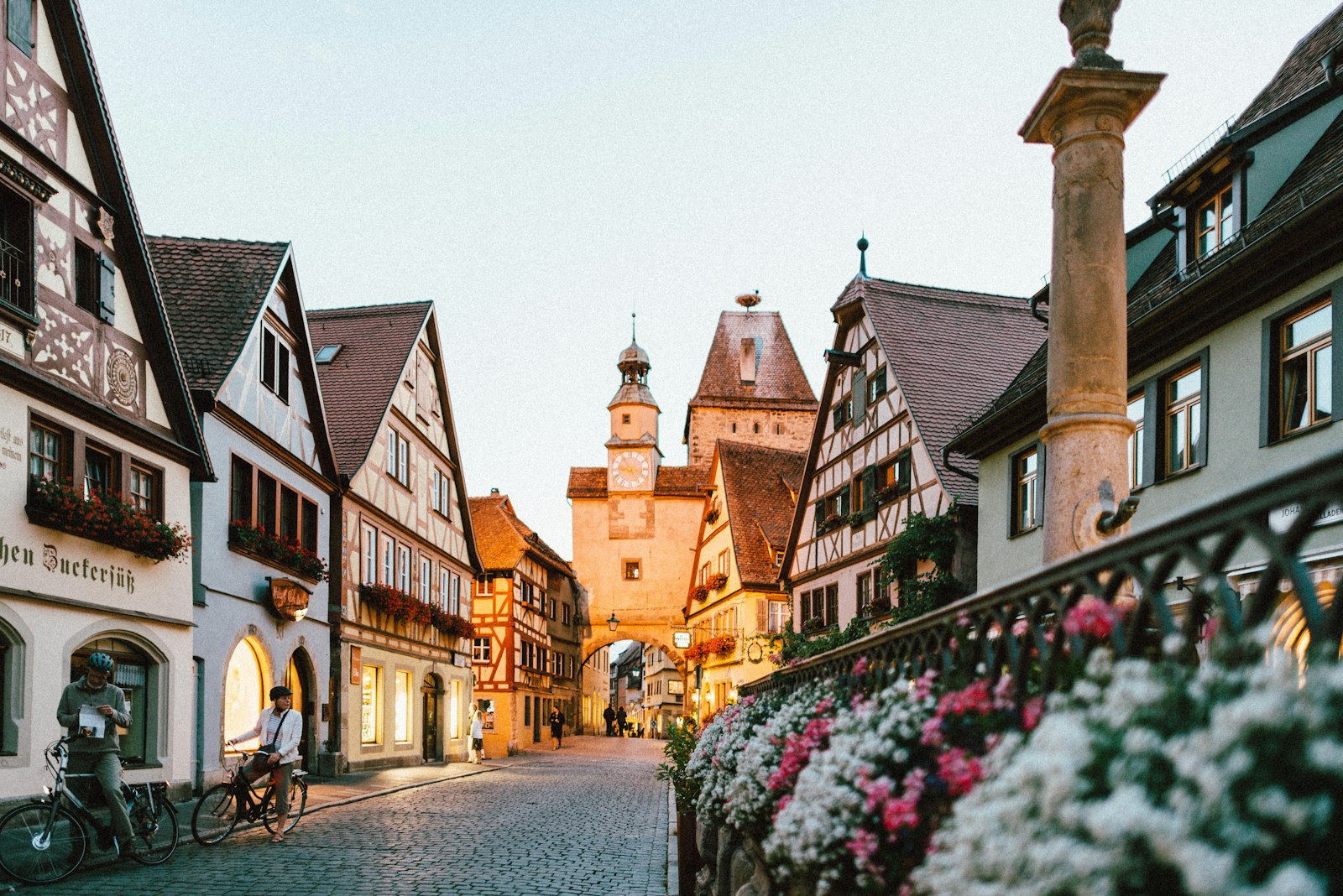
Germany in 7 Days: Munich, Neuschwanstein, Rothenburg & Berlin
Beer halls, fairy-tale castles, medieval walls, and the divided city that changed the world — all connected by Europe's most efficient rail network. The complete guide.
Delhi · Visited: Kedarnath, Gangotri, Manali, Shimla, Rishikesh & more · April 2026 · 17 min read
Seven days in Germany spans more centuries, landscapes, and moods than almost any other European route of the same length — from Munich's baroque grandeur and beer hall culture to Berlin's layered history of trauma and reinvention, all connected by one of Europe's most efficient rail networks.
⚡ What Germany Actually Is
Germany is Europe's largest economy and a country of extraordinary cultural, historical, and natural diversity. It is not one place — it is a federation of 16 states, each with its own dialect, cuisine, and identity. Bavaria in the south has more in common with Austria than with Berlin. The Rhineland is half-French in temperament. Hamburg is a Baltic merchant city that still feels like an independent republic.
What a 7-day Germany circuit gives you is a diagonal slash through this variety: Frankfurt arrival, the medieval Romantic Road at Rothenburg ob der Tauber, Munich's baroque magnificence and beer culture, a day trip to the absurdly beautiful Neuschwanstein Castle, and then north by ICE train to Berlin — a city that contains more history per square kilometre than anywhere else in Europe.
The train network is the backbone of a German trip. Deutsche Bahn's ICE high-speed trains run Munich–Frankfurt in 3h10min, Frankfurt–Cologne in 1h15min, and Cologne–Berlin in 4h30min. Book ICE Sparpreis (saver) tickets 6–8 weeks ahead and pay €30–70 per journey. Buy the day before and pay €100–130. The price difference is significant enough to justify planning.
FRA / MUC / BER
Main Airports
May–Sep
Best Months
7 Days
Duration
€55/day
Budget From
🌡️ Best Time to Visit Germany
May–Jun — Late Spring — Best All-Round
Recommended
15–22°C, long daylight hours (sunset after 9pm by June), beer gardens open in earnest, Neuschwanstein queues manageable. Rothenburg's half-timbered facades look best in soft spring light. The single best window for this circuit.
Sep–Oct — Autumn — Oktoberfest & Foliage
Oktoberfest season
12–20°C, spectacular alpine foliage for Neuschwanstein (castle in orange-gold forest), and Munich's Oktoberfest runs mid-September to early October. Book tent reservations months in advance for Oktoberfest. Excellent photography light throughout.
Jul–Aug — Summer — Peak Season
Book well ahead
22–30°C. Long days, outdoor cafes and beer gardens at their best. But Neuschwanstein tickets sell out weeks ahead, Berlin and Munich are at peak crowds, and prices spike. Book everything 6–8 weeks in advance. Worth it if planned properly.
Nov–Apr — Winter — Christmas Markets
Christmas markets
0–8°C. Germany's Christmas markets (Weihnachtsmärkte) transform every city centre from late November — Nuremberg, Cologne, and Berlin have the most famous. Beer gardens close. Neuschwanstein is quieter but can be snow-closed. A completely different but genuinely magical trip.
✈️ Getting to Germany
Recommended entry point: Fly into Frankfurt Airport (FRA) — Europe's second-busiest hub, with direct connections from virtually every major city worldwide. Exit via Berlin Brandenburg (BER) or Munich (MUC) to avoid backtracking. Frankfurt to Berlin by ICE takes 4h30min; Frankfurt to Munich is 3h10min.
Fly into Frankfurt (FRA) — recommended
Best entryFrankfurt Airport is the best entry point for this circuit. Direct flights from London (1h40min), New York (9h), Dubai (6h30min), Singapore (12h), Mumbai (8h30min). The airport has a direct ICE train station — you can board an ICE to Munich, Cologne, or Berlin directly from Terminal 1 without leaving the airport complex.
Fly into Munich (MUC) — for Bavaria-first route
Bavaria-firstMunich Airport has excellent international connections and the S-Bahn S8/S1 connects to Munich Hauptbahnhof in 40 minutes (€13.60). Start in Munich, do Neuschwanstein and Rothenburg, then head north to Frankfurt, Cologne, and Berlin. This reverses the circuit but works well.
ICE Train Network — the backbone of this trip
Essential planningDeutsche Bahn's ICE trains run Frankfurt–Munich (3h10min, €30–80 Sparpreis), Frankfurt–Cologne (1h15min, €15–55), Cologne–Berlin (4h30min, €35–80). Book at bahn.de at least 6 weeks ahead for Sparpreis fares. The Deutschlandticket (€58/month) covers all regional trains — excellent for day trips but not valid on ICE.
Car Rental — best for Romantic Road
Romantic Road onlyA rental car makes the Rothenburg–Neuschwanstein–Munich stretch far more flexible — you can stop at the small Romantic Road villages (Dinkelsbühl, Nördlingen) that train routes skip. Major rental companies at all three airports. Germany has no motorway speed limit — drive accordingly.
📅 7-Day Germany Itinerary
Each day card is collapsible. This circuit runs Frankfurt → Rothenburg → Munich → Neuschwanstein → Berlin (3 nights). ICE trains connect the major legs. Book Neuschwanstein tickets at hohenschwangau.de before booking anything else — this sells out first.
- ●Arrive Frankfurt Airport (FRA). The S-Bahn S8 or S9 runs from Terminal 1 to Frankfurt Hauptbahnhof in 11 minutes (€5.35). Check in near the Hauptbahnhof or the Bahnhofsviertel neighbourhood — well-positioned for the evening and easy for tomorrow's early train.
- ●Römerberg: Frankfurt's medieval old town square — the half-timbered Ostzeile houses facing the Römer (medieval town hall) are the classic image of old Frankfurt. The Dom-Römer archaeological quarter nearby opened in 2018 with faithfully reconstructed medieval buildings over excavated Roman foundations. Free to walk.
- ●Lunch: Zum Struwwelpeter (Günthersburgallee 51) — a classic Frankfurt Gasthaus serving the two iconic Frankfurt dishes: Grüne Soße (seven-herb green sauce with boiled eggs and potatoes, the Frankfurt signature) and Handkäse mit Musik (curd cheese marinated in oil, vinegar and onions — the name means 'music' because of what it does to digestion). Both €8–14.
- ●Sachsenhausen Apple Wine Quarter: cross the Main river to Frankfurt's traditional south-bank neighbourhood. The Äpfelwein (Ebbelwoi) taverns on Schweizer Straße are the authentic Frankfurt experience — a Bembel (stone jug) of still, dry apple cider served in ribbed glasses, €2–3 per glass. Wagner Apfelwein Wirtschaft (Schweizer Str. 71) is one of the most atmospheric.
- ●Museumsufer: 14 museums line 1km of the Main riverbank. The Städel (€16, Botticelli to Bacon) is the standout if you have time. Goethe-Haus (€10, the birthplace of Germany's greatest literary figure, authentically restored) is 15 minutes' walk from the river.
- ●Evening: Zur letzten Instanz (Waisenstraße 14–16) — Berlin's oldest restaurant, founded 1621, but if you're staying in Frankfurt first, the equivalent Frankfurt institution is Wagner Sachsenhausen. Dinner with Schnitzel and apple wine, €15–22.
- ●Morning train Frankfurt → Würzburg → Steinach → Rothenburg ob der Tauber (2–2.5 hours total, €25–35, requires 1–2 changes). The final approach to Rothenburg on the branch line crosses the Tauber valley — the towers of the medieval town visible from the train.
- ●Stadtmauer (town walls): Rothenburg's complete circuit of medieval walls and towers is walkable in 1.5 hours — the covered walkway atop the walls gives views over half-timbered rooftops and the Tauber valley in every direction. Free, open year-round. Do not skip this — it is why Rothenburg is special.
- ●Marktplatz and Rathaus tower: the Gothic town hall has a tower climb (€2.50, around 200 steps) with a panoramic view of the entire town and valley. The Ratstrinkstube across the square has an hourly mechanical clock show — the famous Meistertrunk legend of the mayor drinking a 3.25-litre Maß to save the town.
- ●Schneeball: Rothenburg's unique local pastry — a fried ball of shortcrust pastry dough, available plain or coated in chocolate, marzipan, cinnamon or icing sugar. Every bakery in town sells them for €2–3. Käthe Wohlfahrt Christmas Village (free entry) sells year-round Christmas decorations in a surreal year-round Christmas shop — genuine Rothenburg institution since 1977.
- ●Dinner at Zur Höll (Burggasse 8): the oldest house in Rothenburg, built around 900 CE, now a restaurant serving Franconian wine and slow-roasted Schäuferla (pork shoulder, €14–18) in a low-ceilinged medieval interior. Reserve a table in advance for evening.
- ●Night Watchman Tour (€9, 8pm, English, nightly April–December): Hans Georg Baumgartner has led this lantern-lit tour in period costume for 30+ years. The 75-minute walk through dark medieval streets with genuine wit, dark humour, and real history consistently ranks among the best tours in all of Germany. Meet at Marktplatz at 8pm.
- ●Morning train Rothenburg → Steinach → Ansbach → Munich (2.5–3 hours, €25–40). Arrive Munich Hauptbahnhof — one of Germany's great railway stations, with U-Bahn, S-Bahn, trams and buses all connecting here. Check in near the Hauptbahnhof (A&O Hostel for budget at €20–35/night dorm, Motel One for mid-range at €80–120).
- ●Marienplatz: Munich's central square with the Gothic New Town Hall (Neues Rathaus). The Glockenspiel carillon performs at 11am, noon, and 5pm daily — 43 bells and 32 gilded figures re-enacting two medieval stories: a jousting tournament and the Schäfflertanz (coopers' dance celebrating the end of the plague). Free. The square is the pulse of Munich.
- ●Viktualienmarkt: Munich's legendary open-air market, established 1807, 140 stalls running Monday–Saturday. Buy a Weißwurst (white veal sausage, Munich's signature breakfast food — eaten before noon, peeled from the skin with a spoon or sucked out, with sweet mustard and a pretzel, €5–7) and a Weißbier at one of the market stalls.
- ●Englischer Garten (Englischer Garten, free): one of the world's largest urban parks at 3.7km², bigger than Central Park in New York. Walk to the stone bridge on Prinzregentenstraße to watch the Eisbach surfer — a single standing wave on the Eisbach river channel where surfers ride year-round, in all weather, for free. One of Munich's most surreal and memorable sights.
- ●Hofbräuhaus (Am Platzl 9, free entry): the world's most famous beer hall, established by Duke Wilhelm V in 1589. A 1-litre Maß of Hofbräu Original costs €12.80. Order Obatzda (Bavarian cheese spread, €6) and a Brezel (pretzel, €4.50). It is loud, touristy, and essential once. The ground-floor hall seats 1,300 people under painted vaulted ceilings.
- ●Evening: If Oktoberfest is running (mid-September to first Sunday in October), the fairground at Theresienwiese is 15 minutes' walk from the Hauptbahnhof. Note: to sit in the main beer tents you need a reserved table, booked months in advance. The outdoor fairground and smaller tents are accessible freely.
- ●6:30am: Train from Munich Hauptbahnhof to Füssen (2 hours, hourly departures — cheapest with the Bayern Ticket at €27.90 for one person covering all regional trains in Bavaria for a full day). The journey through the Alpine foothills is scenic in itself — the Alps appear on the horizon about an hour in.
- ●CRITICAL BOOKING NOTE: Neuschwanstein Castle tickets (€18) must be pre-booked online at hohenschwangau.de — in summer (June–September) book 4–8 weeks in advance. Your ticket shows a timed entry window and you cannot change it on the day. Same-day tickets are essentially unavailable in peak season. The castle that inspired Walt Disney's Sleeping Beauty castle was never completed — Ludwig II died mysteriously in 1886 after only 17 years of construction.
- ●8:30am: Arrive Füssen station. Bus 73 or 78 to Hohenschwangau (€4.50 return, 10 minutes). The walk up through the spruce forest to the castle entrance takes about 40 minutes, or horse-drawn carriage (€7) and shuttle bus (€3.50) are available.
- ●Marienbrücke (Mary's Bridge): a 10-minute walk uphill from the castle entrance spans the Pöllat Gorge 90 metres above the valley floor. The view of Neuschwanstein framed by spruce forest, the Bavarian Alps behind, is the single most photographed view in Germany. Arrive early — by 10am the bridge has queues. Free.
- ●The 35-minute guided tour inside covers the throne room (never completed — the ceiling was never installed), the Singer's Hall (also never used — Wagner's operas inspired every painted surface but Liszt, not Wagner, was the first to play here), and Ludwig's surprisingly modest personal apartments.
- ●Option: Hohenschwangau Castle (€21 or €30 combo with Neuschwanstein): Ludwig II's yellow childhood home, directly below Neuschwanstein. More intimate and better preserved than Neuschwanstein, with original Wittelsbach furnishings and the frescoes depicting the Swan Knight legend that directly inspired Ludwig's entire architectural obsession. Return to Munich by 7pm.
- ●Morning: Deutsches Museum (€15): the world's largest science and technology museum, on an island in the Isar river. The aviation hall (with original WWII-era aircraft including a Messerschmitt Bf109 and a Junkers Ju88), the mining display (walk into a full-scale replica mine), and the musical instruments collection are the highlights. You could spend two days here — budget a focused 2.5 hours on the halls that interest you most.
- ●BMW Museum (€10, adjacent to BMW World showroom — which is free): the museum's spiral ramp display of historic BMW cars, motorcycles, and aircraft engines since 1916 is architecturally as impressive as a contemporary art museum. BMW World next door is a showroom and delivery centre — free to enter, extraordinary futuristic architecture. Near the Olympic Park.
- ●Afternoon: Dachau Concentration Camp Memorial (45 minutes from Munich Hauptbahnhof by S2 train + bus 726, free entry to memorial, transport €5.35): Dachau was the first Nazi concentration camp, established in March 1933 — two months after Hitler became Chancellor. The preserved barracks, the crematorium, and the documentation museum are deeply moving and historically essential. Budget 3 hours. This is not entertainment — it is understanding.
- ●Return to Munich for dinner at Augustiner Bräustuben (Landsberger Straße 19): Augustiner-Bräu is the oldest Munich brewery (1328) and the most respected among locals. The Bräustuben is the brewery's own restaurant — more authentic than the tourist-facing Hofbräuhaus. A 1-litre Augustiner Edelstoff (Munich's most elegant pale lager) costs €10.80. Order Schweinshaxe (roasted pork knuckle, €16) or Steckerlfisch (grilled whole fish on a stick, €12). No reservation needed before 7pm.
- ●Evening option: Augustiner-Keller beer garden (Arnulfstraße 52, open May–September) — Munich's oldest beer garden (1812), under 100-year-old chestnut trees. Self-service food stalls, families, locals. More atmospheric than any tourist beer hall.
- ●ICE train Munich → Berlin (6 hours, departs Munich Hauptbahnhof from 06:00 onwards, €40–80 Sparpreis booked in advance — book at least 4 weeks ahead for the best fares). Arrive Berlin Hauptbahnhof by midday. The glass-and-steel Hauptbahnhof is Europe's largest railway station, built for the 2006 World Cup.
- ●Check in: Generator Berlin Mitte (€22–35/night dorm, good location near Museum Island) for budget, or 25hours Hotel Bikini Berlin (Budapester Str. 40, overlooking the Berlin Zoo, €130–190) for mid-range. Berlin's accommodation is 15–20% cheaper than Munich for equivalent quality.
- ●Brandenburg Gate (Brandenburger Tor, free): the 18th-century Neoclassical gate is Berlin's defining symbol. Designed by Carl Gotthard Langhans and completed in 1791, it has been successively a Prussian triumphal arch, a Nazi backdrop, the sealed border between East and West, and finally the place where Berliners danced on the night the Wall fell in November 1989. Walk through it slowly.
- ●Holocaust Memorial (Denkmal für die ermordeten Juden Europas, free): 2,711 concrete slabs of varying heights on a sloping surface — as you walk deeper in, the slabs tower overhead and the city disappears entirely. The underground Information Centre (free, book a time slot online) tells individual stories of Jewish families murdered during the Holocaust. Allow 45 minutes minimum. The silence is deliberate.
- ●East Side Gallery (free): the longest preserved section of the Berlin Wall (1.3km) along Mühlenstraße, now the world's largest open-air gallery. 105 murals painted by international artists in 1990, including Dmitri Vrubel's famous 'Fraternal Kiss' (Brezhnev and Honecker kissing). Better value than the paid Checkpoint Charlie museum (€15, largely reproductions).
- ●Museum Island (Museumsinsel): five world-class museums on an island in the Spree. The Pergamon Museum (€18, currently partially closed through 2027 but Islamic Art and Antiquities wings remain open) and the Neues Museum (€18, home of the Nefertiti bust — the 3,300-year-old painted limestone portrait is even more extraordinary in person than in photographs) are the highlights. Combined day ticket €24.
- ●Reichstag (free, mandatory pre-registration at bundestag.de — book at least 3 days ahead, ideally 2–3 weeks): Sir Norman Foster's glass dome atop the rebuilt German parliament building offers a 360° panoramic view of Berlin and a mirrored cone that bounces natural light down into the plenary chamber below. The political symbolism — the transparent government beneath the people walking above — is deliberate. Register online for a free timed slot; bring your passport.
- ●Checkpoint Charlie (free, outdoors): the former Allied checkpoint between East and West Berlin on Friedrichstraße. The current guard house is a replica — the original is in a museum in Washington D.C. Skip the paid Checkpoint Charlie Museum (€15, mostly reproductions) and instead read the outdoor information boards at the crossing itself, which cover the wall crossing attempts and Cold War history for free.
- ●Topography of Terror (free): on the site of the former Gestapo and SS headquarters on Niederkirchnerstraße, the outdoor and indoor exhibitions document the systematic persecution apparatus of the Nazi state in exhaustive and unflinching detail. One of Berlin's most important (and most sobering) museums. Free entry, open daily.
- ●Berliner Dom (€9): the huge neo-baroque Protestant cathedral on Museum Island, completed 1905. Climb to the dome for panoramic views. The crypt beneath houses the Hohenzollern dynasty — the Prussian royal family. More architecturally spectacular than spiritually moving.
- ●Kreuzberg neighbourhood: Berlin's most culturally mixed district, the centre of alternative culture since the 1970s. Walk along the Landwehrkanal, explore the street art on Oranienstraße, eat at one of the dozens of excellent and cheap international restaurants — Turkish, Vietnamese, Korean, Indian, all at €8–15/person. The best Döner Kebab in the world (the Berlin Döner is a distinct style) costs €5–7 from any of the Turkish-German snack bars.
- ●Farewell dinner: Zur letzten Instanz (Waisenstraße 14–16) — Berlin's oldest restaurant, opened in 1621. Napoleon ate here. The menu is classic Berliner Küche: Eisbein (pickled pork knuckle with sauerkraut, €18), Königsberger Klopse (meatballs in caper sauce, the Berlin signature dish, €16), and Berliner Kindl beer at €3.80/glass. Reserve in advance.
Free · Personalised · 24hr Reply
Want this Germany plan customised for your dates?
Tell us your group size, budget, and travel dates. We'll build a day-by-day plan around you — completely free.
No account · No credit card · Takes 2 minutes
🏛️ Landmark Guide
The essential sites across the 7-day circuit, in priority order. Entry fees as of 2026. Free sites first — Germany has more high-quality free attractions than almost any other European destination.
Neuschwanstein Castle
The fairy-tale castle that inspired Disney's Sleeping Beauty, built by Ludwig II from 1869 but never completed. The 35-minute guided tour covers the throne room, Singer's Hall, and Ludwig's apartments. Pre-booking is mandatory — same-day tickets are essentially unavailable June–September. The Marienbrücke viewpoint (free) is 10 minutes uphill and gives the definitive view.
Brandenburg Gate, Berlin
Berlin's defining symbol — the 18th-century Neoclassical gate that separated East and West for 28 years. Walk through it from east to west, the same direction millions walked when the Wall fell on November 9, 1989. The Quadriga (goddess of victory in a four-horse chariot) on top was removed by Napoleon in 1806 and returned in 1814.
East Side Gallery, Berlin
The world's largest open-air gallery — 1.3km of authentic Berlin Wall murals painted by 105 international artists in 1990. Dmitri Vrubel's fraternal kiss is the most famous image, but the full walk reveals dozens of equally powerful works. Far better than the paid Checkpoint Charlie museum.
Rothenburg ob der Tauber Town Walls
The complete circuit of medieval city walls surrounding Rothenburg — a covered walkway atop the walls that can be walked in 1.5 hours. Almost entirely undamaged in WWII (a single American general's personal decision). The views over half-timbered rooftops and the Tauber valley are picture-perfect in every direction.
Museum Island, Berlin — Neues Museum
Home of the Nefertiti bust — the 3,300-year-old painted limestone portrait of Akhenaten's queen, discovered in 1912. Photographs do not prepare you for the reality: the paintwork is still vivid, one eye preserved in perfect detail. The Neues Museum was bombed in 1943 and its ruined shell was preserved within the restoration — you walk through architectural time.
Marienplatz Glockenspiel, Munich
The carillon in the New Town Hall tower performs at 11am, noon, and 5pm daily. 43 bells and 32 gilded mechanical figures in two tiers: the upper tier depicts a jousting tournament; the lower tier the Schäfflertanz (coopers' dance from the plague era). The 12-minute show is genuinely charming rather than just tourist spectacle.
Reichstag Dome, Berlin
Sir Norman Foster's glass dome atop the German parliament. A mirrored cone reflects natural light into the chamber; a walking ramp spirals to the top for panoramic views over the city. Register online for a free timed slot at least 3 days ahead. The combination of political symbolism and architectural beauty is unique in Europe.
Germany — Castles, Beer Halls & the Wall
Seven days across Bavaria, the Romantic Road, and Berlin.
📸
Neuschwanstein Castle Bavaria
Neuschwanstein Castle Bavaria
Neuschwanstein Castle in the Bavarian Alps — the fairy-tale castle that inspired Walt Disney, photographed from the Marienbrücke at golden hour.
💰 Budget Breakdown
Germany is a mid-to-high-cost destination in Western European terms — roughly comparable to France but cheaper than Scandinavia and the UK. The main variable is accommodation. Inter-city ICE train fares are the other major cost and are dramatically cheaper booked in advance.
| Category | Budget | Mid-Range | Luxury |
|---|---|---|---|
| 🏨 Accommodation/night | €18–35 (hostel dorm) | €80–160 (hotel) | €300–900 (grand hotel) |
| 🍽️ Food/day | €15–25 | €40–70 | €100–300 |
| 🚂 ICE trains (total 7 days) | €90–150 (advance Sparpreis) | €150–280 | €200–400 (first class) |
| 🎟️ Activities/day | €15–30 | €25–50 | €100–350 |
| 🚌 Local transport/day | €5–10 | €10–20 | €20–60 |
| TOTAL (per person, 7 days) | €380–770 | €1,100–2,200 | €3,800–8,000 |
💚 Budget (€55–110/day)
Hostel dorms in all cities (€18–35), market lunches (€5–8), supermarket dinners (€5–10), ICE trains booked 6+ weeks ahead. The Deutschlandticket (€58/month) covers all regional trains — excellent for day trips.
✨ Mid-Range (€170–330/day)
Design hotels (Motel One, 25hours), restaurant dinners at €20–35/person, Städel and major museum entries, ICE booked 4 weeks ahead. The most comfortable balance for this circuit.
💎 Luxury (€550–1,750/day)
Kempinski, Hotel Adlon, Excelsior Ernst. Michelin-starred dinners (Reinstoff Berlin, Tantris Munich), first-class ICE, private guides for castles and history tours. Germany's top end is genuinely world-class.
Get the free travel guide
+ weekly destination tips
Download the Rajasthan 7-Day Guide instantly — day-by-day itinerary, real budgets, local food spots & packing list. Plus weekly guides from 2,400+ travellers' favourite destinations.
No spam, ever. Unsubscribe with one click.
🏨 Where to Stay in Germany
This itinerary requires accommodation in Frankfurt (1 night), Rothenburg (1 night), Munich (2 nights), and Berlin (2 nights). Book Munich and Berlin accommodation early — both cities fill up quickly, especially during Oktoberfest (Munich, mid-September to early October) and major events.
Generator Berlin Mitte
Hostel · Berlin, central location
Well-designed hostel in central Berlin, 15 minutes' walk from Museum Island. Clean dorms, good bar, reliable Wi-Fi. The best budget option for first-time Berlin visitors who want to be near the main sights.
Motel One München-Hauptbahnhof
Design hotel · Munich, central
Excellent-value design hotel two minutes from Munich Hauptbahnhof. Sleek rooms, good breakfast, extremely well-located for Marienplatz, the Englischer Garten, and the Hauptbahnhof ICE connections. One of the best value hotels in Munich.
Hotel Eisenhut, Rothenburg
Historic hotel · Rothenburg ob der Tauber
Four 16th-century patrician houses combined into one hotel in the heart of Rothenburg. The finest accommodation in the medieval town — beamed ceilings, antique furnishings, and a location that puts you inside the walled city rather than outside it.
Hotel Adlon Kempinski Berlin
Grand hotel · Berlin, Brandenburg Gate
Berlin's most famous hotel, directly beside the Brandenburg Gate on Unter den Linden. The original Adlon was destroyed in 1945; this rebuilt version (1997) maintains the tradition of hosting heads of state and royalty. Michael Jackson dangled his baby from a window here in 2002.
🍽️ Where to Eat in Germany
German cuisine is far more varied than its international stereotype of sausage and sauerkraut. Each region has a distinct food identity: Bavaria has its pork knuckles, pretzels, and Weißwurst; Frankfurt its Grüne Soße and Äpfelwein; Cologne its Sauerbraten and Kölsch culture; Berlin its Turkish-influenced Döner and international Kreuzberg kitchens.
Zur letzten Instanz, Berlin
Historic tavern · Waisenstraße 14–16, Berlin-Mitte
Berlin's oldest restaurant, opened in 1621. Napoleon ate here in 1806; the original beer cellar is still in use. Menu: Eisbein mit Sauerkraut (pickled pork knuckle, €18), Königsberger Klopse (Berlin's signature meatballs in caper sauce, €16), Berliner Kindl beer €3.80. Reserve ahead for dinner. The building survived WWII bombing and the Wall — the interior is genuinely 17th-century at its core.
Augustiner Bräustuben, Munich
Brewery restaurant · Landsberger Straße 19, Munich
Augustiner-Bräu is Munich's oldest brewery (founded 1328) and the brand most respected by Münchners themselves. The Bräustuben is the brewery's own tavern — more authentic and less crowded than the Hofbräuhaus. Augustiner Edelstoff lager (pale, elegant, €10.80 per litre Maß), Schweinshaxe (roasted pork knuckle, €16), Steckerlfisch (grilled fish on a stick, €12), Obatzda (Bavarian cheese spread, €6). Legendary.
Zum Struwwelpeter, Frankfurt
Traditional Gasthaus · Günthersburgallee 51, Frankfurt
A proper Frankfurt Gasthaus serving the two dishes that define Frankfurt cuisine: Grüne Soße (green herb sauce made from seven specific herbs — parsley, chives, watercress, sorrel, lovage, borage, and salad burnet — served with boiled eggs and potatoes, €12) and Handkäse mit Musik (marinated curd cheese with onion, oil and vinegar — the 'music' is the digestive consequence, €8). Apfelwein from the Bembel jug throughout.
Zur Höll, Rothenburg ob der Tauber
Medieval restaurant · Burggasse 8, Rothenburg
The oldest building in Rothenburg, constructed around 900 CE — over 1,100 years old. Now a restaurant serving Franconian wine and slow-roasted Schäuferla (pork shoulder, €14–18) in low-ceilinged medieval rooms. The Tauber Valley Silvaner is the wine to order. Reserve in advance for evening sittings — the dining rooms are small.
Where to Stay in Germany
Verified prices · Instant booking
Generator Berlin Mitte
Hostel · Berlin city centre
Motel One München-Hauptbahnhof
Design hotel · Munich central
Hotel Eisenhut Rothenburg
Historic hotel · Medieval town centre
Hotel Adlon Kempinski Berlin
Grand luxury · Brandenburg Gate
Affiliate links — we earn a small commission at no extra cost to you. Helps keep our guides free.
Things to Do in Germany
Tours & experiences · Instant confirmation
Berlin Wall & History Walking Tour
Best-selling BerlinNeuschwanstein Castle Guided Tour from Munich
Most popularMunich Beer Hall Evening Experience
Iconic experienceRothenburg Night Watchman Tour
UnmissableAffiliate links — we earn a small commission at no extra cost to you.
❌ Mistakes to Avoid in Germany
Not Pre-Booking Neuschwanstein Tickets
Neuschwanstein Castle sells out completely on summer days — arriving without a pre-booked timed entry ticket at hohenschwangau.de means you cannot enter, period. In June–September, same-day tickets are essentially unavailable by 9am. Book your timed entry weeks or months in advance. The ticket also specifies your exact entry time — you cannot change it on the day. This is the single most common Germany travel disaster.
Buying Expensive ICE Tickets Last Minute
Deutsche Bahn's ICE trains have dynamic pricing — the same Munich–Berlin journey can cost €35 booked 6 weeks ahead or €130 bought the day before. The Sparpreis (saver fare) requires advance booking but is non-refundable. For flexibility, the Flexpreis is fully refundable but significantly more expensive. Budget travellers: the €58/month Deutschlandticket covers ALL regional (non-ICE) trains — a slower but dramatically cheaper option.
Visiting Oktoberfest Without a Tent Reservation
Oktoberfest's main beer tents require advance table reservations made months earlier — some as early as January for the following September. Without a reservation, you can only enter the tents if there is standing room, which is unpredictable. The outside fairground is always accessible. The authentic tent experience — 6,000-person singing, Maß-clanking, dirndl-and-lederhosen Bavaria — requires planning months in advance. Book through Munich's official tourist office.
Skipping Rothenburg ob der Tauber
Many Germany itineraries jump Munich → Frankfurt → Cologne → Berlin and skip Rothenburg entirely as 'too far off the route.' This is a mistake. Rothenburg fits naturally between Frankfurt and Munich (2 hours from Frankfurt, 3 from Munich). It is the most perfectly preserved medieval walled city in Germany and the Night Watchman tour (€9) is consistently cited as one of the best experiences in the entire country.
💡 Pro Tips for Germany
The Bayern Ticket Is Extraordinary Value
The Bayern Ticket (Bavaria Ticket) costs €27.90 for one person (€5 per additional person, up to 5 total) and covers all regional trains, S-Bahns, buses and trams in Bavaria for one full day from 9am. Munich to Füssen for Neuschwanstein, Munich to Berchtesgaden, Munich to Nuremberg — all covered. For a group of three, it costs €37.90 total: barely more than a single regular ICE ticket.
Neuschwanstein at 8am Before the Crowds
The castle grounds open at 8am. Walking up to the Marienbrücke viewpoint at 8:15am, before the first tour coaches have arrived, gives you the castle in morning mist with almost no other people in the frame. By 10:30am, hundreds of people are on the bridge simultaneously. The castle itself: the first guided tour of the day is at 9am and has the fewest people.
East Side Gallery is Free — Skip the Checkpoint Charlie Museum
The East Side Gallery is 1.3km of authentic Berlin Wall murals, completely free. The paid Checkpoint Charlie Museum (€15) is largely reproductions and dramatizations — the actual historic content is mostly available on the free outdoor information boards at the crossing itself. Save the €15 for a Berlin Döner and two beers at a Kreuzberg Kneipe.
Reichstag Dome Registration — Do It Now
The Reichstag glass dome is free but requires online registration at bundestag.de with passport details. You must book a specific time slot. During busy periods (summer, Christmas), slots fill 2–3 weeks ahead. Register as soon as your travel dates are confirmed — it is genuinely one of the best free experiences in Berlin and worth the 5-minute online registration.
Bayern Munich Match at Allianz Arena
If your trip coincides with a home Bayern Munich Bundesliga match (August–May, roughly every two weeks), attending is one of the best live football experiences in Europe. Tickets range from €15 (standing terrace — the Bundesliga standing culture is safe and electric) to €120 for covered seats. Check fc-ticketcenter.de or the official Bayern website — some matches sell out weeks ahead.
Kölsch in Cologne: the Auto-Refill Rule
In a Cologne Brauhaus, Kölsch is served in straight 0.2-litre Stangen glasses. The Köbes (waiter) keeps bringing new glasses automatically — without being asked — and marks each one on your coaster. To stop the auto-refill, put your coaster on top of the glass. This is not folklore: it is genuinely what happens. Kölsch is only brewed within Cologne — it cannot legally be called Kölsch if brewed elsewhere.
📸 Been to Germany?
Share your photos and get featured in this guide with full credit. Your real photos help thousands of travellers plan better trips.
❓ Frequently Asked Questions
Plan your Germany trip
You Might Also Like


Questions & Comments
Been there? Planning a trip? Drop it below — we reply to everything.
Have you visited this destination?
Any tips you'd add to this guide?
Questions before your trip?
Want a personalised itinerary?
We'll build your day-by-day plan in 24 hours — free.