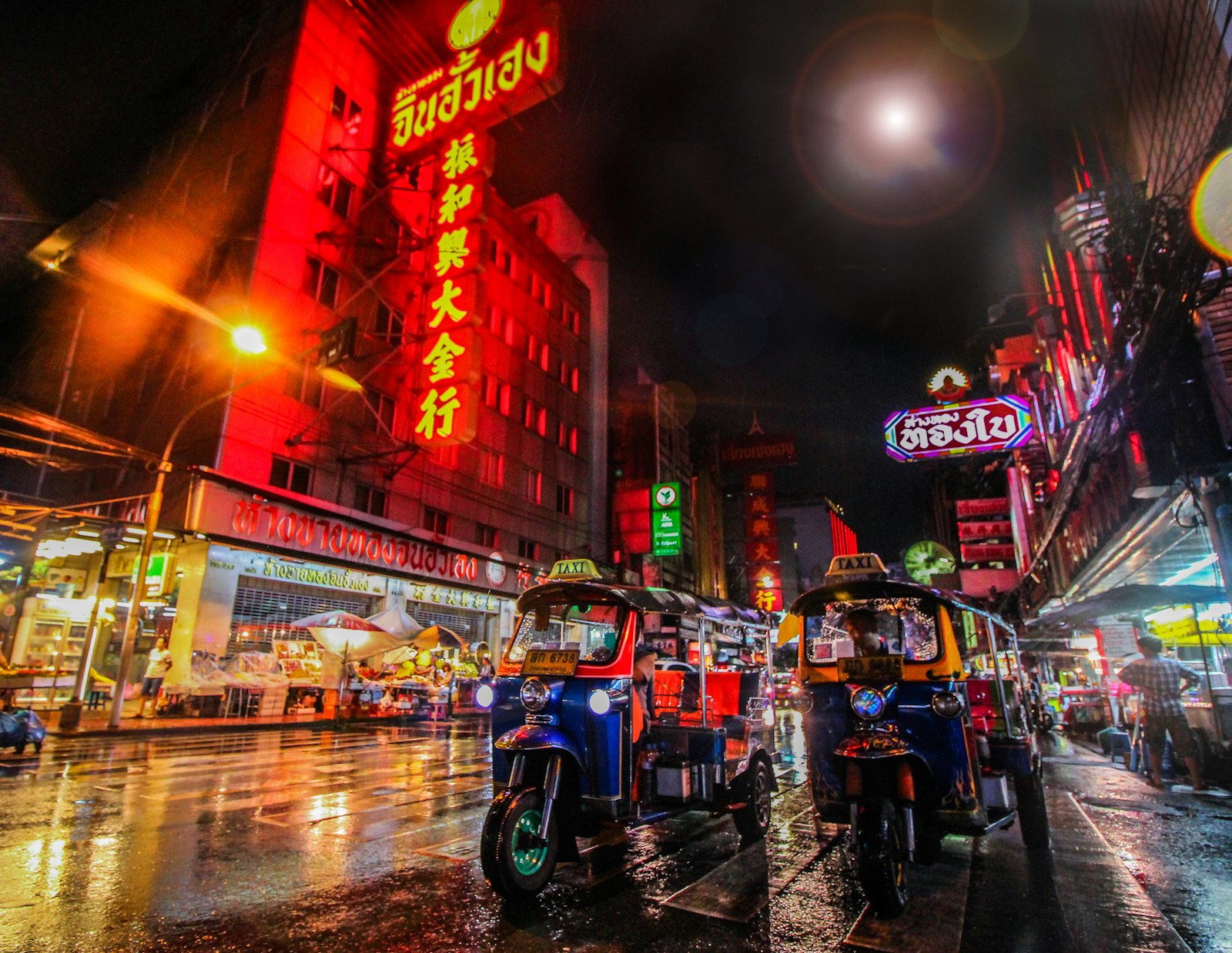
Bangkok in 4 Days: Temples, Street Food & the Real City
Grand Palace at dawn, pad thai from a cart with a 40-person queue, Chatuchak's 15,000 stalls, and the Chao Phraya at sunset. The honest guide with real prices in Baht.
Delhi · Visited: Kedarnath, Gangotri, Manali, Shimla, Rishikesh & more · April 2026 · 16 min read
Bangkok street food at 11pm from a cart with a 40-person queue is better than any Michelin restaurant I've been to. This city rewards the curious and punishes the lazy planner. The temples are overwhelming, the heat is relentless, and the food is the best in Southeast Asia. Here's how to actually do it right.
⚡ What Bangkok Actually Is
Bangkok is a city of 11 million people that somehow functions in permanent, beautiful chaos. The official name is Krung Thep Maha Nakhon, and it has been Thailand's capital since 1782 when King Rama I moved it from Thonburi across the Chao Phraya River. What visitors experience today is a city built in layers — 400 gilded temples next to glass skyscrapers, street food carts beneath elevated railways, and a river system that was the city's highway long before roads existed.
The Grand Palace complex alone took over 150 years to build. Wat Pho has been a centre of traditional Thai medicine and massage since the 1780s. Chinatown (Yaowarat) has been a trading district for over 200 years. These are not tourist attractions bolted onto a modern city — they are the city. Bangkok grew around them.
The practical reality: Bangkok is hot, loud, and the traffic is genuinely terrible. But the BTS Skytrain and MRT metro are fast and air-conditioned, the street food is the cheapest world-class cuisine on earth, and the Thai people are extraordinarily generous hosts. Four days is enough to see the essential temples, eat your way through Chinatown and Chatuchak, take a day trip to Ayutthaya, and understand why 23 million tourists visit every year.
3.5\u20134 hrs
From India
Nov\u2013Feb
Best Season
400+
Temples
\u0E3F800/day
Budget From
🌡️ Best Time to Visit Bangkok
Nov–Feb \u2014 Cool Season — Best Time
Recommended
25–32°C, lower humidity, clear skies. This is as comfortable as Bangkok gets. December and January are peak tourist season — book hotels 2–3 weeks ahead. The best window for temple-heavy itineraries and walking Chinatown at night without melting.
Mar–May \u2014 Hot Season — Brutally Hot
Songkran only
35–40°C with high humidity. April is the hottest month in Bangkok and also Songkran (Thai New Year water festival, 13–15 April) — citywide water fights in the streets. If you can handle the heat, Songkran is an extraordinary experience. Otherwise, plan temples before 9am and spend afternoons in air-conditioned malls.
Jun–Aug \u2014 Early Monsoon — Afternoon Showers
Budget-friendly
30–34°C. Afternoon downpours lasting 1–2 hours, then clearing. Hotels are 30–50% cheaper than peak season. Mornings are often clear enough for sightseeing. If you plan around the rain (temples in the morning, indoor activities in the afternoon), this is a surprisingly good time to visit.
Sep–Oct \u2014 Heavy Monsoon — Flooding Risk
Not recommended
29–33°C. The wettest months — October in particular can bring significant flooding in low-lying areas of Bangkok. Some streets become impassable. Hotels are cheapest but the experience is significantly compromised. Not ideal for a first visit.
✈️ Getting to Bangkok
Key detail: Bangkok has two airports. Suvarnabhumi (BKK) handles most international and full-service flights. Don Mueang (DMK) handles budget carriers like AirAsia, Nok Air, and Lion Air. Check which airport your flight uses before booking transport.
Flights from India (3.5–4 hrs direct)
Best from IndiaDirect flights from Delhi, Mumbai, Kolkata, Chennai, and Bangalore to BKK. IndiGo, Air India, Thai Airways, and Thai AirAsia operate daily. Budget airlines (AirAsia, Thai Lion) fly into DMK. Round-trip fares: ₹12,000–22,000 depending on season and how far ahead you book. Book 6–8 weeks early for the best fares.
Suvarnabhumi (BKK) to city centre
Rail Link recommendedAirport Rail Link to Phaya Thai BTS station: ฿45 (~$1.30), 30 minutes, runs 6am–midnight. Connect to BTS Skytrain for Sukhumvit, Silom, or Siam. This is the fastest and cheapest option. Metered taxi to Sukhumvit: ฿300–400 (~$8–11) plus ฿50 airport surcharge, 30–60 minutes depending on traffic. Grab: ฿350–500 (~$10–14), fixed price, no surprises.
Don Mueang (DMK) to city centre
A1 bus + BTSNo direct rail link. Options: A1 bus to BTS Mo Chit (฿30, 30 min), then BTS anywhere. Metered taxi: ฿250–350 (~$7–10) to Sukhumvit. DMK is closer to the city but traffic on Vibhavadi Road can be terrible during rush hour (add 30–45 minutes).
Getting around: BTS, MRT & boats
EssentialThe BTS Skytrain and MRT metro cover most tourist areas. Buy a Rabbit Card at any BTS station (฿200 including ฿100 deposit + ฿100 credit). Single rides ฿16–59. Chao Phraya Express Boats (฿15–40) connect riverside temples. For everything else, use Grab (Southeast Asia's Uber). Do not rely on taxis without meters or tuk-tuks for transport — BTS and Grab are always faster and cheaper.
🇮🇳 Indian Passport Holders
eVisa online at thaievisa.go.th (5\u20137 days processing, 60-day stay). Visa on Arrival: 15-day stay, \u0E3F2,000 fee, carry \u0E3F10,000 cash as proof of funds. Tourist Visa from Thai embassy for 60 days, extendable 30 more at immigration for \u0E3F1,900.
🌍 Most Western Passports
Visa-free 60 days for USA, UK, EU, Australia, Canada. Extendable 30 days at any immigration office for \u0E3F1,900. Always carry a printed return ticket and hotel booking \u2014 airlines sometimes check before boarding.
📅 4-Day Bangkok Itinerary
Each day card is expandable. This is the mid-range itinerary that balances temples, food, and experiences. Budget and luxury alternatives are noted in the cost estimates. Plan mornings for temples and markets, afternoons for air-conditioned rest, evenings for street food and night markets.
- ●7:30am: Grab or Chao Phraya Express Boat to the Grand Palace. Arrive before the 8:30am opening — by 10am the tour-bus crowds make it unbearable. Entry ฿500 (~$14). Dress code strictly enforced: cover shoulders and knees, no flip-flops. Hire an audio guide inside (฿200) — it makes the Emerald Buddha Temple and the murals 3x more interesting.
- ●10:30am: Walk to Wat Pho (5 minutes south). Entry ฿200 (~$5.50). Home of the 46-metre Reclining Buddha — the gold-leaf detail on the soles of the feet is extraordinary. Get the traditional Thai massage inside (฿300/30min) — this is the original Thai massage school, operating since the 1780s.
- ●12:30pm: Cross-river ferry to Wat Arun (฿4). Entry ฿100 (~$2.80). Climb the steep central prang (Khmer-style tower) for panoramic river views. The ceramic tile mosaics covering the entire structure are best seen in afternoon light. Best photos FROM Wat Arun looking back at the Grand Palace across the river.
- ●2pm: Lunch at Supanniga Eating Room near Tha Tien pier — modern Thai cuisine, ฿250–400/person. Or street-cart pad thai between Wat Pho and the ferry pier for ฿50–80 (~$1.50–2.25).
- ●4pm: Walk through Khao San Road — don’t eat here (overpriced), just absorb the chaos. It’s a Bangkok rite of passage.
- ●7pm: Dinner at Sala Rattanakosin rooftop — Wat Arun view at sunset. Mains ฿350–600 (~$10–17). Reservation essential on weekends.
- ●8am: BTS to Mo Chit — Chatuchak Weekend Market opens at 9am (weekends only). Go early before the heat becomes unbearable. Chatuchak has 15,000 stalls across 35 acres. Download the Chatuchak Guide app — Sections 2–4 for clothes, 7–9 for home decor, 17–19 for art and antiques.
- ●Lunch inside the market: coconut ice cream ฿30, pad kra pao (basil stir-fry) ฿50, mango sticky rice ฿40–60. Bring cash — most stalls do not accept cards. Budget 3–4 hours maximum before the heat and crowds peak.
- ●Weekday alternative: If not a weekend, go to Or Tor Kor Market next to Chatuchak (open daily) — the best fresh food market in Bangkok. Or Taling Chan Floating Market (Sat–Sun only) for a more local experience.
- ●2pm: BTS to National Stadium — Jim Thompson House. Entry ฿200 (~$5.50). Six traditional Thai teak houses containing Jim Thompson’s art collection and the history of Thai silk. Guided tour only, runs every 20 minutes. Genuinely interesting even if you have no interest in silk.
- ●4pm: Walk to Siam area — Siam Paragon, CentralWorld for air-conditioned wandering and good coffee at Roots Coffee Roasters.
- ●6pm: MRT to Wat Mangkon for Chinatown (Yaowarat). The grilled seafood stalls fire up at 6pm. Hoy tod (crispy mussel omelette) ฿80, guay jab (rolled noodle soup) ฿60, mango sticky rice ฿60. Budget ฿200–350 for a feast. This is peak Bangkok.
- ●9am: MRT to Wat Mangkon — walk through Chinatown’s morning markets. Sampeng Lane for cheap everything, narrow alleys full of wholesale goods and dried goods stalls. Real Bangkok lives here.
- ●10:30am: Wat Traimit (Golden Buddha Temple). Entry ฿100 (~$2.80). Houses a 5.5-tonne solid gold Buddha statue accidentally discovered under a plaster exterior in 1955. The museum on the lower floors tells the extraordinary discovery story. Worth 45 minutes.
- ●12pm: Lunch at Nai Ek Roll Noodles in Chinatown — ba mee (egg noodles with crab) from ฿80. Or Thipsamai on Maha Chai Road for pad thai wrapped in egg (฿80–130) — queue from 5pm but a midday visit is shorter.
- ●2pm: Return to hotel for the afternoon heat break. This is not laziness — it’s survival. Bangkok at 2pm is 35–40°C with humidity. Veterans know: 1–4pm is for air conditioning.
- ●5:30pm: Rooftop bar sunset. Octave Rooftop Lounge at Bangkok Marriott Sukhumvit — cocktails ฿350–500 (~$10–14) with 360-degree city views. Smart casual dress. Budget option: Above Eleven with cocktails ฿300–400.
- ●8pm: Asiatique the Riverfront — free shuttle boat from BTS Saphan Taksin. Night market, dinner, riverside atmosphere. Budget ฿200–400 for food. Or Talad Rot Fai (Train Night Market) near Ratchada MRT for vintage cars, craft beer, and better street food.
- ●OPTION A — Ayutthaya Day Trip (strongly recommended): Train from Hua Lamphong at 6:40am. Third class ฿20, second class AC ฿345 (~$10). Journey 1.5–2 hours. This is a UNESCO World Heritage Site — the former capital of the Siamese kingdom, destroyed by the Burmese in 1767.
- ●Rent a bicycle at Ayutthaya station (฿50/day) or hire a tuk-tuk (฿200/hr). Must-see: Wat Mahathat (Buddha head entwined in tree roots — the iconic image), Wat Phra Si Sanphet (three stupas of Ayutthaya’s royal palace), Wat Chaiwatthanaram (the most photogenic, best at golden hour). Entry ฿50 each or ฿220 day pass.
- ●Lunch at Roti Sai Mai market — famous Ayutthaya cotton-candy-style dessert, ฿20/bag. Pad thai at the market ฿40. Return train at 3–4pm.
- ●OPTION B — Shopping + Massage: MBK Center (bargain everything, haggle hard), Terminal 21 (themed floors, incredible food court at ฿40–60/dish), then Siam Discovery for design. Afternoon: Health Land traditional Thai massage — ฿600 for 2 hours. Book ahead. Best value quality massage in Bangkok.
- ●6pm: Last dinner at Err Urban Rustic Thai near the Grand Palace — creative Thai street food done fine-dining style, mains ฿200–400 (~$5.50–11). Or final street food crawl on Sukhumvit — moo ping (grilled pork skewers) ฿10 each.
- ●Final stop: 7-Eleven run for Thai snacks to bring home — dried mango (฿35), instant tom yum packets (฿12), Lay’s Nori Seaweed chips. The real souvenirs.
Free · Personalised · 24hr Reply
Want this Bangkok plan customised for your dates?
Tell us your group size, budget, and travel dates. We'll build a day-by-day plan around you — completely free.
No account · No credit card · Takes 2 minutes
🏛️ Temple & Landmark Guide
The most important sites in order of priority. Entry fees and hours as of early 2026. Dress code at all temples: cover shoulders and knees. The Grand Palace is the strictest \u2014 no shorts, sleeveless tops, or flip-flops.
Grand Palace
Thailand’s most sacred complex, home to the Emerald Buddha (Wat Phra Kaew). Over 150 years of construction across 218,000 sq metres. The murals in the temple cloister depicting the Ramakien (Thai Ramayana) stretch for nearly 2km. Arrive at 8:30am opening — by 10am the tour buses make it overwhelming.
Wat Pho (Reclining Buddha)
Home of the 46-metre gold-leaf Reclining Buddha and the original school of traditional Thai massage. The temple complex has over 1,000 Buddha images and 91 stupas. The massage pavilion (฿300/30min) is the birthplace of Thai massage — legitimately one of the best experiences in Bangkok.
Wat Arun (Temple of Dawn)
Khmer-style prang (tower) on the west bank of the Chao Phraya, covered in thousands of ceramic tiles and porcelain fragments that shimmer in sunlight. Climb the steep central prang for river views. Best photographed from the east bank at sunset, but best visited in morning light.
Wat Traimit (Golden Buddha)
Houses a 5.5-tonne solid gold Buddha statue worth an estimated $250 million. The statue was hidden under plaster for centuries and only discovered in 1955 when a crane dropped it during relocation. The museum explaining the discovery is worth visiting on its own.
Chatuchak Weekend Market
15,000 stalls on 35 acres — one of the largest markets in the world. Open Saturday–Sunday 9am–6pm. Everything from vintage clothing and handmade crafts to antiques and street food. Weekday alternative: Or Tor Kor Market (fresh food, open daily) right next door.
Chinatown (Yaowarat Road)
Bangkok’s oldest trading district, active for over 200 years. During the day: Sampeng Lane wholesale shopping, gold shops, traditional Chinese pharmacies. At night: transforms into the city’s greatest street food corridor. Go at 6pm when the grilled-seafood smoke fills the air.
Ayutthaya Historical Park
Former Siamese capital 80km north of Bangkok, a UNESCO World Heritage Site. Destroyed by the Burmese in 1767 after 417 years as capital. The Buddha head entwined in tree roots at Wat Mahathat is the iconic image. Reachable by ฿20–345 train from Bangkok, 1.5–2 hours.
Bangkok — Temples, Markets & the River
The city of gilded spires, 40-person food queues and the mighty Chao Phraya.
📸
Grand Palace
Grand Palace
Thailand’s most sacred site — over 150 years of gilded architecture. Arrive at 8:30am to beat the tour buses.
💰 Budget Breakdown
Bangkok is one of the cheapest world cities for tourists. Street food costs less than cooking at home, the BTS is under $2 for any ride, and temple entry fees are minimal. The main variable is accommodation and how often you eat at restaurants versus street stalls.
| Category | 💰 Budget | ✨ Mid-Range | 💎 Luxury |
|---|---|---|---|
| 🏨 Accommodation (4N) | ฿1,200–3,200 | ฿4,800–10,000 | ฿24,000–60,000 |
| 🍜 Food & Drinks | ฿800–1,600 | ฿3,200–6,000 | ฿12,000–28,000 |
| 🚉 Transport | ฿400–800 | ฿1,200–2,400 | ฿4,000–10,000 |
| 🎯 Activities & Entry | ฿800–1,400 | ฿2,000–4,000 | ฿15,000–35,000 |
| 🛒 Shopping & Misc | ฿0–1,000 | ฿2,000–5,000 | ฿5,000–20,000 |
| TOTAL (per person, 4 days) | ฿3,200–6,000 (~$90–170) | ฿13,200–27,400 (~$370–770) | ฿60,000+ (~$1,690+) |
All prices Thai Baht (\u0E3F) 2026. USD conversions approximate at \u0E3F35.5 = $1. International flights not included.
💰 Budget (\u0E3F800\u20131,500/day)
Khao San Road hostels (\u0E3F300\u2013800/night), street food only (\u0E3F50\u2013150/meal), BTS + walking, free temples and markets. Completely doable and genuinely comfortable \u2014 Bangkok's street food is world-class at $2 a meal.
✨ Mid-Range (\u0E3F2,000\u20134,000/day)
3-star hotel near BTS (\u0E3F1,200\u20132,500/night), mix of restaurants and street food, BTS + occasional Grab, rooftop bar, Thai massage. The sweet spot for most travellers.
💎 Luxury (\u0E3F6,000+/day)
5-star riverside hotel (\u0E3F6,000\u201315,000/night), Michelin dining (Gaggan, Le Du, Sorn), private tours, spa treatments. Bangkok luxury is still 50\u201370% cheaper than equivalent in London or Tokyo.
Get the free travel guide
+ weekly destination tips
Download the Rajasthan 7-Day Guide instantly — day-by-day itinerary, real budgets, local food spots & packing list. Plus weekly guides from 2,400+ travellers' favourite destinations.
No spam, ever. Unsubscribe with one click.
🏨 Where to Stay in Bangkok
The single most important rule for Bangkok accommodation: stay near a BTS or MRT station. Bangkok traffic is so bad that a hotel 500 metres from a station can save you an hour a day in Grab rides. Every area below is within walking distance of a transit line.
Sukhumvit (BTS Nana to Ekkamai)
Best for first-timers · All budgets
Bangkok’s main tourist and expat strip. Every BTS station from Nana to Ekkamai has hotels, restaurants, rooftop bars, and easy connections to temples and markets. Soi 11 and Soi 24 are the most popular hotel streets. The BTS line running down Sukhumvit connects to virtually everything a tourist needs.
Khao San Road / Banglamphu
Budget · Backpacker hub
Walking distance to Grand Palace, Wat Pho, and the river. Cheapest hostels and guesthouses in Bangkok. The parallel Soi Rambuttri is quieter with better food. No BTS access — you’ll rely on boats and Grab for destinations outside Old Town. Perfect if temples are your priority and budget matters.
Silom / Sathorn (BTS Sala Daeng / Chong Nonsi)
Business district · Mid to Luxury
Bangkok’s business and nightlife district. Excellent BTS connectivity, walking distance to Lumpini Park, good restaurants on every soi. Slightly fewer tourists than Sukhumvit. BTS Sala Daeng connects to MRT Silom for Chinatown access. Popular with couples and business travellers.
Riverside (near ICONSIAM / Asiatique)
Luxury · Scenic
Home to Bangkok’s grandest hotels: Mandarin Oriental, The Peninsula, Capella. Chao Phraya views, hotel boats to temples, ICONSIAM mall. Less convenient for BTS but the river boats compensate. If you want to feel like you’re in a movie version of Bangkok, stay here.
Ari / Pradipat (BTS Ari)
Local hipster · Mid-range
Bangkok’s trendiest local neighbourhood — independent coffee shops, small Thai restaurants, vintage stores, and almost zero tourists. BTS Ari gives you Sukhumvit and Siam in 15 minutes. If you want to see how young Bangkokians actually live, stay here.
🍜 Where to Eat in Bangkok
Bangkok street food is not a budget compromise \u2014 it is the point. The best food in the city is cooked in open-air kitchens on narrow sidewalks. Follow the queues. If 30 Thai people are waiting for a single cart, join them. Restaurants listed here range from \u0E3F50 street stalls to Michelin-starred kitchens.
Thipsamai (Pad Thai)
Legendary street restaurant · Maha Chai Road
Bangkok’s most famous pad thai since 1966. The signature dish: pad thai wrapped in a thin egg omelette (฿80–130 / ~$2.25–3.65). The queue starts at 5pm and moves fast. Worth the wait — the wok hei (smoky char) on their pad thai is unlike anything else in the city. Closed Mondays.
Jay Fai (Michelin Street Food)
1 Michelin star · Maha Chai Road
A 70-year-old woman cooking over charcoal in goggles. Jay Fai is the most expensive street food in Bangkok and worth every Baht. The crab omelette (฿1,000 / ~$28) is the dish — thick with fresh crab meat, perfectly fried. Drunken noodles with seafood (฿600). Queue from 2pm for a 5pm opening. Cash only.
Chinatown (Yaowarat) Night Food
Street food corridor · Open from 6pm
Not a single restaurant but an entire district. Walk Yaowarat Road from 6pm onwards and eat from cart to cart. Grilled river prawns (฿200–300 for a plate), hoy tod (crispy mussel omelette, ฿80), roasted duck rice (฿60), mango sticky rice (฿60). Budget ฿250–400 for a complete feast from multiple stalls.
Err Urban Rustic Thai
Modern Thai · Near Grand Palace
Creative Thai street food elevated to restaurant quality without losing soul. Dishes you’d find in a night market but executed perfectly: pork satay, crab fried rice, crispy pork belly. Mains ฿200–400 (~$5.50–11). Casual atmosphere, wooden house setting. Excellent for a final Bangkok dinner.
Terminal 21 Food Court
Mall food court · BTS Asok
Not glamorous but honestly excellent and absurdly cheap. Thai dishes ฿40–60 (~$1.10–1.70) — pad kra pao, som tam, khao man gai, tom yum. Buy a food court card at the entrance, load credit, eat from any stall. Air-conditioned, clean, and the food rivals many sit-down restaurants.
Where to Stay in Bangkok
Verified prices · Instant booking
NapPark Hostel
Budget Hostel · Khao San area
Riva Surya Bangkok
Boutique Riverside · Old Town
Mandarin Oriental Bangkok
Iconic Luxury · Riverside
The Peninsula Bangkok
5-Star Luxury · Riverside
Affiliate links — we earn a small commission at no extra cost to you. Helps keep our guides free.
Things to Do in Bangkok
Tours & experiences · Instant confirmation
Grand Palace & Temple Tour
Must doFloating Market & Railway Market
PopularAyutthaya Ancient Ruins Day Trip
Day tripBangkok Street Food Tour by Night
Affiliate links — we earn a small commission at no extra cost to you.
❌ Mistakes to Avoid
Taking a tuk-tuk to a ‘special price’ gem shop
The #1 Bangkok scam for decades. Tuk-tuk driver offers a ฿20 ride but stops at a gem shop ‘on the way.’ The gems are worthless glass. Tuk-tuk drivers who approach you near temples are almost always running this scam. Use BTS, MRT, or Grab instead.
Visiting Grand Palace after 10am
Tour buses arrive at 10am and the complex becomes a shoulder-to-shoulder shuffle. Gate opens at 8:30am — be there at 8:15. You’ll have the place nearly to yourself for 90 minutes. By noon it’s genuinely unpleasant.
Only eating on Khao San Road
Khao San food is overpriced and mediocre — it caters to tourists who do not know better. Walk 2 blocks in any direction for real Thai food at half the price. Soi Rambuttri (the parallel street) is already significantly better. Chinatown and Thipsamai are where Bangkok actually eats.
Ignoring the temple dress code
Grand Palace and Wat Pho enforce dress codes strictly — no shorts, sleeveless tops, or flip-flops. They rent cover-ups at the entrance but the queue wastes 20–30 minutes. Carry a light sarong in your bag and save yourself the hassle.
Taking taxis without the meter
Always say ‘meter, krap/ka’ when getting in. If the driver refuses, get out and take the next one. A metered ride from Suvarnabhumi to Sukhumvit is ฿300–400. Without meter they’ll quote ฿800+. Better yet, just use Grab for fixed pricing.
Skipping Ayutthaya
80km from Bangkok, reachable by ฿20 train. A UNESCO World Heritage Site of ancient Siamese ruins with the most photographed Buddha head in Asia. Budget one full day — it is the single best day trip from Bangkok and costs almost nothing to reach.
💡 Pro Tips for Bangkok
BTS/MRT is everything
Buy a Rabbit Card at any BTS station (฿200 including deposit). Covers BTS Skytrain, some river boats, and 7-Eleven payments. Bangkok traffic is brutal — BTS beats Grab 9 times out of 10. Single rides ฿16–59.
Get Grab immediately
Southeast Asia’s Uber. Fixed prices, no scams, AC, GPS-tracked. Use for anything the BTS doesn’t cover. Also delivers food via GrabFood — useful when the heat defeats you at 2pm.
Follow the queue
If there’s a 30-person queue at a street stall, join it. Thais know food. The best pad thai, khao man gai, and som tam are always at stalls with long lines and tiny plastic seats. An empty stall is empty for a reason.
ATM fee hack
Thai ATMs charge ฿220 per withdrawal regardless of amount. Withdraw ฿10,000+ each time to minimize fees. Better: bring a Wise or Revolut card for zero-fee transactions at any Thai ATM.
Embrace the afternoon break
1–4pm is dangerously hot (35–40°C). Plan temples and markets for mornings, air-conditioned malls or spa for afternoons, street food for evenings. This is how Thais structure their own day.
Temple etiquette matters
Remove shoes before entering any temple building. Never point feet at Buddha images. Never touch monks (especially women). Small acts of respect go a very long way in Thailand — the wai (hands pressed together, slight bow) is always appreciated.
📸 Been to Bangkok?
Share your photos and get featured in this guide with full credit. Your real photos help thousands of travellers plan better trips.
❓ Frequently Asked Questions
Plan your Bangkok trip
You Might Also Like


Questions & Comments
Been there? Planning a trip? Drop it below — we reply to everything.
Have you visited this destination?
Any tips you'd add to this guide?
Questions before your trip?
Want a personalised itinerary?
We'll build your day-by-day plan in 24 hours — free.